
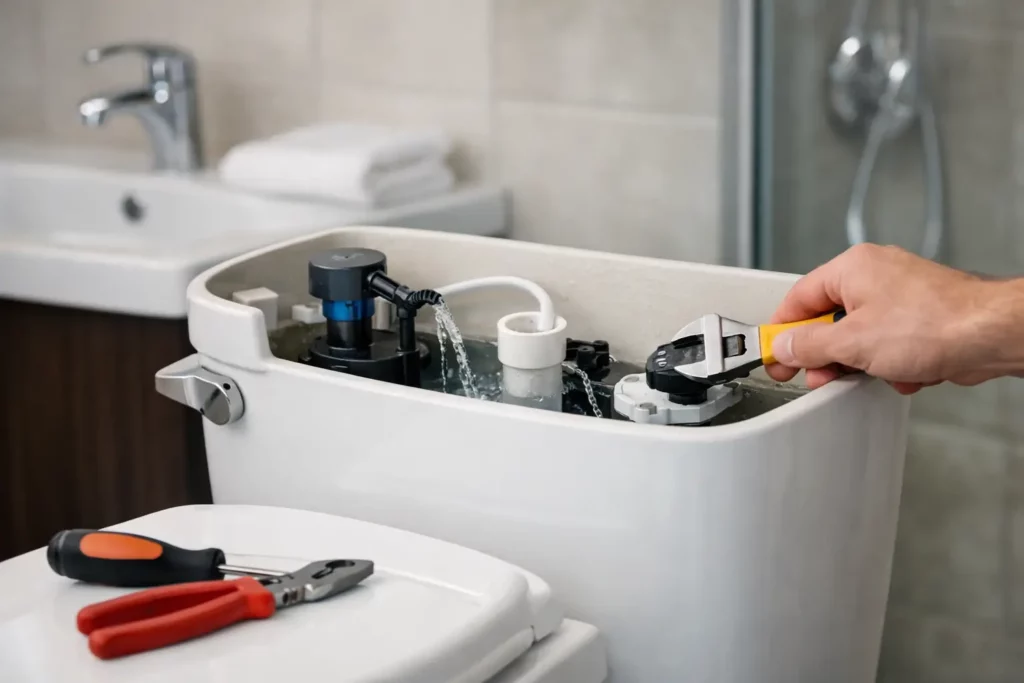
That steady hissing sound from the bathroom is easy to ignore for a day or two, until the water bill shows up or the toilet starts refilling every few minutes. If you’re asking why does toilet keep running, the short answer is that water is escaping from the tank when it should be sealed, and the toilet keeps trying to replace it.
In most homes, this comes down to one of a few parts inside the tank. The good news is that the cause is usually straightforward. The less-good news is that a small running toilet can waste a surprising amount of water over time, so it is worth dealing with sooner rather than later.
Why does toilet keep running in the first place?
A toilet runs when the fill valve keeps adding water to the tank because the tank level keeps dropping. That drop can happen slowly through the flush valve, through an overflow issue, or because a component is out of adjustment.
Think of the tank as a simple system. Water fills to a set level, the valve shuts off, and the toilet waits for the next flush. If the seal at the bottom is not tight, if the chain is interfering, or if the float is set too high, the system never fully settles. That is when you hear constant running, periodic refilling, or a faint trickle into the bowl.
The most common reason: a worn flapper
The flapper is the rubber piece at the bottom of the tank that lifts during a flush and then drops back down to seal the opening. Over time, rubber hardens, warps, or gets coated with mineral buildup. When that happens, water leaks from the tank into the bowl, even when nobody has flushed.
This is the first thing to check because it is also the most common failure point. If the flapper looks bent, brittle, slimy, or uneven on the seat, it may no longer be sealing properly. Sometimes it looks fine at a glance but still leaks just enough to trigger refilling every few minutes.
A quick test helps. Put a few drops of food coloring in the tank and wait 15 to 20 minutes without flushing. If color appears in the bowl, water is slipping past the flapper or flush valve seal.
The chain may be too tight or too loose
The chain connected to the flush handle can also cause trouble. If it is too short, it can hold the flapper slightly open after each flush. If it is too long, it can get caught under the flapper and stop it from closing fully.
This is one of those small adjustments that can make a big difference. The chain should have a little slack when the flapper is closed, but not so much that it tangles. If the toilet started running after someone replaced a handle or adjusted parts in the tank, this is especially worth checking.
A fill valve problem can keep water moving
The fill valve controls water entering the tank after a flush. If it is worn, dirty, or out of adjustment, it may fail to shut off at the correct water level. In some cases, it keeps feeding water until the excess spills into the overflow tube.
When that happens, the toilet can sound like it is constantly refilling even though the flush seal is not the main issue. You may notice water sitting too high in the tank or a steady stream flowing into the overflow tube. If you remove the tank lid and see that happening, the fill valve or float setting is a likely culprit.
There is a trade-off here. Sometimes a simple adjustment solves it. Sometimes an aging valve keeps sticking and should be replaced rather than adjusted again and again.
The float may be set too high
Older toilets may use a ball float, while newer ones often use a cup-style float on the fill valve. Either way, the float tells the valve when to stop filling. If the float is set too high, the tank overfills and sends excess water into the overflow tube.
That creates a running toilet without an obvious leak at the flapper. It also tricks some homeowners because the toilet does flush normally. The issue is not the flush. The issue is that the refill cycle never reaches a clean stop.
In many models, lowering the float slightly is enough. If the adjustment does not hold, or the mechanism feels stiff or unstable, the fill valve may be near the end of its service life.
Mineral buildup and age can affect multiple parts
In areas with harder water, mineral deposits can build up around the flush valve seat, fill valve, and moving parts. Even a small amount of buildup can stop rubber components from sealing correctly or keep valves from moving smoothly.
This is where toilets become less predictable. You might replace a flapper and still hear occasional running because the valve seat is rough. Or the toilet may work fine for weeks, then start acting up again because the fill valve sticks intermittently.
Age matters too. If the toilet is older and several internal parts are original, replacing one worn piece may only partly solve the problem. Sometimes the practical answer is a full tank rebuild kit rather than chasing one issue at a time.
What you can safely check yourself
If you are comfortable lifting the tank lid and doing a basic visual check, start simple. Look at the water level in the tank. If it is above the overflow opening or flowing into the tube, the float or fill valve needs attention. If the water level is normal but the toilet still refills on its own, the flapper is the better suspect.
Listen after a flush. Does the handle need help returning? Does the chain look tangled? Does the flapper drop cleanly? These clues usually point you in the right direction.
You can also shut off the water supply to the toilet and see what happens over the next half hour. If the tank level drops with the supply off, water is leaking from the tank into the bowl. That usually confirms a flapper or flush valve issue rather than a fill valve problem.
When a simple fix turns into a bigger repair
A running toilet is often a small repair, but not always. If the tank bolts are corroded, the shutoff valve is stuck, the toilet rocks at the base, or the internal parts do not match standard replacements, the job gets more involved.
There are also cases where the toilet is not worth repeated repairs. If it is an older unit with frequent issues, high water use, or cracking around the tank components, replacement may be the better long-term value. That is especially true in rental properties or commercial spaces where a recurring toilet problem becomes a repeat service call.
When to call a plumber for a running toilet
If you have already adjusted the chain, checked the float, and replaced the flapper but the toilet still runs, it makes sense to have it diagnosed properly. The issue may be a warped flush valve seat, a failing fill valve, hidden tank damage, or a combination of wear points.
It is also smart to call if the toilet is running alongside other plumbing issues, like low water pressure, leaking shutoff valves, or signs of moisture around the base. At that point, it is less about one noisy fixture and more about preventing water waste and avoiding a bigger repair later.
For homeowners and property managers, speed matters here. A toilet that runs nonstop is not dramatic like a burst pipe, but it does cost money every day it is left alone. A fast repair usually pays for itself in saved water and fewer headaches.
How to prevent the problem from coming back
Toilet parts wear out quietly. Most running toilet issues do not start all at once. They start as a faint refill sound, an occasional phantom flush, or a handle that feels slightly off. Catching those signs early helps you avoid more wasted water and frustration.
It also helps to use quality replacement parts that match the toilet model. Generic parts can work, but they are not always the best fit. If the fit is off by even a little, you can end up with the same problem again in a few weeks.
If you are in Chilliwack or nearby and the fix is not obvious, having a plumber deal with it quickly is often the most efficient route. A dependable service call can sort out the cause, replace the worn parts properly, and make sure the toilet is shutting off the way it should.
A running toilet usually starts as a minor annoyance, but it is really a sign that one part of the system is no longer doing its job. Deal with it early, and you are usually looking at a simple repair instead of ongoing water waste.