
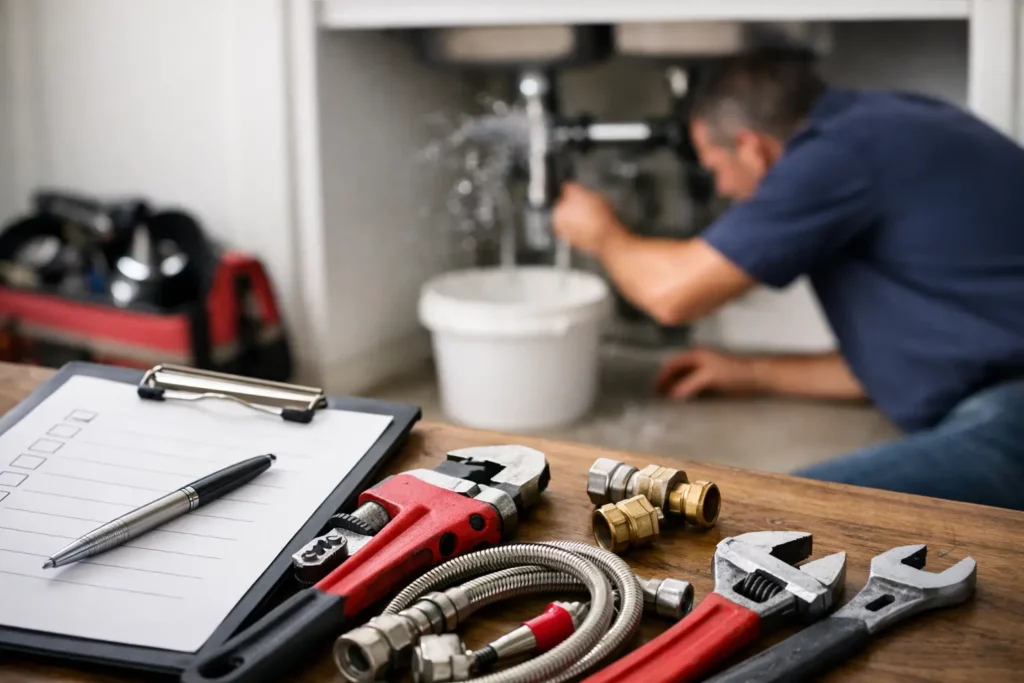
A pipe bursts at 2 a.m., the floor is taking on water, and every second feels expensive. In that moment, an emergency plumbing repair checklist matters because it gives you a clear order of operations – protect people first, limit damage second, and avoid turning a repairable problem into a much larger one.
Plumbing emergencies rarely happen at a convenient time. They also do not all carry the same level of risk. A dripping shutoff under a sink is urgent in one way, while a burst pipe near electrical wiring or a gas-related issue is urgent in another. The right response depends on the source of the problem, how quickly water is spreading, and whether there are safety hazards involved.
What to do first in a plumbing emergency
Start with safety, not tools. If water is approaching outlets, extension cords, appliances, or your electrical panel, stay out of the affected area until power can be safely addressed. If you smell gas or suspect a gas line issue, leave the space and treat it as a priority emergency. Plumbing and gas systems sometimes overlap around water heaters, boilers, and utility rooms, so it is worth slowing down for a few seconds and looking at the full picture.
Once the area is safe to approach, shut off the water. For a localized problem, such as an overflowing toilet or a failed sink supply line, the nearest fixture shutoff may be enough. For anything you cannot isolate quickly, turn off the main water supply to the building. That one step usually does more to reduce repair costs than anything else you can do after the fact.
Then relieve pressure in the system by opening a cold water faucet at the lowest practical point in the home or building. This helps reduce continued flow and can make the situation easier to control while you assess the damage.
Emergency plumbing repair checklist for homeowners
A good emergency plumbing repair checklist should be simple enough to use under stress. The goal is not to complete a full repair on your own. The goal is to stabilize the situation until a licensed plumber can diagnose and fix the root cause.
First, confirm the type of emergency. Burst pipes, failed water heaters, sewer backups, major drain clogs, overflowing toilets, and hidden leaks behind walls all require fast action, but not all should be handled the same way. A backed-up drain may get worse if other fixtures are used. A leaking water heater may still hold hot water under pressure. A frozen pipe may not be leaking yet, but it can split as it thaws.
Next, stop active water flow if possible. Shutoffs behind toilets, under sinks, and at washing machine connections can be effective when the issue is limited to one fixture. If the valve is corroded, stuck, or looks like it may break, do not force it. In that case, go straight to the main shutoff.
After that, protect surrounding materials. Move rugs, paper goods, electronics, and furniture out of the wet area. If water is pooling, use towels or a wet vacuum if it is safe to do so. The plumbing repair is only part of the job. Floors, drywall, cabinets, trim, and insulation can all become secondary losses if water sits too long.
Take a few photos before cleanup gets too far along. This can help with insurance documentation and gives your plumber a clearer picture of how the problem started and spread.
Finally, stop using affected fixtures unless you are sure they are isolated. If one toilet is backing up, avoid running sinks, showers, dishwashers, or laundry that may feed the same drain line. If a main drain or sewer line is involved, using more water often makes the damage worse.
When a temporary fix helps – and when it does not
Temporary measures have their place, but only in the right situation. A bucket under a dripping trap or a towel wrap around a minor leak may buy you a little time. A pipe repair clamp, leak tape, or a temporary cap can sometimes reduce water loss long enough for a proper service call.
What these fixes should not do is create a false sense of security. If a supply line has split, a water heater tank is leaking, or water is coming through ceilings or walls, a temporary patch is not a solution. Those situations need professional repair, and often fast diagnosis, because the visible water is not always the full extent of the problem.
There is also a trade-off between acting quickly and overhandling the issue. Homeowners often make damage worse by cutting into walls too soon, overtightening old valves, or using chemical drain cleaners in a system that is already under stress. A safer rule is this: contain what you can, document what you see, and leave the actual repair to a qualified plumber unless it is a truly minor and obvious issue.
The most common emergencies and the right response
Burst pipe
Shut off the main water immediately. If weather is freezing or recently thawed, the damaged section may not be the only weak point in the system. Drain the line as much as possible and avoid using any plumbing until the pipe is assessed.
Overflowing toilet
Use the toilet shutoff valve near the base if it works. Do not keep flushing to “clear it.” If one toilet overflows after other drains have been slow, the issue may be deeper in the drain system.
Water heater leak
Turn off the unit’s water supply. If safe, shut off power to an electric water heater at the breaker, or follow proper shutoff steps for a gas unit. If the tank itself is leaking, replacement is often more realistic than repair.
Sewer backup
Stop all water use in the building. This is not a plunger situation if multiple drains are affected or wastewater is coming up from a lower drain. Keep people and pets away from contaminated water.
Hidden leak behind a wall or ceiling
If staining, bubbling paint, warped flooring, or dripping appears suddenly, shut off water if the source is active and unknown. Hidden leaks can travel, so the wet spot you see may not be directly below the break.
What property managers and small commercial owners should add
For multi-unit and light commercial properties, the checklist needs one more layer: communication. After shutting off water and securing the affected area, notify occupants quickly and clearly. Let them know which fixtures are out of service and whether they should avoid sinks, toilets, or floor drains.
It also helps to know your shutoff map before an emergency happens. In mixed-use spaces, restaurants, tenant units, and service buildings, waiting to locate the right valve can add a lot of unnecessary damage. The same goes for access to mechanical rooms, cleanouts, and after-hours contact information.
A local contractor with emergency experience can make a big difference here because speed matters, but so does clean execution. Armacom Plumbing works with both homeowners and property-focused clients who need problems diagnosed fast and repaired properly, not patched and revisited a month later.
What to have on hand before you need it
The best emergency plumbing repair checklist starts before the emergency. Keep a flashlight, towels, a wet vacuum if you have one, a bucket, basic work gloves, and the location of your main shutoff written down where others in the building can find it. If you manage a property, label key valves and make sure authorized staff know how to use them.
It is also smart to test shutoff valves occasionally. Not every old valve will cooperate in an emergency, and some fail right when you touch them. If a valve is stiff, corroded, or leaking around the stem, that is a maintenance issue worth addressing before it becomes an emergency.
When to call right away
Some plumbing issues can wait until morning. Others should not. Call for immediate help if water cannot be stopped, if wastewater is backing up, if a leak is near electrical hazards, if a water heater is actively failing, or if a frozen or burst pipe has affected multiple areas.
The key is not to guess based on inconvenience alone. A small visible leak can hide major damage, while a dramatic overflow may still be contained quickly if the right valve is nearby. What matters is risk – to safety, to the building, and to how far the damage can spread in the next hour.
The best time to think through a plumbing emergency is before one starts. Know your shutoffs, keep basic supplies nearby, and use a clear checklist when the pressure is on. Calm, early action usually saves the most money, and it gives your plumber a much better starting point when it is time to put the system back in proper working order.