
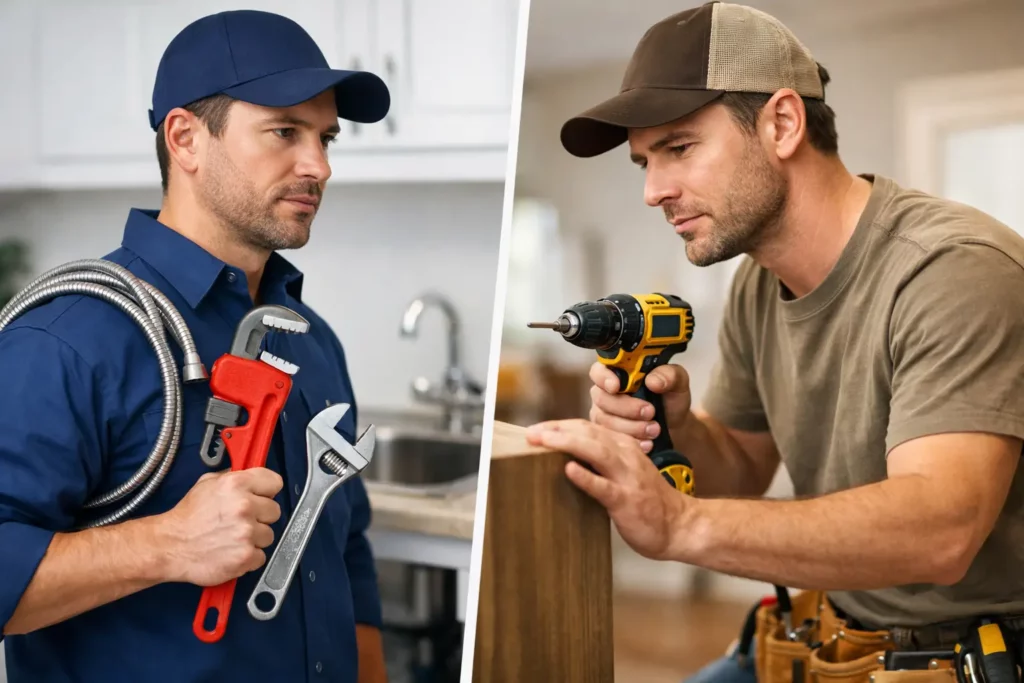
A dripping pipe under the sink can look like a quick fix – until it turns into cabinet damage, mold, or a shutoff valve that snaps in your hand. That is why plumber vs handyman repairs is not just a pricing question. It is really a question of risk, code, long-term reliability, and whether the repair will still be holding up six months from now.
For homeowners and property managers, the confusion is understandable. A handyman may be able to handle a wide range of small jobs around a property. A plumber focuses specifically on water supply, drainage, fixtures, piping systems, and related equipment. The overlap can seem blurry from the outside, but once a repair touches active plumbing lines, hidden leaks, drainage performance, water heaters, or code-sensitive installations, the difference matters.
Plumber vs handyman repairs: the real difference
The easiest way to think about it is this: a handyman is typically hired for general maintenance and minor installation work, while a plumber is hired when the job affects the plumbing system itself.
A handyman may be a reasonable choice for tasks around a bathroom or kitchen that do not require altering pipes or diagnosing system issues. That can include replacing caulk, installing shelving, patching drywall after a repair is complete, or swapping out simple hardware. Those jobs support the space, but they do not involve technical plumbing work.
A plumber is the right call when water is moving through pipes, drains, shutoff valves, supply lines, venting, or appliances connected to the plumbing system. That includes leak detection, burst pipe repair, drain issues, fixture replacements that require reconnecting water lines, toilet problems, water heater installation, and anything where improper work can cause hidden damage or code violations.
The key distinction is not whether the job looks small. It is whether the job can create a bigger plumbing problem if done incorrectly.
When a handyman may be enough
There are situations where a handyman is a practical and cost-effective option. If the work is cosmetic, surface-level, or clearly outside the core plumbing system, a general repair professional may be all you need.
For example, if a bathroom needs trim replaced after water damage has already been fixed, a handyman can often take care of that. The same goes for replacing a towel bar, rehanging a cabinet door, or repairing wall finishes around a plumbing area once the actual plumbing work is complete.
Some homeowners also call a handyman for fixture swaps that appear simple, such as replacing a showerhead or changing out a faucet. That can be fine in some cases, but this is where people often underestimate the job. What starts as a basic replacement can uncover corroded shutoffs, mismatched fittings, worn supply lines, or signs of a slow leak inside the vanity. Once that happens, the work is no longer just a swap.
If there is any doubt about the condition of the plumbing behind the fixture, it is safer to involve a plumber from the start.
When a plumber is the better choice
If the repair involves active leaks, poor water pressure, blocked drains, sewer odors, inconsistent hot water, pipe noise, frozen lines, or visible corrosion, call a plumber. Those are system problems, not just household maintenance items.
The same applies when a job requires diagnosis rather than replacement. A handyman may be able to tighten a fitting or replace a visible part, but if the real issue is pressure imbalance, improper venting, a failing valve, or a concealed leak behind a wall, the repair needs someone who works in plumbing every day.
Water heaters are another clear dividing line. Whether it is a repair, replacement, or new installation, a plumber is the right professional. The unit connects to water lines, pressure controls, drainage, and in many cases gas or venting considerations. Mistakes there are expensive and sometimes dangerous.
Toilets are often underestimated too. A simple flapper replacement is one thing. But if the toilet rocks, leaks at the base, backs up repeatedly, or has drainage issues affecting other fixtures, that points to a plumbing problem that needs a proper diagnosis.
Cost vs value: cheaper is not always cheaper
A lot of plumber vs handyman repairs decisions come down to hourly rates. On paper, a handyman may seem like the less expensive option. Sometimes that is true for minor non-plumbing tasks. But repair cost should be measured by the final outcome, not just the first invoice.
If a repair fails and causes water damage, the cheapest callout quickly becomes the most expensive choice. Even a slow leak can damage drywall, flooring, cabinetry, insulation, and framing before anyone notices it. Then there is the cost of doing the repair again, this time with the right trade.
There is also the issue of efficiency. A skilled plumber often identifies the real problem faster, uses the correct materials, and finishes the repair in a way that lasts. That usually means fewer callbacks, less disruption, and less guesswork.
For property managers and commercial clients, the value is even clearer. Downtime, tenant complaints, repeat service visits, and water damage claims cost more than hiring the right professional in the first place.
Repairs that often get misjudged
Some jobs sit right in the gray area, and that is where bad calls tend to happen.
A leaking faucet, for example, may look simple. But if the shutoff valves are seized or the sink plumbing is outdated, the repair can escalate quickly. Replacing a kitchen faucet can also involve difficult access, corroded connections, and drain adjustments that are easy to get wrong.
Installing a new dishwasher or refrigerator water line may seem straightforward too. But improper connections can lead to slow leaks hidden behind cabinetry for months. The same risk applies to washing machine hookups and utility sink connections.
Another common one is replacing a garbage disposal. People often treat it as an appliance swap, but it affects drain alignment, connections, and sometimes electrical coordination. If the existing drain assembly is already poorly configured, the new unit will not solve the underlying issue.
Then there are shower and tub repairs. Replacing trim is one thing. Working on the valve body behind the wall is another. Once the repair affects waterproofing, pressure balance, or concealed plumbing, the margin for error gets small.
Why code and liability matter
Most homeowners are not thinking about code compliance when they are trying to stop a leak on a Tuesday afternoon. That is understandable. But code exists for a reason, especially in plumbing.
Improper slope on a drain, the wrong venting setup, poor fixture connections, or incorrect water heater installation may not fail right away. Problems often show up later as backups, leaks, poor performance, or inspection issues during a sale or renovation.
Liability matters too. If a repair contributes to property damage, insurance questions can get complicated. That is one reason professional workmanship matters on anything beyond basic surface maintenance. A properly completed repair protects the building, not just the fixture.
For homeowners in older properties around Chilliwack and nearby communities, this matters even more. Aging shutoff valves, mixed piping materials, and previous patchwork repairs can turn a simple service call into a more technical job quickly.
How to decide without overthinking it
A simple rule works well. If the task is cosmetic, dry, and does not change how water moves through the property, a handyman may be enough. If the task involves supply lines, drains, fixtures with active connections, hidden leaks, hot water systems, or anything that could damage the property if it fails, call a plumber.
It also helps to think about consequences. If the repair does not hold, what happens next? If the answer is inconvenience, a handyman might be fine. If the answer is water damage, mold, loss of service, or a larger repair bill, bring in a plumber.
That does not mean every small plumbing issue is a major project. It means the person doing the work should match the risk of the job.
A dependable plumbing contractor will usually tell you plainly whether the issue is minor, urgent, or something worth addressing before it gets worse. That straightforward approach saves money over time because it replaces guesswork with a proper fix.
When you are weighing plumber vs handyman repairs, the best choice is usually the one that protects the property and solves the problem once. A clean, lasting repair is almost always worth more than the appearance of a quick bargain.