
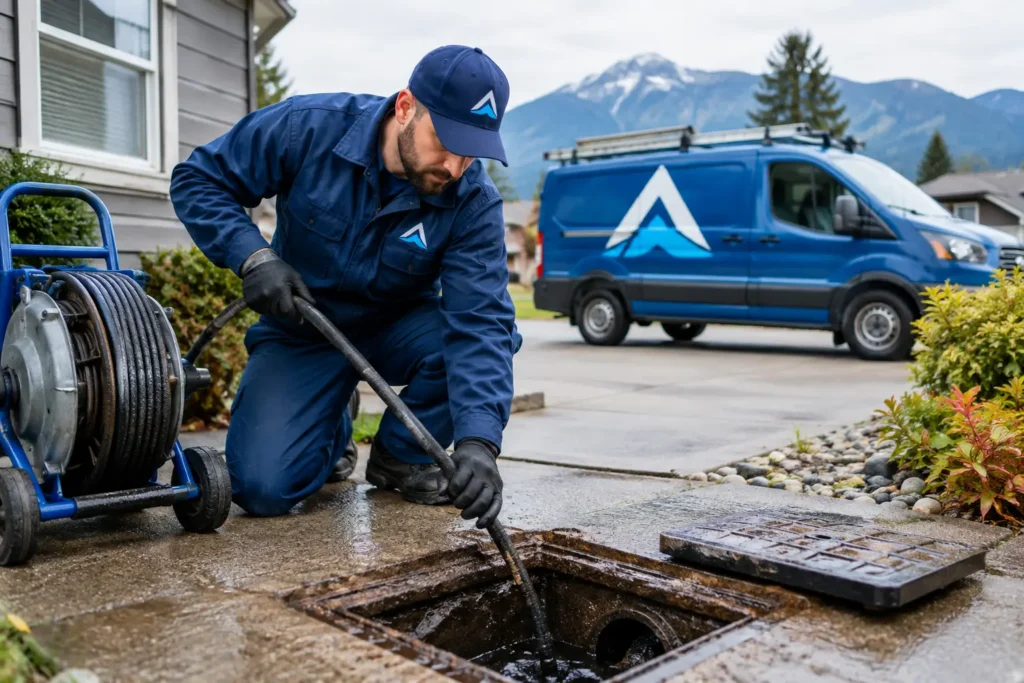
A sewer backup rarely begins with a dramatic flood. More often, it starts with a toilet that bubbles when the washing machine drains, a shower that empties slowly, or a floor drain that gives off an unpleasant odor. Homeowners often ask what causes sewer backups after these early signs have already appeared. The short answer is that wastewater has lost its normal path out of the building. Finding out why – and acting before sewage reaches finished areas – is the part that matters.
A single slow sink can be a local drain issue. When several fixtures are slow, gurgling, or backing up together, the problem may be in the main sewer line. That calls for a proper diagnosis rather than repeated chemical drain cleaner or a quick plunge.
What Causes Sewer Backups in a Home or Business?
Sewer backups happen when a blockage, damaged pipe, capacity issue, or outside source prevents wastewater from flowing through the sewer line. The wastewater then seeks the lowest available opening, which may be a basement floor drain, shower, tub, or ground-level toilet.
The exact cause depends on the building, the plumbing layout, and whether the issue is on a private sewer line or farther downstream. In Chilliwack, older piping, mature trees, heavy rain, and long private service lines can all affect the diagnosis. A plumber should identify the location of the restriction before recommending a repair.
1. Tree roots entering the sewer line
Tree roots naturally grow toward moisture. A small opening at a pipe joint, crack, or aging connection can provide both moisture and nutrients, allowing roots to enter and expand inside the line. Once established, roots catch paper and debris until the pipe begins to drain poorly or blocks completely.
Roots are especially common in older sewer lines, but they can affect newer systems if there is a damaged joint or shift in the pipe. Mechanical drain cleaning can remove the root mass and restore flow, but it does not repair a broken pipe. If roots return quickly, a camera inspection can show whether sewer line repair is needed.
2. Flushable wipes, paper products, and hygiene items
Products labeled “flushable” do not always move through a building drain system as easily as toilet paper. Wipes can snag at bends, joints, root intrusions, or rough pipe interiors. Paper towels, facial tissues, cotton swabs, dental floss, and hygiene products are also regular causes of drain and sewer blockages.
A toilet may still flush when a partial obstruction is forming, which gives a false sense that the problem is gone. If it flushes weakly, rises before draining, or causes a nearby tub or shower to gurgle, stop flushing it. Continued use can turn a manageable blockage into a sewage cleanup.
3. Cooking grease and food debris
Grease may look liquid when poured into a sink, but it cools as it travels through the drain line. It coats the pipe interior and collects food scraps, soap residue, and other debris. Over time, the usable diameter of the pipe becomes much smaller.
This is a frequent issue in kitchens, rental properties, and commercial spaces with regular food preparation. A garbage disposal does not prevent drain trouble. It simply sends smaller pieces farther into the piping. Professional drain cleaning can remove buildup more thoroughly than chemical products, which can damage certain pipes and seldom solve a main-line obstruction.
4. Pipe damage, corrosion, or a shifted sewer line
Sewer pipes do not last forever. Older materials can corrode, crack, separate at joints, or develop rough interiors that trap debris. Ground movement, settlement, nearby excavation, and heavy surface loads can also cause a pipe to sag or shift. A low area, often called a belly, holds wastewater and solids instead of carrying them away consistently.
These defects can produce recurring backups even after the line has been cleaned. The line may drain normally for a while, then plug again in the same spot. A sewer camera inspection is useful because it separates a simple blockage from a structural issue that needs targeted repair.
5. Too much water entering the system during heavy rain
Periods of heavy rain can expose drainage problems that are otherwise hidden. Depending on the property and sewer configuration, excess groundwater or stormwater can contribute to overloaded systems or find its way into damaged private piping. A backup that occurs only during significant rainfall deserves prompt attention, especially if water appears at a floor drain.
Do not assume every rain-related backup is the municipality’s responsibility. The restriction may still be on the private line serving the building. A plumber can assess the plumbing side of the problem and help establish whether the issue appears to be within the property’s sewer connection.
6. A blocked main sewer line versus a branch drain clog
Not every backup comes from the sewer line. A branch drain serves one fixture or a small group of fixtures, such as a kitchen sink or upstairs bathroom. When only one sink, tub, or toilet is affected, the blockage may be in that local branch line.
When lower-level fixtures back up while water is used elsewhere, suspect the main sewer line. For example, running the washing machine may send water into a basement shower, or flushing an upstairs toilet may make a first-floor tub bubble. This pattern is a strong reason to stop using water and arrange professional diagnosis.
7. Improper use of a plumbing fixture
Some backups are caused by what enters the system, but others are caused by how the fixture is used. A toilet used as a disposal point for wipes, excess paper, or non-flushable materials can create a blockage close to the fixture or farther down the line. Repeated plunging can sometimes push a partial clog deeper without removing it.
A slow drain is also not a reason to keep adding chemical cleaner. These products may sit in standing water, create a safety hazard for anyone opening the drain, and damage older piping if used repeatedly. Mechanical cleaning methods are generally safer and more effective when applied after the source of the problem is understood.
8. Neglected drain maintenance and recurring buildup
Drain systems give warning before many full backups. Repeated slow draining, foul odors, gurgling, and periodic toilet clogs should be treated as maintenance concerns, not normal features of an older building. Restaurants, multi-unit properties, and commercial washrooms may need scheduled cleaning because of their heavier use.
The right maintenance approach depends on what is found in the line. Hydro jetting can be effective for certain heavy buildup conditions, while other lines require a different method to avoid damaging compromised pipe. A camera inspection before or after cleaning can provide a clearer picture of the pipe condition and whether the result is likely to last.
Warning Signs to Act On Before a Sewer Backup
The most useful warning sign is a change involving more than one fixture. If a toilet bubbles while a sink drains, water rises in a tub when the washer discharges, or several drains slow down at once, treat it as a possible main-line issue. Sewage odors near a floor drain or an unexplained wet area outside can also point to trouble with the sewer connection.
If wastewater has already entered the home or business, avoid using toilets, sinks, dishwashers, and laundry equipment. Keep people and pets away from contaminated water, since sewage can carry harmful bacteria. A prompt emergency plumbing response can limit the amount of water released while the blockage is located.
How a Professional Plumber Finds the Cause
A proper sewer backup visit should start with questions about which fixtures are affected, when the trouble started, and whether it follows rain or certain appliance use. The plumber may then test drainage, access the line through an appropriate cleanout, and use professional cleaning equipment to restore flow.
When the cause is unclear or recurring, a sewer camera inspection can reveal roots, separated joints, cracks, buildup, or standing water in the line. That information matters because cleaning a line and repairing a damaged line are different jobs. The best recommendation is based on the condition of the pipe, not guesswork.
For Chilliwack homeowners and property managers, early action is usually less disruptive than waiting for a complete backup. If several fixtures are showing warning signs, have the sewer line assessed before the next load of laundry or heavy rainfall turns a drain problem into a cleanup. Armacom Plumbing & Heating can help identify the source and recommend a practical repair or drain-cleaning solution.