
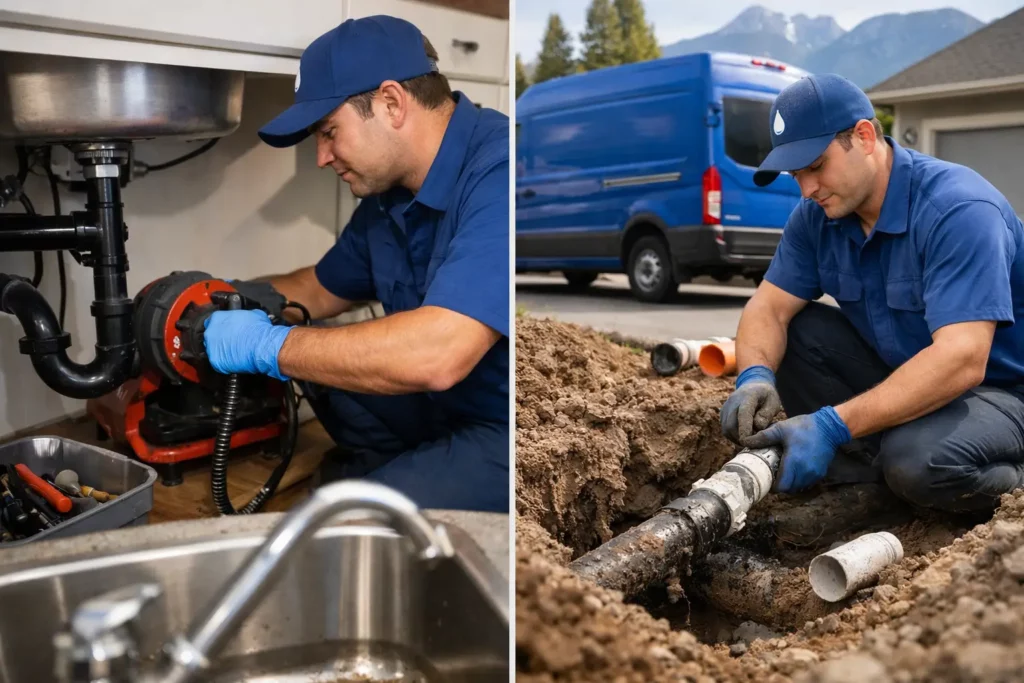
A sink that drains slowly can be a simple blockage. It can also be the first sign of a cracked pipe, root intrusion, or a sewer line that has shifted underground. The difference between drain cleaning vs drain repair matters because cleaning restores flow through a sound pipe, while repair addresses a pipe that is damaged, failing, or no longer properly connected.
For Chilliwack homeowners, landlords, and business owners, the right answer starts with an honest diagnosis. Repeatedly clearing a drain that has a structural problem wastes money and can allow water damage or sewage backup to get worse. On the other hand, replacing piping when a professional cleaning would solve the issue is unnecessary expense.
What Drain Cleaning Actually Solves
Drain cleaning removes material that is restricting normal flow inside a pipe. In kitchens, that material is often food residue, soap buildup, and cooking oils that have cooled and hardened in the line. Bathroom drains commonly collect hair, soap scum, toothpaste residue, and small items that accidentally fall into a fixture.
A professional drain cleaner uses the appropriate method for the location and condition of the line. Cable equipment can break up or retrieve many localized clogs. Hydro jetting uses controlled high-pressure water to scour buildup from pipe walls and can be especially useful in suitable larger drain and sewer lines with heavy internal buildup.
Cleaning is usually the appropriate first service when the pipe itself is intact and the blockage is the main problem. Common signs include a single slow fixture, a tub or shower that has gradually become slower, or a kitchen sink that drains poorly without leaking below the cabinet.
It is also often the right maintenance service for commercial properties where drain lines see frequent use. Restaurants, offices, rental units, and other light commercial spaces can develop recurring buildup simply because their drains handle more volume than a typical household.
Cleaning is not just pouring chemicals down a drain
Store-bought chemical drain openers can damage certain pipes, fittings, and seals, particularly when used repeatedly or left sitting in a blocked line. They may open a small channel through a clog without removing the buildup that caused it. They also create a safety concern for anyone who later needs to work on the drain.
A proper service call focuses on finding the obstruction, clearing it safely, and verifying that water is moving through the line as it should. If a blockage returns quickly, that is a reason to investigate further rather than keep treating the same symptom.
When Drain Repair Is the Better Answer
Drain repair is needed when the pipe has a physical defect that cleaning cannot correct. A cable or hydro jet can remove roots and debris from inside a line, but it cannot seal a crack, reconnect separated joints, correct a sagging section of pipe, or restore badly deteriorated material.
Older properties can have drain piping that has shifted over time, corroded internally, or developed weak connections. Underground sewer lines may be affected by root growth, soil movement, or repeated loading. In these cases, the drain may clear temporarily but continue to collect debris at the damaged area.
Repair becomes more likely when you see persistent symptoms such as these:
- Multiple fixtures drain slowly or back up at the same time.
- Toilets bubble when a sink, washing machine, or tub is draining.
- The same drain clogs again soon after it has been professionally cleared.
- There is sewage odor, damp ground, or an unexplained wet area near the building.
- A drain pipe leaks under a sink, behind a wall, or in a crawlspace.
A sewer camera inspection can help distinguish a heavy clog from a broken, offset, root-intruded, or collapsed line. Seeing the inside of the pipe allows the plumber to recommend work based on the actual condition instead of guessing from surface symptoms.
Drain Cleaning vs. Drain Repair: The Key Difference
The practical difference is simple: cleaning treats what is inside the pipe; repair treats the pipe itself.
A kitchen line packed with grease and food debris may need thorough cleaning. Once the buildup is removed, it may perform normally for years with better day-to-day use. A sewer line with separated joints, however, can invite roots and allow solids to hang up at the same spot. Cleaning may provide short-term relief, but repair is what stops the underlying failure from repeating.
There are situations where both services are necessary. A line may need cleaning first so a camera can travel through it and show the full condition. After the inspection, the plumber may find a localized section that needs repair. In another case, the camera may show that the pipe is sound and that cleaning was all that was required.
That is why the lowest-cost first step is not always the best value. The goal should be an accurate diagnosis and a repair plan that prevents avoidable repeat calls.
How a Professional Diagnoses the Problem
Good drain work starts with questions. Which fixtures are affected? Did the problem appear suddenly or develop over weeks? Does the drain back up only when a specific appliance runs? Has the line been cleared before, and if so, how long did it stay open?
The answers narrow down whether the issue is likely in a fixture branch, a main building drain, or the sewer line. A plumber may then test fixture drainage, inspect accessible piping, use drain-cleaning equipment, and recommend a camera inspection where the symptoms point to a deeper line problem.
For example, one bathroom sink that drains slowly is often a local clog. A toilet that gurgles while the laundry drains points to a larger shared line. Sewage coming up through a lower-level shower or floor drain should be treated as urgent because continued water use can worsen the backup.
In Chilliwack, a prompt assessment is particularly worthwhile when a property has recurring main-line stoppages. Waiting until a full sewer backup occurs can turn a manageable drain issue into a cleanup, repair, and disruption problem.
When Hydro Jetting Makes Sense – and When It Does Not
Hydro jetting is effective for certain tough drain-cleaning jobs because it removes more than a small opening through the blockage. It can wash away sludge, scale, grease, and loose debris along the pipe wall when used by a trained plumber on an appropriate line.
It is not automatically the right choice for every drain. Older, fragile, badly damaged, or unknown-condition pipes should be evaluated before high-pressure cleaning is used. If a camera inspection shows a major break, collapse, or severely compromised section, repair should take priority.
This is one area where a one-size-fits-all approach causes problems. The best method depends on pipe material, pipe condition, the location of the blockage, and what the inspection shows.
What You Can Do Before Calling a Plumber
If one fixture is slow but not overflowing, stop using that fixture and avoid adding chemical cleaners. Check only accessible, simple items such as a sink stopper or hair catcher. If the clog is beyond that point, forcing it with improvised tools can damage the fixture or push the blockage farther into the line.
If several drains are affected, toilets are bubbling, or sewage is backing up, reduce water use throughout the building. Do not run dishwashers, washing machines, or additional showers while waiting for service. For a visible leak from drain piping, place a container below it if safe to do so and avoid using the connected fixture.
Property managers should also note which suites, rooms, or fixtures are affected. That information helps speed up diagnosis, especially in multi-unit or commercial buildings.
Choosing the Right Service for a Lasting Result
Drain cleaning is the sensible choice for ordinary buildup and isolated clogs in otherwise healthy piping. Drain repair is the right investment when inspection shows damage, leaks, failed connections, or a line that repeatedly blocks for the same structural reason.
If you are unsure which applies, do not commit to a repair based on symptoms alone. Ask for the cause of the blockage, the condition of the pipe, and whether a camera inspection is warranted. A clear explanation gives you a better basis for deciding what to fix now and what to monitor.
When a drain in your Chilliwack property keeps demanding attention, treat the repeat problem as useful information. The right diagnosis can turn a recurring disruption into a straightforward repair plan and help keep the plumbing working reliably.