
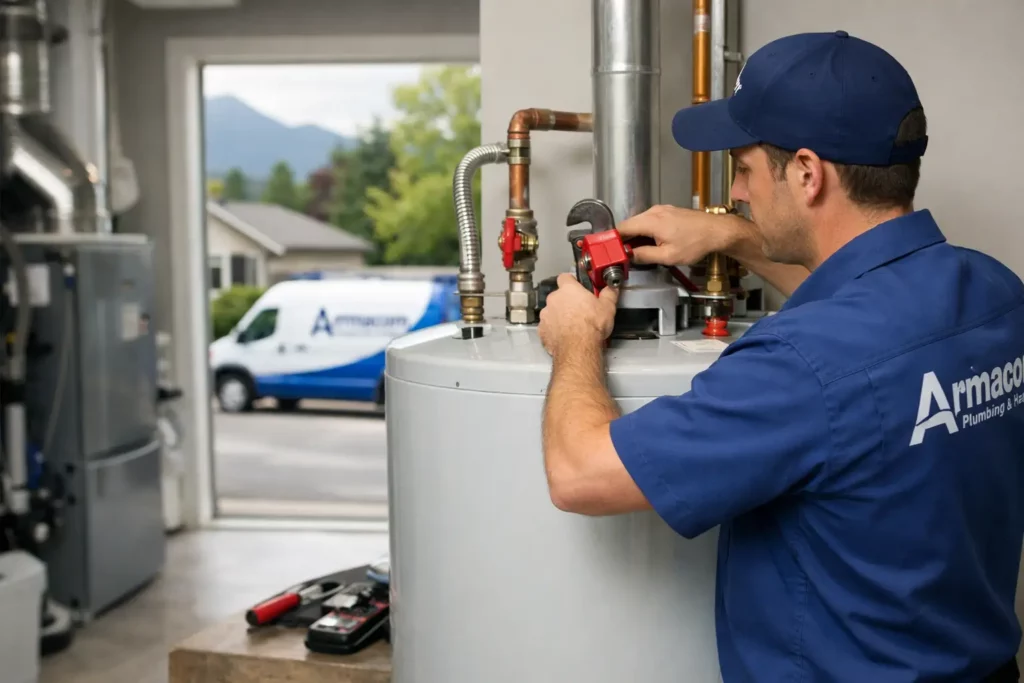
A hot water tank rarely quits at a convenient time. It may start with a lukewarm shower, a small puddle near the tank, or a burner that will not stay lit. For hot water tank repairs Chilliwack homeowners can rely on, the first job is determining whether the problem is a serviceable component or a tank that has reached the end of its working life.
A proper diagnosis matters. Replacing a faulty valve, thermostat, or ignition component can restore dependable hot water at a reasonable cost. But repairing a corroded tank body is not a lasting solution, and waiting too long can turn a small leak into water damage, a shutdown, and an urgent replacement.
Hot Water Tank Repairs in Chilliwack: What Can Be Fixed?
Most conventional water heaters have a steel storage tank, a heat source, safety controls, water connections, and a drain valve. Gas models also have a burner assembly, venting, ignition system, and gas controls. Electric models use heating elements and electrical controls. A plumber needs to identify where the failure is occurring before recommending a repair.
Many common issues are repairable. A tank that is producing inconsistent water temperatures may have a failing thermostat, heating element, gas control, or sediment buildup affecting performance. A small leak at a pipe connection, shutoff valve, or temperature and pressure relief valve may be corrected without replacing the heater itself.
Pilot and ignition problems on gas water heaters can also have several causes. The issue could be a worn igniter, a dirty burner area, a thermopile problem, or a control-related fault. These are not components to guess at. Gas appliances require careful testing and safe repair procedures, particularly when the unit will not ignite or repeatedly shuts down.
The key distinction is the tank itself. If water is leaking from the bottom seam, jacket, or body of the tank, internal corrosion is often the cause. Once the steel tank has failed, replacement is generally the practical and safe option.
Signs the tank may still be worth repairing
A repair may make sense when the tank is otherwise sound and the problem is isolated. For example, you may notice water coming from a fitting above the tank rather than the tank body, or the heater may still deliver hot water but make popping sounds as sediment heats at the bottom.
Other repairable signs include a dripping relief valve, a failed drain valve, limited hot water caused by an element or thermostat issue, or a pilot light that will not remain on. The age of the water heater, its overall condition, and the availability of parts all affect the recommendation.
Signs replacement should be considered
Rust-colored water, especially when it appears only on the hot side, can indicate corrosion inside the tank. Moisture or rust around the base, visible corrosion at the seams, and recurring leaks are more serious warning signs. So is a tank that has already required multiple repairs and is approaching or beyond its expected service life.
Age alone does not automatically mean replacement. A well-maintained tank can sometimes continue operating reliably. Still, an older unit with a significant repair need deserves an honest repair-versus-replacement discussion. Spending money on a major component repair may not be the best value if the tank is likely to fail next.
Do Not Ignore These Water Heater Warning Signs
A water heater does not need to be completely cold to need attention. Early symptoms often give homeowners and property managers time to schedule service before the situation becomes an emergency.
Listen for rumbling, banging, or popping during heating cycles. Mineral sediment settles at the bottom of a storage tank over time. As water heats beneath that layer, it can create noise and reduce efficiency. Flushing may help in some cases, but it will not reverse tank corrosion or correct a failed component.
Pay attention to changes in hot water capacity. If the household suddenly runs out of hot water much sooner than normal, an electric unit may have a failed element, while a gas unit may have burner or control issues. A tank that is undersized for the property can create a similar complaint, which is why diagnosis should consider usage as well as equipment condition.
Water around the heater should always be checked promptly. Condensation can occur in some situations, but standing water is not something to assume is harmless. The source may be a loose connection, a relief valve discharge, a nearby plumbing leak, or the tank itself. A plumber can trace the source before water reaches flooring, walls, or stored belongings.
If you smell gas near a gas water heater, leave the area, avoid operating switches or open flames, and contact the appropriate emergency gas provider from a safe location. Do not attempt to relight or repair the appliance yourself.
Repair or Replace? The Decision Comes Down to Condition
The lowest immediate price is not always the lowest long-term cost. A straightforward repair on a newer tank with no corrosion history is often sensible. On the other hand, a failing tank can release a substantial amount of water without much warning, particularly when internal rust has weakened the metal.
A professional recommendation should account for the tank’s age, leak location, repair history, current performance, and the condition of related piping and shutoff valves. It should also consider how the building uses hot water. A family home, rental property, restaurant, and small commercial space can have very different demand patterns.
For landlords and property managers, reliability is often the deciding factor. An older heater that can be repaired today may still create another service call soon after, along with tenant disruption. In that case, planned replacement can be easier to manage than an after-hours failure.
When replacement is the right choice, it is worth reviewing tank capacity and fuel type rather than simply installing the same size again. A larger household may need more stored hot water, while some properties may be better suited to a properly sized tankless water heater. That decision depends on demand, existing gas capacity, venting, installation space, and the condition of the plumbing system.
Why Professional Diagnosis Protects Your Home or Business
Water heaters combine pressurized water, high temperatures, and either electricity or gas. A quick visual check can reveal obvious trouble, but it cannot confirm whether safety controls, combustion components, pressure relief equipment, or electrical parts are functioning correctly.
The temperature and pressure relief valve is particularly important. It is designed to discharge if unsafe temperature or pressure conditions develop. It should never be capped, plugged, or modified to stop a drip. A technician needs to determine why it is discharging before any repair is made.
Professional service also helps prevent common installation problems, such as incorrect connections, poor venting on gas equipment, missing shutoff access, or inadequate drainage around a replacement tank. These details affect safety, future serviceability, and the lifespan of the equipment.
At Armacom Plumbing & Heating, the goal is to give Chilliwack customers a clear assessment: what has failed, whether the repair is likely to last, and what replacement would involve if the tank is no longer dependable. That approach helps homeowners make a decision based on the condition of the system rather than pressure or guesswork.
What to Do While You Wait for Service
If the tank is leaking, move stored items away from the area and protect nearby finishes if it is safe to do so. For an active leak, turn off the cold-water supply valve to the heater if you can identify it and access it safely. If water is spreading quickly or you cannot control the leak, shut off the property’s main water supply and request emergency plumbing service.
Do not drain a hot tank unless you understand the procedure and can do it safely. The water can be hot enough to cause injury, and an old drain valve may not reseal once opened. Do not remove covers or work on gas or electrical components.
For a unit that is simply not heating, note what you are seeing before calling. Is there no hot water at all, or just less than usual? Is there water near the tank? Are there unusual sounds, error lights, or a pilot issue? Those details help speed up diagnosis when the plumber arrives.
A water heater problem is easiest to manage when it is addressed before the tank fails completely. If you have noticed leaking, rusty water, reduced hot water, or unreliable operation, arranging an inspection now can give you more choices and a safer path forward.