
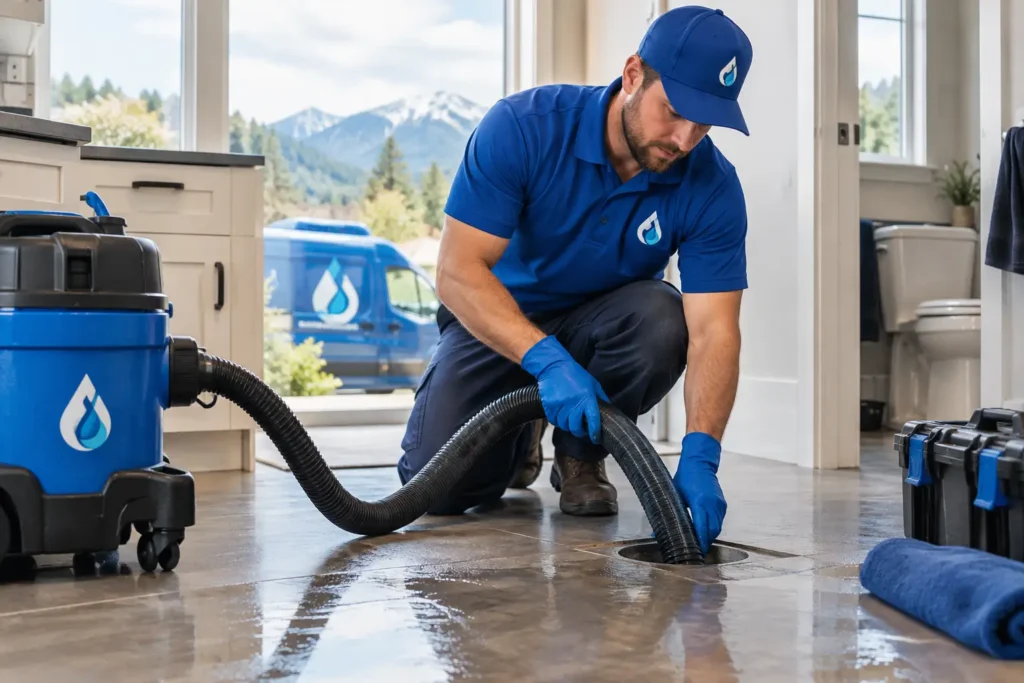
A sewer backup is not a normal drain clog. When wastewater comes up through a basement floor drain, shower, toilet, or laundry drain, the priority is protecting people and stopping more contamination from entering the building. This Chilliwack sewer backup cleanup guide explains what to do in the first hour, what homeowners should not attempt, and when a professional plumbing assessment is needed.
Wastewater can contain bacteria, viruses, and other contaminants. Even a small amount that reaches finished flooring, drywall, stored belongings, or heating equipment can turn into a larger restoration issue if it is not handled promptly. Fast action matters, but safety matters more than speed.
Chilliwack Sewer Backup Cleanup Guide: First Steps
If sewage or dirty wastewater is coming up inside the property, stop using water immediately. Do not flush toilets, run sinks, start the dishwasher, take a shower, or drain a washing machine. Any water sent down the plumbing system may add to the backup and force more wastewater out at the lowest open fixture.
Keep children, pets, tenants, and customers away from the affected area. If the backup has reached electrical outlets, appliances, or the electrical panel area, do not enter standing water. Shut off power only if it can be done safely from a dry location. If there is any doubt, stay clear and contact the appropriate emergency service.
Next, identify whether the issue appears isolated or affects multiple fixtures. A single slow sink may point to a local branch-drain blockage. A toilet, tub, floor drain, and laundry drain backing up together usually points to a blockage farther along in the building drain or sewer line. That distinction helps a plumber arrive prepared for the right type of drain cleaning or sewer line repair.
Take photos and short videos before cleanup begins, provided you can do so without entering contaminated water. Record where the backup appeared, the apparent water level, visible damage, and affected belongings. Clear documentation can be useful when speaking with an insurer, property manager, or restoration company.
Do Not Treat Sewage Like Ordinary Water Damage
Clean water from a supply-line leak can sometimes be dried quickly before significant damage occurs. A sewer backup is different. Wastewater from toilets or a main sewer line should be treated as contaminated, especially when the source is unknown.
Avoid using a household wet vacuum, mop, or regular shop vacuum on sewage. Those tools can spread contamination and may not be adequately sanitized afterward. Do not use fans to blow air across an affected room before contaminated materials have been removed and surfaces properly cleaned. Air movement can spread contaminants to areas that were initially dry.
Homeowners should also avoid pouring chemical drain cleaners into fixtures during a backup. These products rarely clear a main sewer blockage, can damage some piping, and create a chemical hazard for anyone who later needs to work on the line. If the drain must be opened or mechanically cleared, caustic chemicals make the job more dangerous.
Porous materials that absorbed sewage often need to be removed rather than cleaned. This may include carpet, underlay, cardboard storage boxes, insulation, and sections of drywall. Hard, nonporous surfaces can often be professionally cleaned and disinfected, but the correct approach depends on how long the contamination sat, how far it spread, and the material involved.
Find the Plumbing Cause Before Cleanup Is Finished
A cleanup is only successful if the source of the backup is addressed. Otherwise, wastewater can return the next time someone flushes a toilet or uses the washing machine.
Common causes include a blocked building sewer, root intrusion, a damaged or displaced sewer pipe, accumulated debris in older drain lines, or an obstruction in a branch drain. In commercial spaces, frequent heavy use can expose drainage problems that are less noticeable in a typical home. Mobile homes can also have drainage configurations that require careful diagnosis before repair work begins.
A qualified plumber will typically start by determining which fixtures are affected and whether the blockage is inside the building drain or farther out in the sewer connection. Professional drain cleaning equipment may clear an accessible blockage, while a sewer camera inspection can help identify recurring root intrusion, pipe damage, offsets, or buildup that will continue causing problems.
Hydro jetting can be an effective option for some drain and sewer lines because it removes buildup from the pipe walls rather than simply punching a small opening through the blockage. It is not the right answer for every line. Older or damaged piping should be assessed first so the cleaning method matches the condition of the system.
If the sewer line is broken, deteriorated, or repeatedly blocked, cleaning alone may be temporary. At that point, a plumber can explain the repair options based on pipe material, access, the location of the defect, and the condition of the rest of the line.
What to Tell an Emergency Plumber
Clear information helps shorten diagnosis time. When calling for emergency plumbing service in Chilliwack, explain whether wastewater is actively entering the property, which fixtures are backing up, and whether the issue started after laundry, bathing, flushing, or heavy rain.
It is also useful to mention recent warning signs. Gurgling toilets, slow drains in several rooms, water appearing at a basement floor drain, or backups that happen whenever the washing machine drains can all point toward a developing main-line problem. Tell the plumber whether you have tried a plunger, drain cleaner, or any other product. This affects both the repair plan and jobsite safety.
For landlords, strata managers, and commercial property owners, provide access details and identify any tenants, staff, or customers who may have noticed the first symptoms. A quick timeline can help determine whether the issue is limited to one suite or affects a shared drainage line.
Protect the Property After the Flow Stops
Once the plumbing blockage has been cleared or isolated, the affected area still needs careful attention. Remove standing wastewater using proper protective equipment and cleanup methods. Contaminated materials should be bagged and disposed of appropriately. Surfaces need cleaning and disinfection, followed by controlled drying to reduce the chance of lingering odor and moisture damage.
Do not put furniture, boxes, rugs, or finished materials back into the area until it is clean and dry. If sewage reached cabinets, baseboards, wall cavities, or finished flooring, professional restoration assessment may be warranted. Hidden moisture can create future damage even when the visible floor looks clean.
Keep the plumber’s findings, invoices, photos, and any camera inspection results. These records can be useful for insurance documentation and for planning a longer-term repair if the line has an ongoing condition. They also give future property owners or managers a clearer history of the drainage system.
Reducing the Risk of Another Backup
Not every sewer backup can be prevented, but recurring problems usually leave clues. If several drains run slowly, toilets gurgle, or backups occur at the same time of year, schedule an investigation before the next emergency. Waiting until wastewater enters the building generally means more cleanup, more disruption, and a more expensive repair process.
Use toilets only for human waste and toilet paper. Wipes labeled flushable, paper towels, hygiene products, dental floss, and cooking grease do not belong in the drain system. They can catch on rough pipe interiors, roots, or existing buildup and create a blockage well beyond the fixture where they were flushed.
For properties with mature landscaping or older sewer piping, periodic professional assessment may make sense. The right interval depends on the line’s history. A house with no drainage symptoms does not necessarily need routine aggressive cleaning, while a property with repeated root intrusion or prior sewer issues should not ignore early warning signs.
A sewer backup is stressful, especially when it happens after hours or affects a rental unit or business. Focus first on safety, stop water use, document the damage, and get the drainage system properly diagnosed. Armacom Plumbing & Heating can help Chilliwack property owners identify the cause and make practical repair recommendations before a temporary blockage becomes the next emergency.