
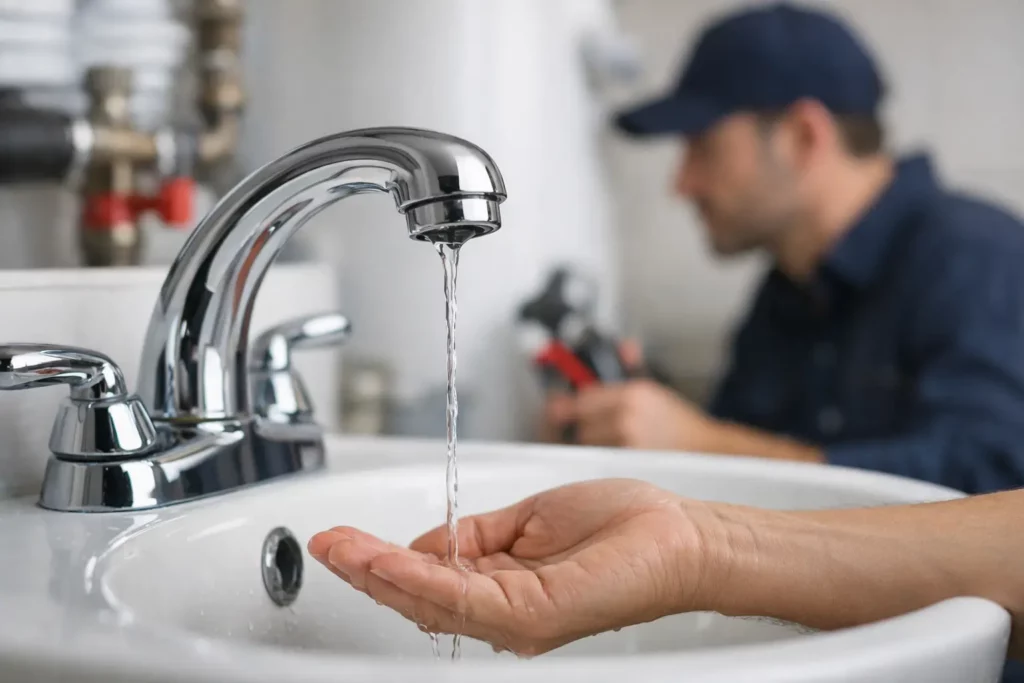
You notice it first in the shower. Then the kitchen faucet takes longer to rinse dishes, and a washing machine cycle seems to drag on. If you are wondering what causes low water pressure, the answer is usually not one single problem. It can be anything from a partially closed valve to a hidden leak, clogged piping, failing pressure equipment, or aging water lines inside the home.
The key is not guessing. Low pressure has a pattern, and that pattern usually tells you where the issue is coming from. If the problem affects one fixture, the cause is often local. If the whole building is affected, you are usually dealing with a supply, valve, leak, or piping issue.
What causes low water pressure in one fixture?
When only one faucet or shower has weak flow, start small. In many homes, the problem is a clogged aerator or showerhead. Mineral buildup, sediment, and debris can restrict water as it passes through the screen. This is common in older homes and in properties where plumbing work was recently done, because debris can get stirred up in the line.
A worn fixture cartridge can also reduce flow. Inside many faucets and shower valves, the cartridge controls water movement and mixing. When it starts to fail, pressure can drop, temperature control may get inconsistent, or the handle may become stiff. In commercial washrooms and rental units, these issues often show up sooner because the fixtures see heavier use.
If the weak pressure only happens on the hot side, the issue may be closer to the water heater. Sediment buildup, a valve restriction, or old galvanized sections of pipe can all choke off hot water flow before it reaches the fixture.
What causes low water pressure throughout the house?
If every fixture feels weak, look at the main plumbing system rather than the fixtures themselves. One of the most common causes is a partially closed shutoff valve. It sounds basic, but it happens often after repairs, renovations, or emergency shutoffs. A main valve that is not fully open can reduce pressure across the entire property.
Another common issue is a pressure regulator problem. Not every property has one, but where it is installed, it plays a major role in controlling incoming water pressure. When a regulator starts failing, pressure may drop suddenly, fluctuate throughout the day, or become uneven between fixtures. Sometimes homeowners describe this as the house having good pressure one day and weak pressure the next.
Leaks are another major cause. A hidden water line leak under the home, behind a wall, or in the yard can rob pressure before water even reaches the fixtures. In some cases the pressure loss is gradual. In others, it shows up overnight and is paired with higher water bills, damp spots, or the sound of running water when nothing is on.
Old piping matters too. In many older homes in Mission, Abbotsford, and Hope, original plumbing systems can narrow internally over time. Galvanized steel is especially known for corrosion buildup inside the pipe. From the outside, the line may look intact. Inside, the water path can be heavily restricted. That leads to low pressure, reduced volume, and a system that never quite performs properly.
If an older plumbing system is showing those signs, a targeted repair may help, but in some homes a larger upgrade is the better long-term fix. That is where whole-house repiping becomes worth discussing.
How low water pressure starts in older homes
Older homes often have more than one issue happening at the same time. A fixture may have buildup, the piping may be narrowed, and the shutoff valve may not be operating cleanly. That is why pressure complaints in older properties need a proper diagnosis instead of a quick assumption.
Poly-B systems can add another layer of concern. While Poly-B itself is better known for reliability issues than pressure loss alone, homes with aging Poly-B plumbing may have related fittings, valves, or partial repairs that affect flow. In those situations, it is smart to look at the condition of the full system, not just the weakest fixture.
In areas with a mix of older rural properties and newer developments, like Agassiz and parts of Cultus Lake, pressure problems can also vary depending on private system setup, building age, and previous repair history. Two neighboring homes can have the same complaint for completely different reasons.
Weather, demand, and seasonal changes
Low pressure is not always caused by a damaged pipe inside the building. Sometimes demand patterns and seasonal changes play a role. During cold snaps, vulnerable lines can partially freeze and restrict flow. During heavy summer demand, some properties notice lower pressure at peak use times, especially if irrigation, outdoor taps, and multiple fixtures are all running together.
That does not mean weak pressure should be accepted as normal. It means diagnosis should account for timing. If pressure is low only in the morning, only when the sprinkler system runs, or only during freezing weather, those details matter. They can point to demand overload, undersized piping, or a line beginning to fail.
What causes low water pressure in commercial buildings?
Commercial plumbing adds a few more variables. In restaurants, retail units, and tenant improvement projects, low pressure can come from undersized branch lines, worn flush valves, pressure balancing issues, failing regulators, or hidden leaks in larger distribution systems. A building may also have pressure concerns tied to occupancy changes. A unit that used to serve light office use may struggle once it becomes a food service space or salon.
Property managers should pay attention when tenants report pressure complaints in more than one unit. That often points to a building-level issue rather than a fixture problem. Fast diagnosis matters because low pressure can affect operations, customer use, cleaning, appliance performance, and leasehold improvements.
How a plumber narrows it down
A good pressure diagnosis starts with a few simple questions. Is the issue on hot water, cold water, or both? Is it one fixture or all of them? Did it start suddenly or gradually? Was any recent plumbing work done? Are there signs of leakage or unusual water bills?
From there, testing usually includes checking fixture flow, inspecting shutoff valves, reading pressure levels, evaluating regulators where present, and looking for signs of restriction or leakage. In some cases, the solution is quick. Cleaning a fixture aerator or replacing a bad cartridge can restore normal performance right away. In other cases, the pressure issue is a symptom of a bigger problem that needs repair before damage or higher utility costs follow.
This is also where experience matters. Low pressure and low volume get confused all the time, but they are not always the same issue. A house can technically have decent pressure and still feel weak because the piping is restricted and cannot deliver enough volume when more than one fixture runs.
When low pressure is a sign to stop waiting
If pressure dropped suddenly, if water is discolored, if you hear water moving when fixtures are off, or if the problem affects the whole property, it is time to get it checked. The same goes for any pressure issue paired with leaking, damp drywall, soft flooring, or unexplained utility increases.
Waiting can turn a repairable issue into a more expensive one. A small leak can damage framing and finishes. A failing regulator can stress fixtures and appliances. Corroded piping does not improve on its own.
For homeowners and businesses that need fast, reliable plumbing service, the right next step is getting a proper diagnosis instead of replacing random parts. Armacom Plumbing & Heating handles residential and commercial plumbing issues across the eastern Fraser Valley, including leak repair, fixture problems, repiping, and pressure-related system repairs. More information is available at https://armacom.ca.
If your water pressure has been getting worse, pay attention to the pattern before it becomes an emergency. The fix might be simple, but when it is not, catching the real cause early usually means a cleaner repair, lower cost, and better long-term results.