
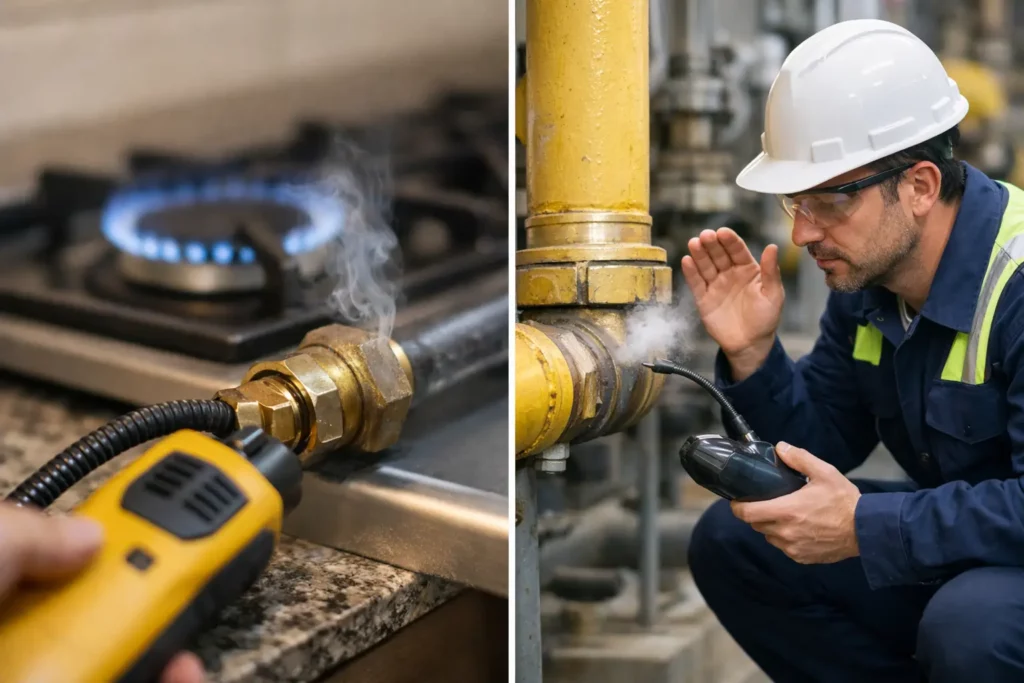
A gas leak usually does not announce itself with one obvious sign. More often, it shows up as a faint sulfur smell near an appliance, a hissing sound behind a wall, or a heater that suddenly stops running right. If you are looking up how to spot gas leaks, the first thing to know is simple – trust anything that feels off, and treat it seriously.
In homes and commercial buildings, gas leaks can come from appliance connectors, shutoff valves, worn fittings, aging gas lines, or work that was never installed properly in the first place. In places like Mission, Abbotsford, and Hope, we also see issues surface when colder weather pushes heating systems harder and exposes weak points that were not obvious during milder months.
How to spot gas leaks before they get worse
The most common sign people notice is smell. Utility gas is treated with an additive that gives it a rotten egg or sulfur-like odor. If that smell is stronger near a furnace, water heater, stove, boiler, or gas fireplace, do not brush it off as normal startup odor.
Sound matters too. A small leak can make a soft hissing or whistling noise, especially around a flex line, union, valve, or regulator. In a quiet mechanical room, that sound is sometimes easier to notice than the smell.
You may also see signs around the pipe itself. Corrosion on exposed gas piping, dust blowing strangely near a fitting, or bubbling in standing water outside can all point to escaping gas. On exterior lines, dead or discolored vegetation in one area can be a clue, especially if the rest of the lawn or landscaping looks normal.
Then there is appliance behavior. A gas appliance that struggles to ignite, cycles irregularly, or burns with an unusual flame can signal a supply issue. That does not always mean a leak – it could be a failing component or venting issue – but it deserves attention. A healthy gas flame is typically blue. If you are seeing more yellow or orange than usual, or soot where there should not be soot, have it checked.
Physical symptoms can be part of the warning
People sometimes notice the building before they notice the leak. Headaches, dizziness, nausea, fatigue, or irritation that gets better after leaving the area can be a warning sign. Those symptoms are not specific to gas leaks, so you should not diagnose the problem based on symptoms alone. But if people in the building feel off and there is also an unusual odor or appliance issue, act on it.
This is especially important in rental properties, mixed-use buildings, restaurants, and small commercial spaces where occupants may assume someone else already reported the issue. If multiple people mention the same smell or discomfort, take it seriously right away.
Where gas leaks commonly happen
Leaks tend to show up at connection points first. That includes shutoff valves behind stoves and dryers, flex connectors, threaded joints, appliance regulators, and fittings near furnaces and water heaters. Older homes in Agassiz or Mission may have sections of gas piping that have seen decades of service, and age alone can be enough to create trouble at a joint or valve.
In commercial settings, the risk shifts a bit. More appliances, longer runs, tenant improvements, and higher use all create more possible failure points. A restaurant kitchen, for example, can have several connectors and shutoffs in one tight area. If anything gets bumped, loosened, or worn down, the leak may start small and go unnoticed until the odor builds.
Outdoor gas lines can also leak, particularly where corrosion, ground movement, or poor protection has affected the piping. In areas like Cultus Lake and Hope, where weather exposure and seasonal property use can vary, it is worth paying attention to any exterior gas appliance or buried service that has not been checked in some time.
What not to do if you suspect a leak
If you think there may be a gas leak, do not start flipping switches to investigate. Do not turn lights on or off, do not plug anything in, and do not use a lighter or match to “test” anything. Avoid using garage door openers or anything else that could create a spark.
Do not assume opening a window solves the problem. Ventilation can help reduce gas concentration in some cases, but it does not fix the source. If the odor is noticeable, the safer move is usually to get people out and have the system checked properly.
And do not rely on DIY soap testing unless you already know exactly what you are checking and it is safe to do so. Soap solution can help identify a known suspect joint, but it is not a substitute for proper gas leak detection, pressure testing, and repair by a licensed professional.
What to do right away
If the smell is strong, evacuate the building. Get everyone out, keep them clear of the area, and call your gas utility and a qualified gas line plumber from a safe location. If there is any immediate danger or anyone is unwell, call emergency services as well.
If the smell is faint and limited to one area, it still needs prompt attention. Shut off the appliance only if you can do so safely and without creating risk. Then have the line, valve, and appliance checked by a licensed technician. Gas systems are not a wait-and-see issue.
For homeowners, this is also a good time to think beyond the immediate leak. If one connector or fitting has failed, the rest of the system may need a closer look. The same goes for older mechanical rooms where other plumbing work may be due, such as water heater replacement or boiler service.
Why gas leak signs are sometimes missed
Not every leak is dramatic. Small leaks can be intermittent, affected by appliance cycling, temperature changes, or ventilation. A furnace room might smell normal one day and strong the next. A commercial unit may only show symptoms when several appliances are running at once.
There is also nose fatigue. If you have been in the same space for a while, you may stop noticing the odor even though it is still there. That is one reason reports from visitors, tenants, or staff matter. Fresh noses often catch what regular occupants miss.
Some buildings have overlapping problems too. A sewer odor, a failed vent, or a dirty mechanical room can confuse the issue. That is where experienced diagnosis matters. You want someone who can separate a gas line problem from an appliance problem or another building issue without guessing.
Prevention is mostly about inspections and proper installation
The best way to reduce gas leak risk is to have gas appliances and exposed gas piping inspected when there are signs of wear, after renovations, or when equipment is replaced. New appliances should be connected and tested correctly. Older shutoff valves and connectors should not be assumed safe just because they have not failed yet.
This matters in residential homes, but it matters just as much for property managers and business owners. A vacant unit that has sat through temperature swings, a tenant improvement that added appliances, or a mechanical room with aging equipment all deserve a closer look before they become emergency calls.
If you are already planning related work, it makes sense to address the whole system. A proper gas line installation should be done with the same care as other key plumbing upgrades, whether that is a new tankless setup, boiler repair, or broader mechanical improvements. For businesses that need ongoing support, regular plumbing maintenance can also help catch issues before they interrupt operations.
When to call a professional
Call as soon as you suspect a leak. That is the short answer. Gas issues are one of the few building problems where hesitation can create real risk fast.
A qualified plumber or gas fitter can test the system, locate the leak, confirm whether the issue is in the piping or the appliance, and make the repair safely. That is not just about code compliance. It is about making sure the fix actually holds and the rest of the system is not left as a hidden problem.
For homeowners and businesses in the eastern Fraser Valley, the right response is always the same – take the sign seriously, get the area assessed properly, and do not gamble on a temporary workaround. If you need experienced help with gas lines or related plumbing work, Armacom Plumbing & Heating handles residential and commercial service with a practical, safety-first approach.
A gas leak does not need to be obvious to be dangerous. If something smells wrong, sounds wrong, or your equipment starts acting differently, trust that instinct and get it checked before a small issue becomes a much bigger one.