
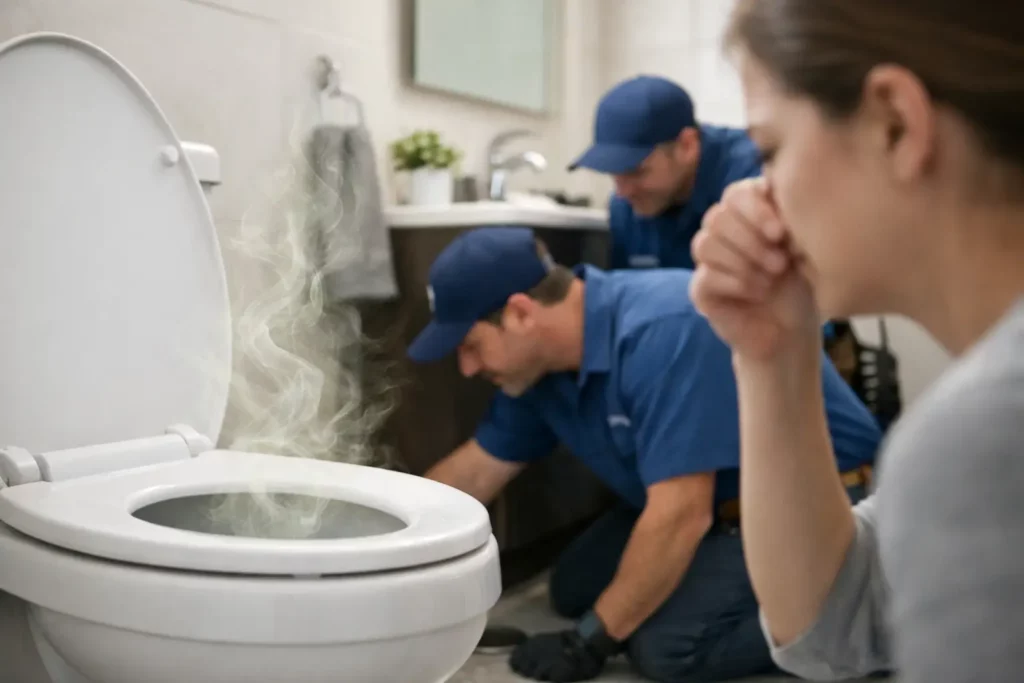
A sewer smell in bathroom areas is not something to cover up with a candle or air freshener. That odor usually means sewer gas is entering the room through a drain, toilet connection, plumbing vent, or damaged pipe. In many Chilliwack homes, the cause is minor and quick to correct. In others, the smell is an early warning that a drain or sewer line needs professional attention.
Sewer gas can contain unpleasant and potentially irritating gases, so treat a persistent odor as a plumbing problem, not just a cleaning issue. The useful clue is when and where you smell it. Does it appear after a shower? Only when the bathroom has not been used for a while? Is it strongest near the toilet, vanity, tub, or floor drain? Those details narrow down the diagnosis quickly.
Common Causes of a Sewer Smell in Bathroom Spaces
A dry P-trap
Every sink, shower, tub, and floor drain should have a P-trap. It is the curved section of pipe below the fixture that holds water. That standing water creates a seal between the room and the sewer system.
When a guest bathroom, basement bathroom, or floor drain goes unused, the water in the trap can evaporate. The result is often a sudden sewer odor with no visible leak. This is particularly common in suites, vacant units, and commercial washrooms that are not used every day.
Pour a few cups of water slowly into each drain, including the shower, tub, vanity, and any floor drain. If the smell disappears and stays gone, a dry trap was likely the cause. For seldom-used drains, adding a small amount of mineral oil after filling the trap can slow evaporation. If the odor returns quickly, the trap may have a leak or another issue affecting it.
A toilet seal that has failed
The wax ring beneath a toilet seals the toilet base to the drain opening in the floor. If that seal fails, sewer gas can escape around the toilet even when no water is leaking onto the floor.
A toilet that rocks, shifts when someone sits down, or has recently been removed is more likely to have a compromised seal. You may also notice an odor that is strongest at the base of the toilet, especially after flushing. In some cases, there may be staining or moisture around the base, but not always.
Do not rely on caulking around a loose toilet to solve the problem. The toilet needs to be removed, the flange checked, and the seal replaced correctly. This is a straightforward repair when caught early, but leaving it can damage flooring or the subfloor below.
Buildup inside a sink or shower drain
Not every drain odor is sewer gas. Hair, soap residue, toothpaste, skin oils, and other organic material can collect along the inside walls of a drain. As that material breaks down, it can produce a sour or sewage-like smell.
This odor is usually most noticeable right at the drain opening and may get worse after running warm water. Cleaning the stopper, overflow opening, and accessible drain surfaces can help. Avoid repeatedly pouring harsh chemical drain cleaners into the pipe. They often do little for heavy buildup and can be rough on older plumbing.
If water drains slowly along with the odor, professional drain cleaning is the better next step. A proper cleaning removes the buildup causing the restriction instead of simply pushing a small opening through it.
A blocked or poorly functioning plumbing vent
Plumbing vents run through the roof and allow air to move through the drainage system. They help traps maintain their water seal and allow fixtures to drain properly. When a vent is blocked by debris, a nest, frost, or another obstruction, you may hear gurgling from a toilet or sink. You may also notice trap water being pulled down after a fixture drains.
A bathroom with recurring odor, gurgling, and slow drainage deserves a closer inspection. Vent problems can look like a basic clogged drain at first. The difference is that clearing one fixture may not solve the underlying air-pressure problem in the system.
Roof work and vent diagnosis have safety considerations. A qualified plumber can assess the drainage and vent system without guessing at the cause.
A drain or sewer line problem
When more than one fixture is slow, gurgling, or producing odor, the issue may be farther down the line. A partial blockage in a branch drain or main sewer can hold waste in the pipe, restrict flow, and allow odor to build up.
Watch for patterns: a toilet bubbles when the tub drains, the shower backs up after flushing, or a basement floor drain smells stronger after laundry. These are signs that the plumbing system is not moving wastewater and air as it should.
Older Chilliwack properties, homes with mature landscaping, and buildings with aging drain piping can develop recurring line problems over time. The right repair depends on what is found. Sometimes thorough drain cleaning restores normal flow. If the issue keeps coming back, a camera inspection can identify roots, a broken section, a sag in the line, or heavy scale buildup before any major work is recommended.
What You Can Check Before Calling a Plumber
Start with the simple checks that do not risk making the problem worse. Run water for 30 to 60 seconds in every bathroom fixture, including drains that are easy to forget. Flush the toilet and look for movement at its base. Check whether the odor is localized to one drain or present throughout the bathroom.
Then pay attention to drainage. A single slow sink may be a local blockage. Multiple slow fixtures, gurgling sounds, or water appearing in a tub or shower after flushing point to a larger drainage issue. Do not keep flushing or running water if wastewater is backing up. That can turn a manageable drain problem into an emergency cleanup.
For a property manager, note the unit number, affected fixtures, time the odor is strongest, and whether adjacent units have similar symptoms. That information helps determine whether the problem is within one suite or a shared building drain.
When a Bathroom Sewer Odor Needs Fast Service
Call for plumbing help promptly if the odor is persistent, becomes stronger after flushing, or comes with slow drains and gurgling. A visible leak around a toilet, sewage backup, or water coming up through a floor drain needs immediate attention.
This is especially true in restaurants, offices, multi-unit buildings, and rental properties. An odor complaint in a commercial washroom can affect staff and customers, but it can also signal a drain issue that may worsen during busy hours. Early diagnosis usually means less disruption and lower repair costs.
A professional visit should involve more than deodorizing the room. The plumber should identify the source, check the relevant trap and toilet seal, assess drainage behavior, and recommend further testing only when the symptoms support it. If a main line issue is suspected, drain cleaning or camera inspection can provide a clear picture of what is happening underground.
Preventing Sewer Odors From Returning
Use every bathroom fixture regularly, especially in guest baths, basement suites, and vacant spaces. Monthly water flow keeps P-traps full and gives you a chance to spot slow drains before they become blockages.
Keep hair and debris out of shower and tub drains, and have recurring slow drains addressed rather than treated repeatedly with chemical products. If a toilet starts rocking, repair it early. Small movement can damage the seal beneath it long before a noticeable leak appears.
For homeowners in Chilliwack and nearby Fraser Valley communities, sewer odors are often solved with a careful inspection and the right repair, not a major project. Armacom Plumbing & Heating can help trace the source with precision and care so you can get back to using the bathroom without wondering what that smell means. If the odor keeps returning, trust the pattern – plumbing problems rarely improve by being ignored.