
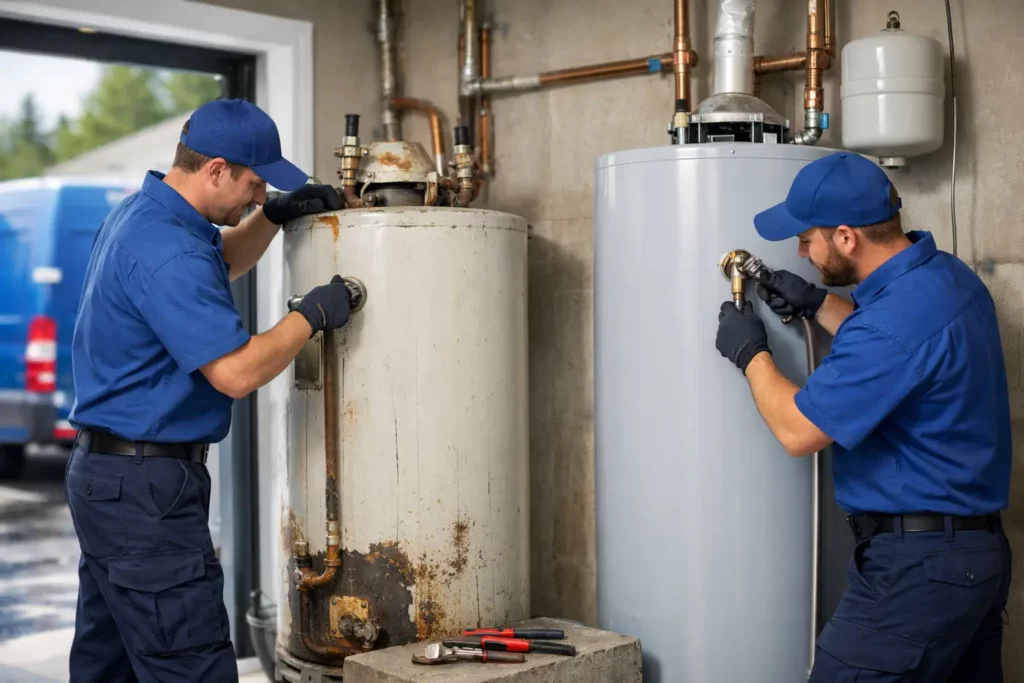
A water heater replacement example is often more useful than a generic checklist because it shows what actually changes from one home to the next. In Chilliwack, a straightforward tank swap can become a larger job when the old unit has venting concerns, deteriorated shutoff valves, an undersized supply line, or water damage around the tank. The right replacement starts with an on-site assessment, not simply matching the number printed on the old tank.
A Chilliwack Water Heater Replacement Example
Consider a typical family home with a 50-gallon natural gas water heater in a utility room. The unit is 14 years old, takes longer to recover after morning showers, and has begun leaving a small amount of rusty water near its base. The homeowner may be tempted to wait until it fails completely. That can mean a cold-water emergency, a rushed equipment decision, and the possibility of a tank leak damaging flooring or stored belongings.
At the visit, the first job is to confirm whether the moisture is truly coming from the tank. Water can also come from a leaking pipe fitting, the temperature and pressure relief valve discharge line, or condensation. If the tank itself is corroded or leaking from the bottom seam, repair is not a dependable option. Replacement is the practical path.
The plumber then checks more than the tank capacity. A proper assessment includes the existing gas piping, shutoff valve, vent connection, combustion air requirements, water shutoff valves, drain arrangement, and the space needed to safely service the new unit. These details determine whether the job is a simple like-for-like replacement or whether corrections are needed for safe, long-lasting results.
In this example, the old heater is still delivering hot water, but the burner compartment shows signs of age and the tank has visible corrosion near the bottom. The existing hot- and cold-water isolation valves are stiff and unreliable. Replacing the heater without addressing those valves would save a little time on installation day but could create an avoidable problem when the next plumbing repair is needed.
What the Replacement Scope Usually Includes
Once the homeowner chooses a properly sized replacement, the old water heater is isolated, drained, disconnected, and removed. Water heater removal needs to be handled carefully. A tank that appears empty can still be heavy, and old fittings can fail when moved.
The new tank is set in place and connected with the correct water, gas, and venting components for that installation. The plumber installs or replaces the required safety components, fills the tank, checks all water connections for leaks, and tests gas connections and burner operation. The temperature setting is reviewed before the job is complete.
In the Chilliwack example, the scope also includes replacing the worn water isolation valves. That is a sensible addition because these valves are directly accessible during the replacement. It prevents a future service visit just to deal with a valve that should have been renewed while the system was open.
A good installation is not judged only by whether hot water returns that afternoon. The unit should be secure, accessible for future maintenance, correctly vented, and free of water or gas leaks. The work area should also be left clean, with the old tank removed from the property.
Sizing Is About Household Demand, Not Just Tank Size
The old 50-gallon tank is not automatically the right choice for every replacement. A household of two adults using one shower may be well served by a smaller unit, while a home with several bathrooms, teenagers, or frequent back-to-back showers may need the same capacity or more. Recovery rate matters too, especially for gas-fired units.
A plumber will ask practical questions: How many people live in the home? Are showers commonly used at the same time? Is there a large soaker tub? Does the building have a commercial kitchen, staff washrooms, or other high-demand fixtures? For property managers, the answer may also depend on occupancy patterns rather than the number of suites alone.
Oversizing has a cost. It can mean paying more for equipment and keeping more water heated than the building needs. Undersizing is equally frustrating because the first person gets a comfortable shower while the next person runs out of hot water. The right choice is based on demand and the limitations of the existing installation.
When a Tankless Unit Changes the Example
Some homeowners ask whether a tankless water heater makes more sense during replacement. It can, but it is not an automatic upgrade for every Chilliwack property. A tankless unit provides hot water on demand and does not store a large volume of heated water. However, it must be sized around the required flow rate and incoming water temperature, and it may require changes to gas piping, venting, condensate drainage, or water piping.
For a family that regularly runs multiple showers, a dishwasher, and laundry at the same time, accurate sizing is critical. A tankless unit that is too small can deliver inconsistent temperatures when demand rises. In a home where the existing gas line cannot support the new appliance load, the added gas fitting work changes both the scope and budget.
A conventional tank may be the better choice when the existing layout supports it, the household’s demand is predictable, and the owner wants the lowest upfront replacement cost. A tankless installation can be a strong fit where space is limited or where the long-term operating pattern supports the investment. The decision should be based on the building, not on a one-size-fits-all recommendation.
Why a Replacement Can Cost More Than Expected
Homeowners often expect a water heater replacement to be a fixed-price appliance swap. Sometimes it is. But the condition of the existing installation can reveal work that should not be ignored.
Common examples include a seized water shutoff valve, corroded supply connections, a vent that does not meet current installation requirements, inadequate access around the unit, or an aging gas valve that cannot be safely reused. In older Fraser Valley homes, plumbing changes made by previous owners can also complicate an otherwise routine replacement.
The best approach is clear communication before the work begins. A plumber should explain what is included, what needs correction, and why it affects safety, reliability, or serviceability. That gives the homeowner a chance to make an informed decision instead of being surprised after the old tank has already been removed.
Signs You Should Plan Replacement Before Failure
Most tank-style water heaters do not fail on a convenient schedule. Planning ahead is worthwhile when the unit is approaching the end of its expected service life, shows corrosion, produces rusty hot water, makes popping or rumbling noises, or has a recurring leak around the tank itself.
Loss of hot water does not always mean the tank needs replacement. The issue may be a failed component, a gas supply concern, or another repairable fault. A proper diagnosis separates a repair that makes sense from a tank that has reached the end of its useful life. If water is actively leaking from the tank, shut off the water supply if it is safe to do so and arrange service promptly.
For strata managers and commercial property owners, planned replacement is especially valuable. A failed water heater can affect tenants, staff, customers, or multiple occupied spaces. Recording unit ages and arranging inspections before peak failure periods can reduce emergency calls and protect the property from avoidable water damage.
The Value of a Complete On-Site Assessment
The real lesson from this water heater replacement example is that the appliance is only one part of the job. The pipes, valves, gas connection, venting, drainage, household demand, and access all matter. Skipping that review can lead to a replacement that works initially but causes trouble later.
Armacom Plumbing & Heating approaches water heater replacement with the same precision and care used for plumbing repairs and gas-related work: inspect the existing conditions, explain the available options, and complete the installation for reliable daily use. Whether the project is in Chilliwack, Abbotsford, or another Fraser Valley community, a planned replacement gives you more control over the equipment, timing, and final result.
If your water heater is aging but still operating, that is often the best time to assess it. You can compare a like-for-like tank replacement with other workable options and make the decision before a small leak turns into an urgent plumbing problem.