
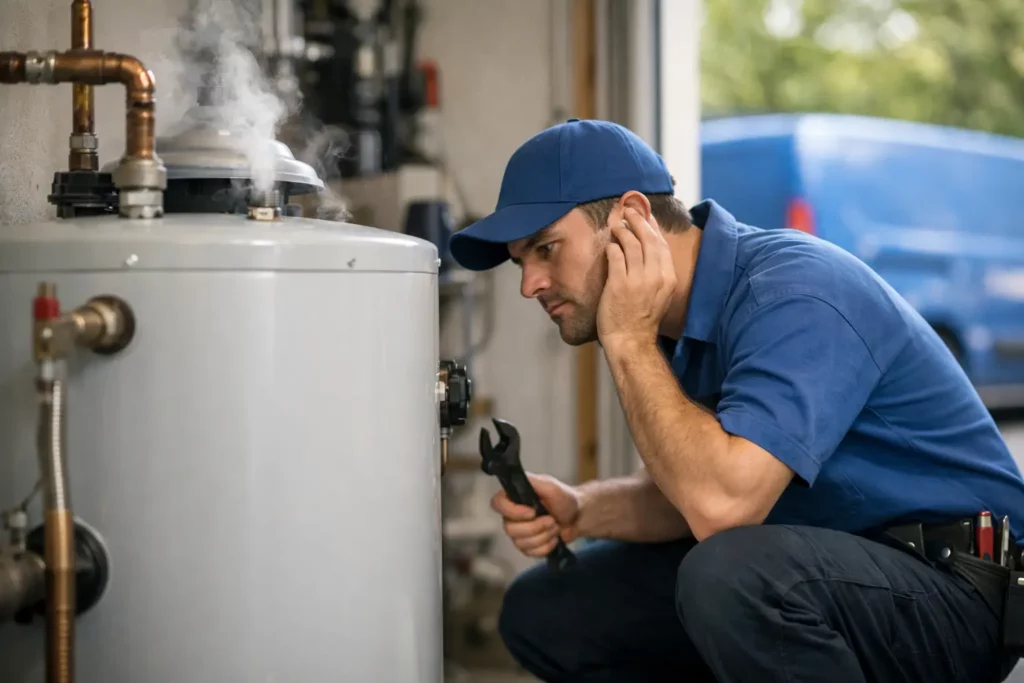
A water heater is usually one of the quietest appliances in a Chilliwack home. When it starts popping, rumbling, hissing, or banging, it is reasonable to ask, why is water heater noisy and whether the problem can wait. Some sounds are harmless operating noise, but others point to sediment buildup, a failing component, excessive pressure, or a leak that needs prompt attention.
The sound itself matters. A Red Seal plumber does not diagnose a noisy water heater from one detail alone. We look at when the noise happens, whether hot water performance has changed, the unit’s age, the fuel type, and whether there are signs of moisture or gas odor around the tank.
Why a water heater gets noisy
Most conventional tank-style water heaters in the Fraser Valley make a low burner sound or a brief rush of water during normal operation. New noises, louder sounds, or noises paired with inconsistent hot water deserve a closer look.
Hard mineral deposits and sediment are a common cause in older tanks. As the heater warms the water, sediment at the bottom can trap small pockets of water. Those pockets boil and break free, creating popping, crackling, or a dull rumble. The sound can be surprisingly loud even when the tank still delivers hot water.
A noisy unit is not automatically an emergency, but it should not be ignored for months. Sediment forces the heater to work harder, reduces usable hot-water capacity, and can accelerate wear on the tank. In many cases, the practical decision is between maintenance and water heater replacement, depending on the tank’s condition and age.
What common water heater noises can mean
Popping or rumbling from the bottom of the tank
Popping is most often sediment heating at the bottom of a gas or electric storage tank. You may notice it during a long shower, after several people use hot water, or while the tank recovers after being depleted.
A professional tank flush may help if the heater is otherwise in good condition. However, flushing is not a cure-all. On an older tank with heavy buildup, disturbing sediment can expose a weak drain valve or reveal existing corrosion. A plumber should assess whether maintenance is worthwhile or whether replacement is the more reliable, long-lasting option.
Rumbling can also occur when a tank has been operating with significant sediment for some time. If it is accompanied by reduced hot water, rusty water, or moisture around the base, arrange a service visit rather than attempting a forceful flush yourself.
Hissing or sizzling
A brief hissing sound may simply be water moving through a pipe or a burner operating on a gas water heater. Continuous hissing is more concerning, especially if there is water on top of the tank, beneath the unit, or around nearby piping.
Water dripping onto a hot burner area can sizzle. A small leak from a connection, the temperature-and-pressure relief valve, or the tank itself may be responsible. The source needs to be identified with precision and care. A leaking fitting can often be repaired, while a leak from the tank body generally means the water heater has reached the end of its service life.
If you smell gas near a gas water heater, do not look for the source or relight the pilot. Leave the area, avoid switches and open flames, and contact your gas utility’s emergency line or emergency services as appropriate. Once the area is safe, a qualified gas fitter can inspect the appliance and its connections.
Banging, knocking, or thumping in the pipes
A sharp bang when a faucet, dishwasher, or washing machine stops running may not be the water heater at all. It is often water hammer – a pressure shock caused when fast-moving water suddenly stops. Loose pipes can amplify that impact behind walls or ceilings.
If the sound occurs only when hot water is used, a plumber can determine whether the issue is related to the water heater connections, pressure conditions, pipe support, or a fixture valve. This is a plumbing repair issue worth addressing early, particularly in commercial buildings or multi-unit properties where repeated pressure shocks can strain fittings over time.
High-pitched whistling or screeching
Whistling can happen when water is forced through a partially restricted valve or connection. It may occur at the water heater’s shutoff valve, a mixing valve, or another part of the hot-water piping. Because several components can produce a similar sound, guessing at the cause often leads to unnecessary part replacements.
A service call is the better route if whistling is new, persistent, or comes with fluctuating water temperature. A technician can isolate the sound and inspect the system without creating a larger leak.
Ticking sounds after hot water use
Light ticking is often caused by hot pipes expanding and cooling against framing or pipe supports. It is usually more noticeable at night, when the house is quiet. If there is no leak, pressure issue, or loss of hot water, occasional ticking is commonly not urgent.
Still, ticking that becomes loud or turns into banging should be inspected. Pipe movement can wear against surrounding materials or indicate that supports are loose.
Safe checks homeowners can make
Before calling for service, take a few observations that can speed up diagnosis. Note whether the sound happens during heating, while a faucet is running, or after hot water use stops. Check the floor around the tank for moisture and look for visible drips at pipe connections.
Also pay attention to hot-water performance. If showers run cold sooner than usual, water looks rusty, or the temperature varies unexpectedly, mention that when booking service. These details help separate a sediment issue from a failing tank, a pipe problem, or a control issue.
Do not remove access panels, adjust gas controls beyond normal operating settings, cap a relief valve, or repeatedly reset a safety control. Those actions can hide a problem or create a safety risk. If the tank is actively leaking, turn off the water supply to the heater if you can do so safely and arrange fast, reliable plumbing service.
When a noisy water heater needs urgent service
Call a plumber promptly when noise comes with water pooling around the tank, visible corrosion, brown or rusty hot water, repeated temperature problems, or a relief valve that is discharging water. Those symptoms can indicate that the tank or a safety component needs attention.
For Chilliwack homeowners, it is also wise to act before a small leak becomes water damage in a utility room, garage, crawl space, or finished basement. Water heaters often fail at inconvenient times, and an aging tank rarely improves on its own.
If the unit is nearing the end of its expected service life, replacement may be more cost-effective than repeated repairs. Tankless water heater installation can be worth considering for some households, particularly where space is limited or hot-water demand is high. It depends on the home’s gas supply, venting requirements, usage habits, and budget. A conventional tank remains a sensible choice for many homes and commercial properties.
A practical next step for a noisy tank
A noisy water heater does not always need to be replaced, but the sound is useful information. Record when it occurs, check for leaks without taking the unit apart, and have the system assessed if the noise is persistent or changing. Armacom Plumbing & Heating can help Chilliwack property owners identify whether a repair, maintenance visit, or replacement will provide the safest and most dependable result.
Addressing the noise early gives you more control over the decision, rather than waiting for a cold shower or a leaking tank to make it for you.