
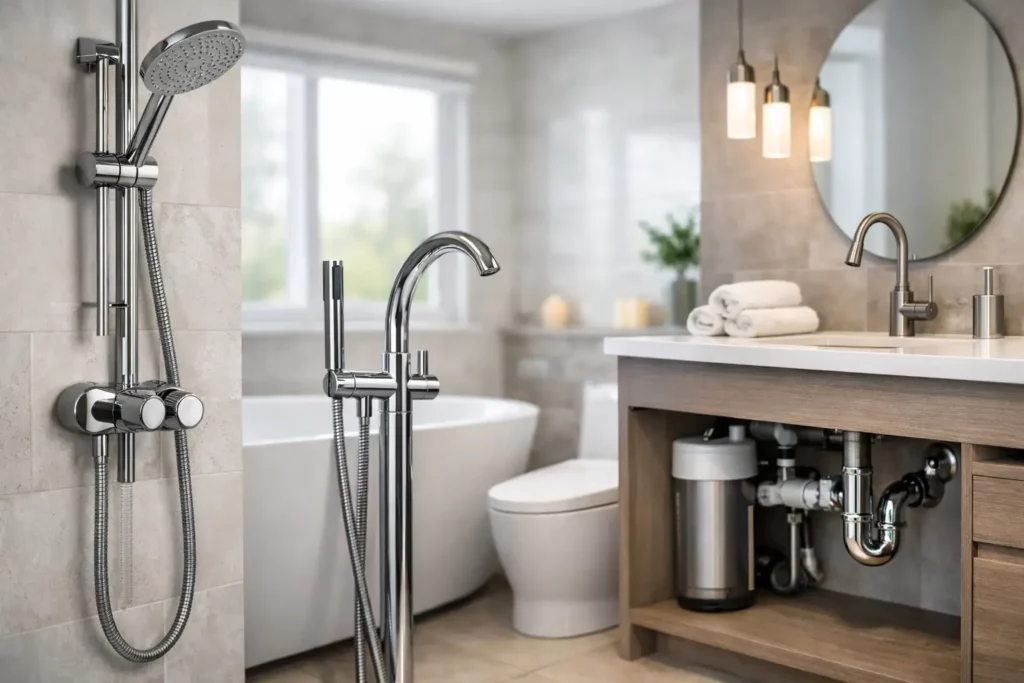
A bathroom remodel can look great on the surface and still cause problems behind the walls. That usually happens when the finishes get all the attention and the plumbing gets treated as an afterthought. The best bathroom plumbing upgrades improve how the room works every day – better water pressure, fewer leaks, easier cleaning, lower water waste, and less risk of expensive repairs later.
If you’re planning a renovation, updating an older home, or managing a rental property, the right plumbing upgrades are the ones that solve real problems and hold up over time. Some are visible and add comfort right away. Others stay out of sight but do the heavy lifting for reliability and long-term value.
What makes the best bathroom plumbing upgrades worth it
A good upgrade should do at least one of three things. It should improve performance, reduce maintenance, or prevent future damage. The strongest options usually do all three.
That matters because bathrooms put a lot of stress on a plumbing system. Fixtures get used multiple times a day, drains collect hair and soap buildup, seals wear out, and older shutoff valves or supply lines can fail without much warning. Spending money in the right places now often costs less than dealing with leaks, water damage, or poor fixture performance later.
It also depends on the age of the home. In newer bathrooms, the best upgrades may be comfort and efficiency focused. In older homes, replacing worn valves, drains, or supply lines may be the smarter first move before any finish work begins.
1. Replace old shutoff valves and supply lines
This is not the flashy part of a renovation, but it is one of the most practical. Old shutoff valves often seize up from age and mineral buildup. That becomes a problem the moment a toilet starts running, a faucet needs repair, or a supply line begins to leak.
Upgrading to reliable shutoff valves and braided supply lines gives you better control and lowers the risk of sudden failure. It also makes future maintenance faster and cleaner. For homeowners, that means less panic during a leak. For property managers, it means simpler service calls and less downtime between tenants.
If the bathroom is already being opened up, this is the right time to do it. Waiting until after new tile, paint, and trim are complete makes even a small plumbing issue more frustrating than it needs to be.
2. Install a comfort-height, high-efficiency toilet
A toilet upgrade is one of the fastest ways to improve daily use. Comfort-height models are easier on the knees and back, especially for older adults or anyone planning for long-term accessibility. High-efficiency models use less water without sacrificing flush performance, which matters in busy households.
Not every water-saving toilet performs the same, so this is one area where cheaper is not always better. A poor flush leads to repeat clogs, double flushing, and constant frustration. The better choice is a well-built unit that balances water use, bowl design, and trapway performance.
If your current toilet rocks, sweats, runs, or clogs often, replacement usually makes more sense than repeated repairs. In many bathrooms, this is one of the most cost-effective upgrades available.
3. Upgrade the shower valve, not just the trim
A lot of bathroom remodels focus on new showerheads and fresh trim kits. Those improve appearance, but the real performance comes from the valve behind the wall.
A modern pressure-balancing or thermostatic shower valve gives you steadier temperature control and a better overall shower experience. It also adds safety by reducing sudden temperature swings when someone runs a sink, flushes a toilet, or starts the washing machine elsewhere in the house.
This upgrade matters even more in older homes where the existing valve may be worn, outdated, or difficult to service. Replacing the trim without replacing the valve can leave you with a nice-looking shower that still has poor temperature control. If the wall is open, it makes sense to handle both at the same time.
4. Add a quality shower drain and improve drainage slope
Drainage problems often start small. Water lingers in the shower, slow draining becomes normal, and then clogs show up more often. In many cases, the issue is not just hair buildup. It can be the drain design, the piping layout, or the slope of the shower base.
A better shower drain assembly can improve flow and make cleaning easier. If you are converting to a walk-in shower, this is also the time to make sure the drain placement and slope are done correctly. A sleek new shower is not much of an upgrade if water pools in the corners or drainage is always sluggish.
This is one of those details that separates a bathroom that looks finished from one that actually performs well.
5. Choose a faucet upgrade that matches your plumbing system
New faucets are often selected for style first, and that is understandable. But the best faucet upgrade is one that works well with your existing water pressure, sink setup, and daily use.
Single-handle faucets are simple and easy to clean. Widespread faucets can look more upscale in a primary bath. Touchless or low-contact options can be useful in commercial spaces or busy family bathrooms where hygiene matters. The right choice depends on who uses the bathroom and how often.
It is also worth paying attention to internal cartridge quality and serviceability. A low-cost faucet may look good out of the box but wear out faster, drip sooner, and become harder to repair. A better-built faucet usually costs more upfront and saves money over time.
6. Improve ventilation where plumbing moisture causes damage
Ventilation is not always grouped with plumbing upgrades, but it should be part of the conversation. Bathrooms deal with constant moisture, and poor ventilation shortens the life of caulking, fixtures, cabinetry, and paint. It also makes hidden plumbing leaks harder to spot because the whole room feels damp all the time.
If you are already renovating, improving the exhaust fan and checking for moisture-prone areas around the tub, shower, and vanity is a practical move. This does not replace good plumbing, but it protects the bathroom from the side effects of daily water use.
For homes with recurring mildew or peeling finishes, better ventilation may be just as valuable as a fixture replacement.
7. Upgrade exposed drain assemblies under the sink
Bathroom vanities often get updated for appearance, but the drain assembly underneath is left untouched. That can be a mistake, especially in older homes.
A new pop-up drain, trap assembly, and properly aligned waste arm can reduce leaks and improve drainage. If the old setup has corrosion, makeshift repairs, or signs of previous drips, replacing it during a vanity or faucet upgrade is the cleaner option.
This is especially important in powder rooms and guest baths where minor leaks can go unnoticed for a long time. Cabinet bottoms often show the damage long after the actual issue started.
The best bathroom plumbing upgrades behind the walls
Some of the most valuable upgrades are the ones no one sees once the job is done. If the bathroom is down to the studs, it is smart to think beyond the fixture list.
Replace aging drain and water lines when needed
If the home has old galvanized piping, corroded drain lines, or signs of repeated plumbing trouble, cosmetic upgrades should not come first. Replacing worn piping during a remodel is far more efficient than opening finished walls later.
This is not necessary in every project. If the piping is in good condition, there may be no reason to replace it. But when there are clear signs of age, leaks, poor flow, or inconsistent water quality, it is usually money well spent.
Add accessible cleanouts where possible
A bathroom drain clog is easier to manage when the system includes properly placed cleanout access. This is especially useful in multi-unit properties, older homes, or bathrooms with a history of slow drainage.
It is a simple upgrade with practical value. You may never think about it again until a drain problem shows up, and then you will be glad it was done.
When to prioritize function over finish
Not every bathroom needs the same upgrade path. If you are building a primary ensuite, comfort features may be worth the investment. If you are updating a rental or resale property, durability and ease of maintenance usually matter more than premium fixture styling.
In busy homes, the smartest upgrade is often the one that reduces service calls. That could mean a better toilet, a stronger shower valve, or replacing old shutoffs and supply lines before they fail. In older bathrooms, hidden plumbing improvements usually deliver more value than decorative changes alone.
That is where practical planning matters. A polished bathroom should still be easy to service, reliable under daily use, and built to avoid preventable problems.
Choosing upgrades that last
The best results come from matching the upgrade to the condition of the bathroom, the age of the plumbing, and the way the space is actually used. There is no single package that fits every home. A family bathroom, a commercial washroom, and a primary ensuite all need different priorities.
For homeowners in areas with a mix of older and newer housing, including places like Chilliwack and nearby communities, that difference matters even more. Two bathrooms can look similar on the surface and need completely different plumbing work underneath.
A good bathroom upgrade should still feel like a good decision five years from now. If it improves reliability, keeps maintenance simple, and helps the room function better every day, it is money well spent.