
A kitchen drain usually gives you a warning before it fully backs up. Water starts draining slower, the sink smells off, or the garbage disposal makes the whole basin fill up instead of clearing. If you are searching for how to unclog kitchen drain problems without making them worse, the right approach depends on what is causing the blockage and how far down the line it is.
Most kitchen clogs are not random. They build over time from grease, soap residue, food scraps, coffee grounds, and small particles that collect inside the pipe walls. That is why some fixes work well for a fresh, minor clog, while others barely touch a heavier blockage sitting deeper in the drain.
How to unclog kitchen drain step by step
Start with the simplest fix before moving to anything more involved. If the sink is still draining a little, that usually means the clog is partial and easier to clear. If it is completely backed up or water is coming up in another fixture, the problem may be farther down the branch line and may need professional equipment.
Step 1: Remove standing water
If the sink is full, bail out as much water as you can with a cup or small container. This gives you room to work and makes it easier to tell whether each step is helping. It also keeps dirty water from splashing back when you remove parts under the sink.
Step 2: Check the strainer and disposal opening
Many kitchen sink clogs start right at the top. Pull out any visible debris from the basket strainer or disposal splash guard. Food sludge can gather there and restrict flow more than people expect. Wear gloves if needed and clean the opening thoroughly before trying anything else.
Step 3: Flush with hot water and dish soap
If grease is the main issue, hot water and dish soap can sometimes loosen a fresh buildup. Add a good amount of dish soap to the drain, then carefully run very hot tap water for a minute or two. This works best on slow drains, not fully blocked ones.
There is a limit here. If grease has cooled and hardened farther down the pipe, hot water alone usually will not solve it. In some cases, it softens the clog just enough for it to move and create a tighter blockage downstream.
Step 4: Try a plunger
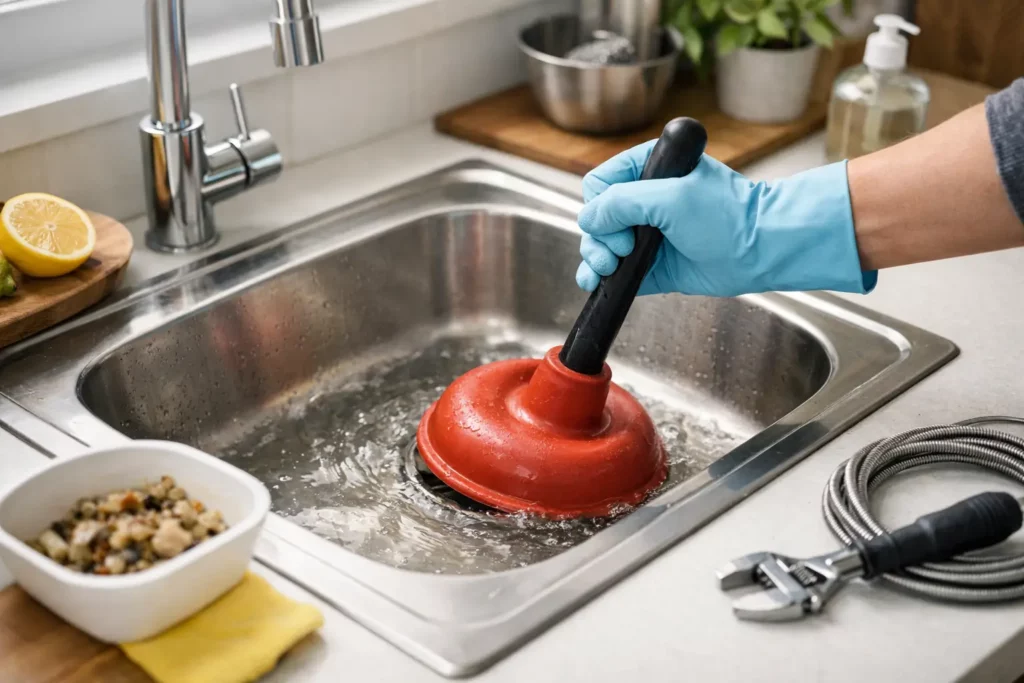
A sink plunger is often more effective than chemical products. If you have a double kitchen sink, seal the second drain opening with a stopper or wet rag so you can build pressure. Add enough water to cover the plunger cup, then plunge firmly several times.
If the water suddenly starts draining, run hot water afterward to help move loosened debris through the line. If nothing changes after a few rounds, stop forcing it. Repeated plunging on a stubborn clog can create a mess without fixing the actual restriction.
Skip harsh chemical drain cleaners
Many homeowners reach for drain cleaner first, but that is rarely the best move in a kitchen sink. Chemical cleaners often struggle against grease-heavy clogs, and they can sit in the trap or pipe without clearing the blockage. That creates two problems. The first is possible pipe damage over time, especially in older plumbing. The second is safety risk when someone later opens the trap or works on the drain and gets exposed to the chemical.
For homes with garbage disposals, older drain assemblies, or recurring clogs, chemical products are even less appealing. A mechanical cleaning method is usually safer and more effective.
When the clog is in the trap
If the drain is still blocked, the next likely spot is the P-trap under the sink. This curved pipe section is designed to hold water and block sewer gases, but it also catches debris. Kitchen traps commonly collect grease, rice, pasta, eggshell fragments, and dense food waste.
How to clean the P-trap
Place a bucket underneath the trap before loosening anything. If the trap has slip nuts, you may be able to remove it by hand or with adjustable pliers. Once it is off, empty the contents into the bucket and inspect the pipe for buildup. Clean the trap thoroughly, then check the short horizontal pipe leading into the wall.
If that section is packed with sludge, you may be dealing with a deeper clog beyond the trap. Reassemble everything carefully and test for leaks once the water is back on.
This is a reasonable DIY step for many homeowners, but it is not always straightforward. Older fittings can be brittle, overtightened connections can crack, and poorly aligned reassembly can lead to leaks in the cabinet. If the plumbing under the sink looks corroded or has been modified over the years, it may be smarter to stop there.
Use a drain snake for deeper blockages
If the trap is clear or only partially dirty, the clog may be farther into the branch drain. That is where a hand auger or drain snake can help. Feed the cable into the drain opening or wall pipe, depending on how you are working, and turn it slowly to break up or hook the blockage.
A snake is often the best answer for compacted food waste and sludge deeper in the line. It is less useful if the issue is heavy grease coating the full pipe diameter rather than one isolated clog. In that case, the snake may punch a small opening without fully cleaning the pipe walls, and the problem returns soon after.
If you meet strong resistance, do not force the cable aggressively. It is possible to damage older drain lines or get the snake stuck, especially around fittings and tight bends.
What if you have a garbage disposal?
A disposal adds another variable. If it hums but does not spin, it may be jammed rather than clogged. Turn off power to the unit before touching anything. Many disposals can be manually turned from the bottom with the proper tool to free a jam. After that, press the reset button if your unit has one.
If the disposal runs but the sink still backs up, the blockage may be in the drain line after the disposal. That is common when ground food combines with grease and settles in the trap or branch pipe. Running the disposal longer usually does not help and may pack the clog tighter.
Fibrous foods, grease, bones, pasta, rice, and coffee grounds are common causes of disposal-related drain issues. Even when a disposal can grind something, that does not mean your drain line wants it.
Signs you should call a plumber
Some clogs are simple. Others are a sign of a larger drainage issue. If the sink repeatedly backs up, if water shows up in the dishwasher connection, or if more than one fixture is draining slowly, the problem may be beyond the kitchen sink itself.
Call a plumber if:
- The sink is fully blocked and basic steps do not change anything
- You removed the trap and the clog is deeper in the wall line
- The drain keeps clogging after temporary fixes
- You hear gurgling from nearby fixtures
- There is a leak under the sink after taking plumbing apart
- You already used chemical cleaner and the line still is not open
In those situations, a professional can clear the line more completely and check whether grease buildup, poor slope, or a larger drainage problem is causing repeat blockages. For homeowners and property managers, that usually saves time compared with trying one temporary fix after another.
How to prevent the next kitchen drain clog
The easiest drain to clear is the one that never clogs in the first place. Kitchen drains handle a lot of abuse, and most blockages come from daily habits rather than one major mistake.
Keep grease and cooking oil out of the sink, even if you follow with hot water. Wipe greasy pans with a paper towel before washing them. Use a sink strainer to catch food scraps, and avoid putting coffee grounds, rice, pasta, eggshells, or fibrous vegetables down the drain. If you have a garbage disposal, treat it as a backup convenience, not a primary method of waste disposal.
It also helps to flush the drain occasionally with hot water and dish soap after heavy cooking. That will not fix an established clog, but it can reduce fresh grease buildup before it hardens.
The real question is not just how to unclog kitchen drain lines
The bigger question is how to clear the clog without turning a simple repair into a damaged pipe, a leak under the cabinet, or a drain that plugs again next week. Some kitchen sink clogs respond to hot water, plunging, or trap cleaning. Others need proper drain equipment and a closer look at what is happening inside the line.
If your sink is slow but still moving, a careful DIY approach can make sense. If the clog is stubborn, recurring, or affecting more than one fixture, getting it handled properly is usually the fastest path back to a working kitchen. A clean, fully open drain should stay that way longer when the cause is addressed, not just pushed a little farther down the pipe.
When a kitchen drain starts acting up, the best time to deal with it is before it becomes a full backup on a busy day.