A sewer line problem rarely starts with a dramatic failure. More often, a Chilliwack homeowner notices one slow drain, an occasional toilet backup, or a wet patch that does not dry out. The question becomes sewer repair versus replacement: can the damaged section be fixed with confidence, or is the entire line nearing the end of its useful life?
The right answer is not based on the age of the home alone or on the lowest upfront price. It comes down to the pipe’s condition, the location and extent of the damage, the history of backups, and the risk of another failure after the work is complete. A proper assessment helps avoid paying for a small repair that only delays a larger problem.
When Sewer Repair Is the Sensible Choice
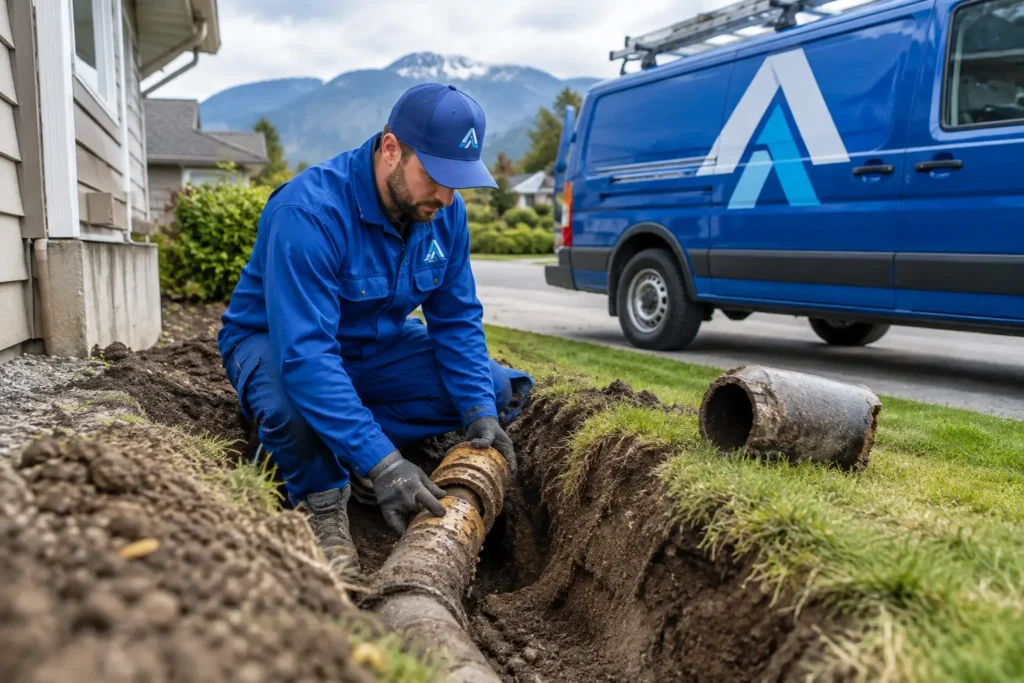
Sewer repair is often the practical choice when the problem is confined to one accessible section of pipe. A localized crack, separated fitting, damaged connection, or a short area affected by root intrusion may be repaired without replacing the full sewer line.
This approach makes sense when the rest of the line is in good working order and the repair will restore a dependable connection. For example, a home may have one recurring blockage near a damaged joint while the remaining pipe has proper slope and sound material. Repairing that section can address the cause rather than simply clearing the symptom.
A repair may also be appropriate when damage resulted from a specific event, such as ground movement affecting one area of the yard or a heavy vehicle crossing where it should not have. The key is confirming that the damage is isolated. Clearing a blockage can restore drainage temporarily, but it does not correct a broken, offset, or deteriorating pipe.
For commercial properties, a targeted repair can limit interruption when the issue is contained. Restaurants, rental buildings, and small businesses still need work planned carefully, but replacing a short failed section may be less disruptive than replacing a line that has years of dependable service remaining.
Signs Replacement May Be the Better Investment
A sewer line does not have to collapse completely before replacement becomes the more cost-effective decision. Repeated drain backups, ongoing root intrusion, multiple damaged areas, or pipe material that is broadly deteriorating can all point toward replacement.
Older homes can have sewer piping that has reached the point where one repair leads to another. If a plumber finds failures in several locations, patching each one may create a cycle of excavation, service interruptions, and repeat costs. In that situation, replacement provides a more durable reset.
Replacement is also worth serious consideration when the pipe has lost its slope, has extensive cracking, or shows widespread deformation. Wastewater relies on gravity and a consistent path to leave the building. A line that holds water or catches solids because of poor grade can continue causing blockages even after a small damaged area is repaired.
Pay attention to the pattern inside the building. One slow sink may be a local drain issue. When toilets, tubs, showers, and lower-level fixtures all drain slowly or back up together, the concern is more likely in the main sewer line. If wastewater appears at a floor drain or lower fixture when another fixture is used, treat it as an urgent plumbing issue rather than waiting for the next backup.
Sewer Repair Versus Replacement: What Drives the Cost
The price difference between sewer repair and replacement can be significant, but the cheapest option is not always the least expensive over time. Access is a major factor. A line that runs through open yard space generally creates a different scope of work than one located beneath a driveway, patio, landscaping, building addition, or commercial pavement.
Depth matters as well. A deeper line requires more excavation and safety planning. The length of pipe being replaced, the material selected, connections to the building and municipal system, and restoration after the plumbing work are all part of the overall project.
A targeted repair generally costs less because less pipe and ground need to be disturbed. That advantage disappears if the line needs repeated repairs over the next few years. Replacement costs more at the outset, but it can reduce the likelihood of repeated emergency calls, property damage, and disruption to tenants or business operations.
For landlords and property managers, the decision should account for more than the invoice. A recurring sewer backup can mean vacant units, tenant complaints, cleanup costs, and potential damage to flooring or finishes. A planned replacement is often easier to manage than another after-hours failure.
Pipe Age Matters, but Condition Matters More
It is reasonable to consider the age of a property, particularly if the sewer line has never been updated. Still, age alone does not decide whether replacement is necessary. Some older lines remain functional for years, while newer installations can develop problems because of installation errors, shifting soil, or outside damage.
The more useful question is whether the pipe is structurally sound and likely to remain reliable after the proposed repair. A single failed connection on otherwise sound piping is different from a line with recurring blockages and multiple weak areas.
In Chilliwack, seasonal rain and changing ground conditions can make drainage problems more noticeable. That does not automatically mean the sewer line needs replacement, but it is a reason not to ignore recurring symptoms. Fast diagnosis and timely sewer line repair can prevent wastewater from backing up into a home or business.
Do Not Confuse Drain Cleaning With Pipe Repair
Professional drain cleaning is valuable when buildup, roots, or debris are restricting a line. Hydro jetting can clear certain blockages thoroughly and restore flow in suitable piping. But cleaning and repair are different services.
If the underlying pipe is cracked, separated, crushed, or incorrectly graded, a clean line can block again because the physical defect remains. A qualified plumber should explain whether the problem is a maintenance issue, a localized repair issue, or evidence that the line needs replacement.
This distinction protects property owners from two common mistakes: replacing a sewer line when cleaning would solve the problem, or repeatedly cleaning a line that has a structural failure. The best recommendation is the one that matches the actual condition of the pipe.
Questions to Ask Before Approving the Work
Before choosing a repair or replacement, ask what specifically has failed and whether the problem is isolated or widespread. Ask how the recommended work will address recurring backups, what access is required, and whether other portions of the line are likely to need attention soon.
It is also reasonable to ask about the expected disruption to the property. Homeowners may need to plan around temporary limits on water use. Property managers should understand how work could affect occupants, parking, access, and daily operations. A clear scope of work reduces surprises and helps everyone plan properly.
For an active backup, do not keep running water in an attempt to push the blockage through. Limit water use and arrange emergency plumbing service as soon as possible. Wastewater backups can escalate quickly and may damage finished areas of the property.
Choosing a Long-Lasting Answer
The best sewer decision is not automatically repair or replacement. It is the option that corrects the present problem while making sense for the line’s remaining condition, the property’s use, and the cost of future risk.
Armacom Plumbing & Heating helps Chilliwack homeowners, landlords, and local businesses understand the practical difference before work begins. Whether the answer is a focused sewer repair, professional drain cleaning, or a planned replacement, the goal should be clear: restore reliable drainage with precision and care, and avoid returning to the same problem a short time later.