
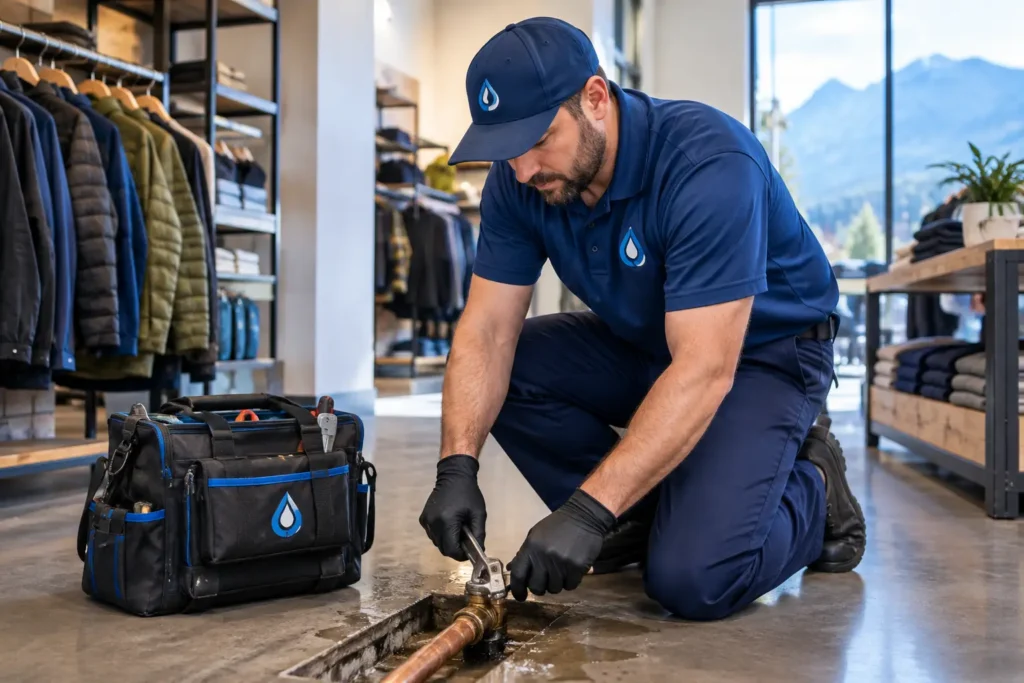
A leak behind a retail wall is rarely just a plumbing problem. It can soak inventory, damage flooring, create a slip hazard, interrupt staff, and force a business to close part of the store during its busiest hours. Retail leak repair is about finding the source quickly, limiting damage, and making a repair that holds up under daily use.
For Chilliwack retailers, the right response depends on where the water is coming from, how long it has been leaking, and what systems are affected. A visible drip under a staff-room sink is different from water appearing along a sales-floor baseboard or a sudden loss of pressure in a multi-unit commercial building. The goal is not to guess at the cause. It is to diagnose the plumbing issue accurately and protect the operation around it.
Why retail leaks need a fast, measured response
Retail spaces place plumbing in locations that are easy to overlook until something fails. Water lines may run above suspended ceilings, inside finished walls, below concrete, or through staff washrooms, utility areas, and tenant spaces. A small pinhole leak can travel a surprising distance before it becomes visible, especially when water follows framing, piping, or floor structure.
That delay is why discoloration, a musty smell, warped flooring, recurring puddles, or an unexplained water bill should be taken seriously. These are often signs that the visible moisture is not the origin of the leak. Repainting a stained ceiling or replacing a wet tile without correcting the plumbing source only postpones the bigger repair.
A prompt professional assessment also helps businesses make better decisions about access and scheduling. Some repairs can be completed from a utility room or above a ceiling with limited disruption. Others require opening a small section of drywall, temporarily shutting off a branch water line, or coordinating access with neighboring tenants. Planning the work properly protects the store while avoiding unnecessary closures.
Common causes of retail plumbing leaks
Many retail leaks are caused by ordinary wear, but the location and use of the building can make the consequences more serious. Supply-line failures are common around restroom fixtures, break-room sinks, janitor closets, water heaters, and equipment connections. Corrosion, aging fittings, loose connections, and damaged shutoff valves can all allow water to escape slowly or fail without warning.
Drain leaks create a different pattern. Rather than a steady pressurized leak, they may only appear when a sink, toilet, or floor drain is in use. A failed drain fitting, cracked trap, or deteriorated seal can release water into cabinetry, walls, or the space below. Because the leak is intermittent, staff may notice it only after a busy period or after cleaning.
Toilets deserve special attention in public and staff washrooms. Water at the base of a toilet can come from condensation, a supply connection, an internal fixture issue, or a failed seal at the floor. The source matters. A repair that addresses only the visible water may leave a hidden leak active beneath the flooring.
Older commercial properties can also have recurring issues from aging pipe materials or previous repairs that were never properly corrected. When the same area leaks more than once, treating it as a one-off service call can become expensive. The better approach may be to identify whether a larger section of piping, a valve assembly, or a fixture connection is reaching the end of its service life.
What professional retail leak repair involves
Effective leak repair starts with narrowing down the source. A plumber will look at when the leak appears, what fixtures or equipment are nearby, whether water pressure has changed, and where moisture is collecting. This helps distinguish between a supply leak, a drainage issue, a fixture problem, or water migration from another part of the building.
Once the source is confirmed, the repair should address the failed component rather than simply contain the symptoms. That may mean replacing a worn valve, rebuilding a fixture connection, repairing a section of water line, or correcting a drainage connection. In a retail setting, the work also needs to account for public access, merchandise, finished surfaces, and the business’s operating hours.
After the repair, testing is essential. Supply piping should be checked under normal water pressure, while drains and fixtures should be run long enough to confirm that the leak has stopped. If water has reached walls, ceilings, flooring, or stored goods, the business may also need to address moisture and material damage separately. Plumbing repair stops the cause, but any affected building materials still need timely attention.
When a leak becomes an emergency
Not every retail leak requires an after-hours call, but some situations should not wait until the next business day. Active water flowing from a ceiling, a burst supply line, water near electrical equipment, a restroom fixture that will not stop running, or a leak affecting customers and staff can quickly become an emergency plumbing issue.
If it is safe to do so, staff can keep customers away from the affected area and move nearby inventory out of harm’s way. A property manager or business owner should also identify whether the store’s water can be isolated without affecting critical operations. Avoid opening walls, dismantling fixtures, or attempting a repair while water is active. Those actions can increase damage and complicate the diagnosis.
For a store in a plaza or multi-tenant building, clear communication matters as much as the repair itself. Water may be coming from a shared line, a neighboring unit, or a fixture above. A qualified plumber can help establish which plumbing system is involved so the appropriate owner, tenant, or manager can authorize the necessary work.
Reducing repeat leak repairs in retail properties
The least disruptive retail leak repair is the one that is prevented through early attention to warning signs. This does not mean replacing every older fixture or pipe automatically. It means responding before a minor issue has time to damage finishes, inventory, or tenant improvements.
Property managers and business owners should keep an eye on recurring moisture around the same fixture, repeatedly loose or corroded shutoff valves, stains that return after drying, and areas where flooring is beginning to lift or soften. A fixture that needs frequent adjustment is also worth addressing before it fails during business hours.
Scheduled maintenance can be particularly useful for businesses with staff washrooms, multiple sinks, hot water equipment, or high customer traffic. The right scope depends on the building and its plumbing history. A small retail unit may only need repairs as issues arise, while a larger property with several tenant spaces benefits from a more proactive approach to plumbing repairs and water-use concerns.
Choosing a plumber for retail leak repair in Chilliwack
Commercial leak work is not only about replacing a part. The plumber needs to understand how to work around customers, coordinate access, protect finished areas, and explain what was found in plain language. For landlords and property managers, documentation of the issue and repair can also help with maintenance planning and tenant communication.
Ask whether the plumber can respond appropriately to the urgency, isolate the affected plumbing safely, and recommend a repair based on the actual cause. Be cautious of quick fixes that do not explain why the leak happened. A small repair may be completely appropriate, but when leaks recur, the underlying condition deserves a closer look.
Armacom Plumbing & Heating provides retail and light commercial plumbing support for Chilliwack businesses that need clear diagnosis, careful repair work, and practical scheduling. Whether the problem is a leaking water line, a restroom fixture, a drain connection, or water appearing where it should not, addressing it early can protect both the premises and the business operating inside it.
A retail space should not have to work around buckets, wet floors, or repeated patch repairs. When a leak appears, a timely assessment gives you the best chance to keep the repair contained and your doors open.