A drain camera inspection is not something most property owners think about until a drain backs up twice, a toilet gurgles when the washer empties, or wastewater appears where it should not. At that point, guessing can turn a manageable drain problem into repeated service calls and unnecessary damage. For Chilliwack homeowners, landlords, and business owners, seeing the condition of the pipe can be the fastest way to choose the right repair.
The purpose is straightforward: find out what is actually happening inside an inaccessible drain line before deciding whether cleaning, repair, or replacement is appropriate. It is especially valuable when symptoms keep returning after a clog has been cleared.
What a drain camera inspection can reveal
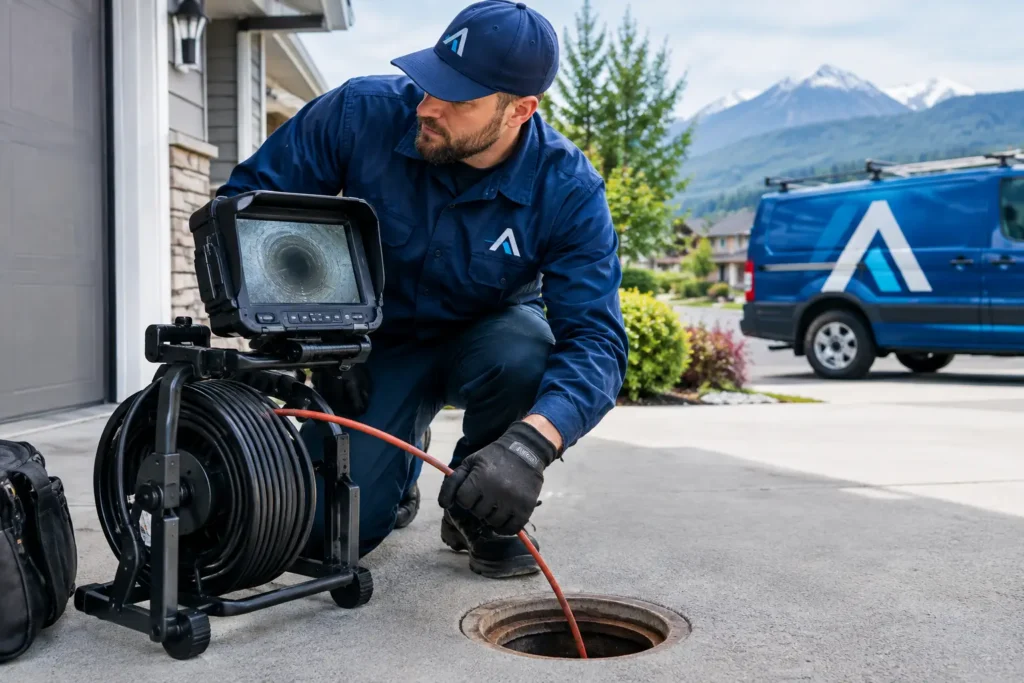
A professional drain camera inspection uses a flexible, waterproof camera fed through an accessible drain opening or cleanout. The live image helps the plumber identify the location, nature, and likely severity of an issue inside the line. This is more useful than treating every slow drain as a simple buildup problem.
Common findings include compacted debris, scale buildup, displaced pipe joints, root intrusion, damaged sections of pipe, or a low area where waste and water repeatedly collect. In older homes, pipe material and past repair history can also affect what the line looks like and what type of work makes sense next.
The result is not merely a picture of the inside of a pipe. It is information that guides the work. If the line is sound but obstructed, professional drain cleaning or hydro jetting may be the appropriate next step. If the pipe is broken, separated, or badly deteriorated, cleaning alone may provide only temporary relief.
Signs the problem is deeper than one fixture
A single slow bathroom sink may be caused by a local issue in that fixture drain. When several fixtures are affected, the concern is usually farther down the drainage system. The timing of the symptoms matters as much as the symptom itself.
For example, water rising in a shower when a toilet is flushed often points to a shared branch line or main drain restriction. A kitchen sink that drains slowly only when the dishwasher runs can indicate a related drainage issue. Repeated clogs in the same toilet, especially after standard clearing has already been done, deserve a closer look rather than another quick fix.
Property managers should pay attention to recurring calls from the same suite or commercial unit. Repeat blockages can disrupt tenants and operations, but they also create a pattern. A proper diagnosis helps distinguish between a local fixture issue, a line condition that needs cleaning, and a repair concern that should not be delayed.
Why repeated snaking is not always the answer
Drain clearing equipment has an important place in plumbing work. It can remove many routine blockages quickly and restore flow. But when a line clogs again soon afterward, the question changes from “How do we get water moving today?” to “Why does this line keep blocking?”
A cable may open a path through roots, sludge, or compacted material without fully removing the underlying cause. Likewise, it cannot correct a cracked pipe, a separated fitting, or a section that has shifted out of alignment. Continuing to clear the same line without understanding its condition can mean paying for short-term relief several times.
This does not mean every drain issue requires extensive repair. Many lines respond well to thorough cleaning. The value of inspection is that it separates a cleanable problem from a structural one. That distinction protects the property owner from approving work based on assumptions.
What happens during the visit
Before equipment goes into the line, a plumber should ask about the history of the issue: which fixtures are affected, when backups occur, whether there have been previous clogs, and what work has been completed in the past. Those details help determine the best access point and whether the line first needs to be opened or cleaned.
The camera is then advanced carefully through the line while the plumber watches for changes in pipe condition, standing water, obstructions, and damaged areas. Locating equipment may be used to identify where a concern sits underground or within the building. This is particularly helpful when planning a repair and avoiding unnecessary excavation.
Not every line can be viewed perfectly from end to end. Heavy blockage, standing water, tight bends, or pipe damage can limit visibility. In those cases, clearing the obstruction first may be necessary before the full condition of the pipe can be confirmed. An experienced plumber should explain that limitation plainly rather than overstate what can be determined.
When cleaning is enough and when repair is the better investment
The best solution depends on what is found, the age and material of the line, how often the issue returns, and the property’s plans. A well-maintained line with buildup may only need professional cleaning. A line with roots may need cleaning now and an honest discussion about the likelihood of recurrence. A collapsed or badly offset section generally needs repair to provide dependable drainage.
For a homeowner preparing to sell, the right decision may differ from that of an owner planning to stay for another decade. For a restaurant, retail space, or multi-unit property, downtime and repeat closures can make a durable repair the more economical choice. There is no one-size-fits-all recommendation, which is why diagnosis comes before a repair proposal.
When repair is necessary, the scope should be based on the actual location and condition of the issue. A targeted repair may be possible when the problem is isolated. More extensive sewer line repair may be warranted when multiple sections are failing or the pipe has reached the end of its service life.
Local conditions worth considering in Chilliwack
Chilliwack properties include a mix of established homes, newer construction, rental properties, and light commercial buildings. That variety means drain problems are not all alike. Older piping may have different vulnerabilities than newer material, while mature landscaping can contribute to root-related issues around buried lines.
Seasonal wet weather can also make an existing drainage problem more noticeable. Water entering where it should not, saturated soil around a compromised line, or a partially restricted pipe may reveal itself during periods of heavier use or wet conditions. The weather does not automatically cause a blockage, but it can expose a weakness that was already developing.
For landlords and strata managers, documenting the condition of a troubled line can support more informed maintenance planning. Instead of reacting to every backup as an isolated event, the property can be managed with a clearer understanding of which lines need attention first.
When to call for professional help
Call promptly if wastewater backs up into a tub, shower, floor drain, or lower-level fixture. The same applies when multiple drains stop working at once, toilets repeatedly overflow, or a commercial space has drainage issues that could affect customers or staff. These situations can become sanitation and property-damage concerns quickly.
If the drain is still moving but has a history of repeated trouble, scheduling service before a full backup is usually the better option. Armacom Plumbing & Heating can assess the symptoms, clear the line when appropriate, and recommend further investigation when the condition of the pipe needs to be verified.
A drain problem rarely improves because it is ignored. Getting a clear answer while the issue is still manageable gives you more control over the cost, timing, and scope of the work.