A burst supply line under a sink can soak cabinets and flooring in minutes. A sewer backup can make a bathroom unusable just as quickly. This Chilliwack emergency plumbing response guide is built for the first few minutes after you discover a serious problem – when calm decisions can limit damage and help a plumber get to the real issue faster.
The goal is not to diagnose or repair plumbing yourself. It is to protect people, shut down water when appropriate, move valuables out of harm’s way, and recognize when the situation needs immediate professional attention. For homeowners, landlords, property managers, and local businesses, that response can make the difference between a contained repair and extensive restoration work.
Chilliwack Emergency Plumbing Response Guide: First Actions
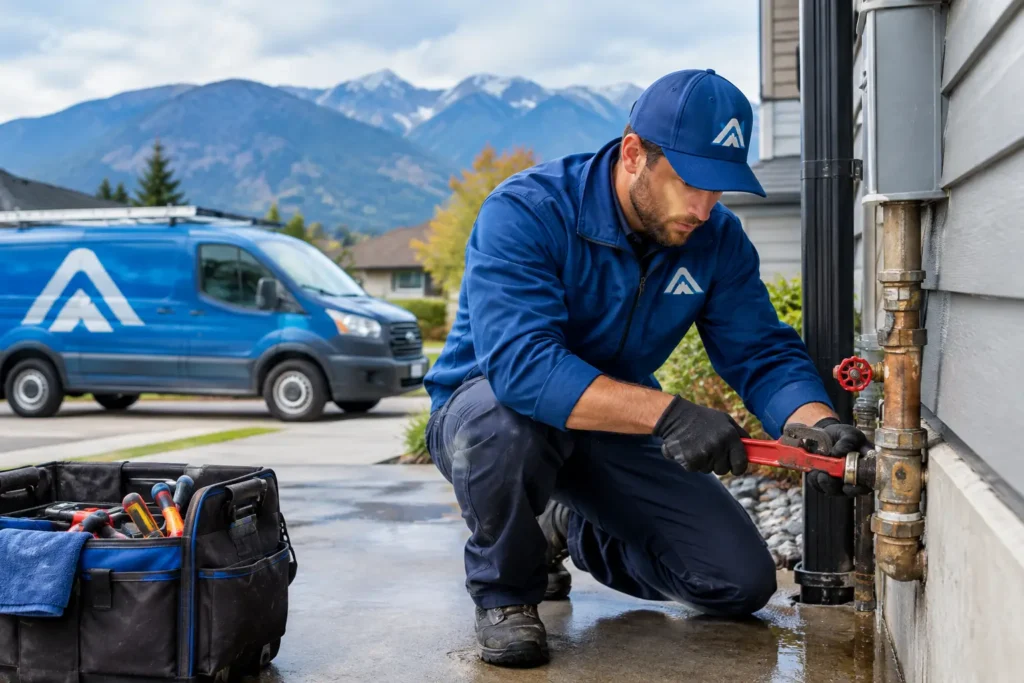
Start by looking for the source of the water without putting yourself at risk. If water is actively spraying from a fixture supply line, toilet connection, appliance hose, or visible pipe, close the nearest fixture shutoff valve if you can reach it safely. These are commonly found beneath sinks, behind toilets, or near the appliance being supplied.
If the leak is not contained by a local shutoff, or you cannot identify the source, turn off the building’s main water supply. Every home and commercial unit should have the main shutoff identified before an emergency occurs. In many homes it is near where the water line enters the building, but location varies. In a strata property, the unit shutoff may be different from the building’s main shutoff, so property managers should make sure residents know the correct procedure.
Once the water is off, keep people away from wet areas where electricity may be present. Do not walk through standing water if outlets, appliances, extension cords, or electrical equipment are involved. If water is reaching electrical components or there is an immediate safety concern, contact emergency services first.
Then take practical steps to reduce further loss. Move rugs, furniture, stock, documents, and other belongings away from the affected area when it is safe to do so. Place a container under a slow drip if that helps contain it, but do not attempt to take apart pressurized plumbing, open walls, or force stuck valves. A broken valve or fitting can turn a manageable leak into a much larger one.
For a gas odor, hissing near a gas line, or suspected gas leak, leave the building immediately. Do not operate switches, use flames, or try to locate and repair the leak. Call 911 and the gas utility from a safe location. Gas fitting concerns require a qualified professional response, not a temporary fix.
Match the Response to the Plumbing Problem
Not every plumbing issue requires the same level of urgency. Water that is flowing freely, wastewater that is backing up, or a failed hot water tank all need fast attention, but the safe first action can be different.
Active water leaks and burst pipes
A sudden loss of water pressure, a rushing sound inside a wall, wet drywall, or water spreading across a floor can indicate a broken water line. Shut off the water supply and call for emergency plumbing service. Even when a leak seems small, water can travel under flooring and behind finishes before it becomes visible.
In colder conditions, frozen pipes need caution as well. Never use an open flame to thaw a pipe, and do not assume the problem is resolved just because water begins moving again. A pipe may have cracked while frozen and only leak once pressure returns. A plumber can assess the damaged section and make a proper plumbing repair before it causes another failure.
Overflowing toilets and blocked drains
If a toilet is rising toward the rim, remove the tank lid and close the toilet’s shutoff valve if accessible. Do not keep flushing to test whether the blockage has cleared. If other fixtures are draining slowly, gurgling, or backing up at the same time, stop using water throughout the building. The issue may affect the main drainage system rather than one toilet.
A single slow sink may be inconvenient. Wastewater coming up through a tub, floor drain, or lower-level fixture is different. Keep children, pets, and staff away from the area, avoid contact with contaminated water, and arrange professional drain cleaning or sewer line repair as soon as possible. Chemical drain products are not a good emergency solution. They can damage certain piping, create hazards for anyone working on the drain later, and rarely solve a serious blockage.
No hot water or a leaking hot water tank
No hot water is disruptive, especially in a multi-unit property or business, but it is not always a middle-of-the-night emergency. A leaking hot water tank is more urgent, particularly if water is pooling, flowing from the tank, or reaching finished areas. Shut off the cold-water supply to the tank if it can be done safely. If you smell gas near a gas-fired unit, follow gas-leak safety procedures and leave the area.
A tankless water heater that has stopped working may require prompt service, but a lack of hot water alone does not necessarily require shutting down the entire water supply. The right response depends on whether there is a leak, an active safety concern, or simply a loss of heating. Clear details help a plumber prioritize the call and arrive prepared.
Sewer odors and recurring drainage trouble
Strong sewer odors, repeated toilet clogs, or drains that back up after temporary clearing should not be ignored. They can point to a developing drainage or sewer line problem. If wastewater is not actively backing up, restrict water use and arrange an assessment rather than repeatedly plunging or applying chemicals. Early service may prevent an emergency at the worst possible time.
When an Emergency Plumber Is the Right Call
Call for urgent help when water cannot be stopped, wastewater is entering the property, a major fixture has failed, or a leak is affecting walls, ceilings, flooring, or business operations. Landlords and property managers should also treat leaks in vacant units seriously. Water can run unnoticed for hours and affect neighboring spaces.
Restaurants, retail spaces, offices, and other commercial properties have an additional concern: an isolated plumbing issue can quickly interrupt customer service or create an unsafe workspace. Closing water to the affected area may protect the property, but it may also affect washrooms, handwashing stations, or kitchen operations. A fast diagnosis helps determine whether a targeted repair can restore service or whether the area needs to remain out of use.
Armacom Plumbing & Heating handles emergency plumbing issues with a focus on finding the source, stopping further damage, and completing repairs with long-lasting results. In an emergency, clear information about what happened is more useful than a guess about the cause.
What to Tell the Plumber Before Arrival
When you call, explain whether the water is still running, whether the main water supply has been shut off, and where the leak or backup is appearing. Mention any signs that multiple fixtures are involved, such as toilets and tubs draining poorly at the same time. For a hot water tank or tankless unit, describe whether there is water around the equipment, no hot water, unusual noise, or a gas odor.
If it is safe, take a few photos before moving items or drying the area. This can help document the issue for a landlord, strata manager, insurer, or property file. It also gives the plumber a clearer picture if access conditions or the visible damage change before arrival.
Make the work area accessible where possible. Clear items from beneath sinks, around the water heater, or near the affected drain, but do not remove panels or dismantle plumbing. If you live in a condo or manage a multi-unit building, notify the appropriate building contact promptly. Shutting off water to one unit can sometimes affect more than one resident.
After the Immediate Problem Is Contained
Once the active issue is under control, do not rush to turn the water back on. A proper repair should be tested under pressure and the affected fixtures checked for normal drainage and operation. This matters with water line repairs, toilet repairs, drain blockages, and hot water tank replacement alike. The visible failure may be only part of the problem.
It is also worth using the repair visit to identify vulnerable components. Old toilet supply lines, corroded shutoff valves, aging hot water tanks, recurring drain trouble, and Poly-B piping can all deserve attention before they become an after-hours emergency. That does not mean every older part needs replacement immediately. The decision depends on its condition, accessibility, history of leaks, and the consequences of a failure in that location.
A plumbing emergency is stressful because it asks for quick action without much information. Knowing where your shutoff is, keeping the area safe, and calling for qualified help promptly gives you the best chance of protecting your Chilliwack property and getting back to normal with confidence.
Overflowing toilets and blocked drains
If a toilet is rising toward the rim, remove the tank lid and close the toilet’s shutoff valve if accessible. Do not keep flushing to test whether the blockage has cleared. If other fixtures are draining slowly, gurgling, or backing up at the same time, stop using water throughout the building. The issue may affect the main drainage system rather than one toilet.
A single slow sink may be inconvenient. Wastewater coming up through a tub, floor drain, or lower-level fixture is different. Keep children, pets, and staff away from the area, avoid contact with contaminated water, and arrange professional drain cleaning or sewer line repair as soon as possible. Chemical drain products are not a good emergency solution. They can damage certain piping, create hazards for anyone working on the drain later, and rarely solve a serious blockage.
No hot water or a leaking hot water tank
No hot water is disruptive, especially in a multi-unit property or business, but it is not always a middle-of-the-night emergency. A leaking hot water tank is more urgent, particularly if water is pooling, flowing from the tank, or reaching finished areas. Shut off the cold-water supply to the tank if it can be done safely. If you smell gas near a gas-fired unit, follow gas-leak safety procedures and leave the area.
A tankless water heater that has stopped working may require prompt service, but a lack of hot water alone does not necessarily require shutting down the entire water supply. The right response depends on whether there is a leak, an active safety concern, or simply a loss of heating. Clear details help a plumber prioritize the call and arrive prepared.
Sewer odors and recurring drainage trouble
Strong sewer odors, repeated toilet clogs, or drains that back up after temporary clearing should not be ignored. They can point to a developing drainage or sewer line problem. If wastewater is not actively backing up, restrict water use and arrange an assessment rather than repeatedly plunging or applying chemicals. Early service may prevent an emergency at the worst possible time.
When an Emergency Plumber Is the Right Call
Call for urgent help when water cannot be stopped, wastewater is entering the property, a major fixture has failed, or a leak is affecting walls, ceilings, flooring, or business operations. Landlords and property managers should also treat leaks in vacant units seriously. Water can run unnoticed for hours and affect neighboring spaces.
Restaurants, retail spaces, offices, and other commercial properties have an additional concern: an isolated plumbing issue can quickly interrupt customer service or create an unsafe workspace. Closing water to the affected area may protect the property, but it may also affect washrooms, handwashing stations, or kitchen operations. A fast diagnosis helps determine whether a targeted repair can restore service or whether the area needs to remain out of use.
Armacom Plumbing & Heating provides 24/7 emergency plumbing services throughout Chilliwack and surrounding Fraser Valley communities. Our approach focuses on identifying the source of the problem, stopping further damage, and completing practical, reliable repairs. In an emergency, clear information about what happened is more useful than guessing at the cause.
What to Tell the Plumber Before Arrival
When you call, explain whether the water is still running, whether the main water supply has been shut off, and where the leak or backup is appearing. Mention any signs that multiple fixtures are involved, such as toilets and tubs draining poorly at the same time. For a hot water tank or tankless unit, describe whether there is water around the equipment, no hot water, unusual noise, or a gas odor.
If it is safe, take a few photos before moving items or drying the area. This can help document the issue for a landlord, strata manager, insurer, or property file. It also gives the plumber a clearer picture if access conditions or the visible damage change before arrival.
Make the work area accessible where possible. Clear items from beneath sinks, around the water heater, or near the affected drain, but do not remove panels or dismantle plumbing. If you live in a condo or manage a multi-unit building, notify the appropriate building contact promptly. Shutting off water to one unit can sometimes affect more than one resident.
After the Immediate Problem Is Contained
Once the active issue is under control, do not rush to turn the water back on. A proper repair should be tested under pressure and the affected fixtures checked for normal drainage and operation. This matters with water line repairs, toilet repairs, drain blockages, and hot water tank replacement alike. The visible failure may be only part of the problem.
It is also worth using the repair visit to identify vulnerable components. Old toilet supply lines, corroded shutoff valves, aging hot water tanks, recurring drain trouble, and Poly-B piping can all deserve attention before they become an after-hours emergency. That does not mean every older part needs replacement immediately. The decision depends on its condition, accessibility, history of leaks, and the consequences of a failure in that location.
A plumbing emergency is stressful because it asks for quick action without much information. Knowing where your shutoff is, keeping the area safe, and calling for qualified help promptly gives you the best chance of protecting your Chilliwack property and getting back to normal with confidence.