A dripping faucet is frustrating, but a pipe leaking behind a wall at 11 p.m. is a different situation entirely. Knowing when to call an emergency plumber can limit water damage, protect your property, and prevent a manageable plumbing repair from becoming a major restoration project.
For homeowners, landlords, and business owners in Chilliwack, the key question is not simply whether the plumbing problem is inconvenient. It is whether water, wastewater, gas, or loss of an essential service is creating an immediate risk to people or property. If the answer is yes, it is time to call for emergency plumbing help.
When to Call an Emergency Plumber Right Away
Some plumbing problems do not improve by waiting until business hours. Call an emergency plumber promptly if you are dealing with a burst or actively leaking pipe, sewage backing up into a fixture, a toilet that is overflowing and will not stop, no running water throughout the building, or a suspected gas leak.
A significant leak deserves immediate attention even when the water is not pouring through the ceiling. Water can travel inside walls, under flooring, and along framing before it becomes visible. By the time staining appears on drywall or a ceiling, moisture may already be affecting insulation, cabinets, flooring, and structural materials.
Drain backups are also urgent when wastewater is coming up through a tub, shower, floor drain, or lower-level toilet. This is not the same as a slow bathroom sink. A backup involving sewage is a sanitation concern and can indicate a blockage affecting the main drain line. Keep people and pets away from the affected area and arrange professional help.
A gas smell, a hissing sound near a gas connection, or a suspected damaged gas line requires a different response. Leave the area if necessary, avoid switches, flames, and other ignition sources, and contact the appropriate emergency authorities and a qualified gas professional. Gas fitting is not a wait-and-see issue.
Water Leaks That Can Wait vs. Leaks That Cannot
Not every leak requires an overnight service call. A faucet that drips into a sink, a toilet with a minor tank leak, or a small amount of water beneath a fixture may be suitable for a scheduled plumbing repair if the leak can be contained and no damage is occurring.
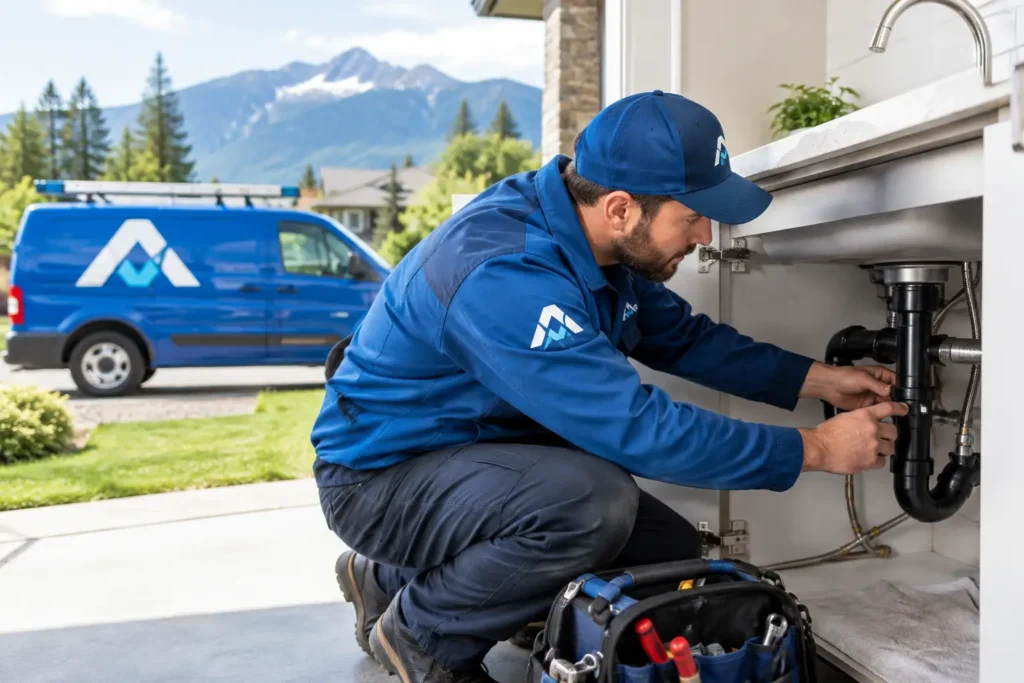
The situation changes when water is actively spreading, soaking materials, or cannot be controlled. A broken supply line under a sink, a failed hose connection, a leaking hot water tank, or a pipe that has split can release a surprising amount of water in minutes. In those cases, shut off the local fixture valve or the main water supply only if it is safe and you know where it is. Then call a plumber.
Watch for less obvious signs, too. Warm spots on a floor, persistent water sounds when fixtures are off, damp drywall, a sudden drop in water pressure, or unexplained pooling around a water heater can point to an active leak. These problems may not require a middle-of-the-night visit in every case, but they should be assessed quickly. Professional leak detection can identify the source before hidden moisture creates a more expensive repair.
A Drain Clog Becomes an Emergency When Wastewater Backs Up
Most individual fixture clogs are inconvenient rather than urgent. A single slow sink or tub can usually be booked as a regular drain cleaning service, especially if all other fixtures are draining normally.
Call sooner when the problem affects multiple fixtures. For example, if flushing a toilet makes water rise in the tub, or running the washing machine causes a lower-level drain to back up, the blockage may be farther along in the drain system. Continuing to use water can force wastewater out at the lowest available opening.
Restaurants, retail spaces, and other commercial properties should take recurring drain problems seriously. A backup can interrupt operations, create an unpleasant environment for customers and staff, and damage finishes or inventory. In many cases, prompt drain cleaning or hydro jetting is more cost-effective than waiting for a complete blockage during a busy shift.
Do not keep flushing, plunging aggressively, or pouring multiple chemical products into a drain that is backing up. Those actions can make the situation messier, expose occupants to chemicals, and complicate diagnosis. Stop using affected fixtures until a plumber determines what is causing the blockage.
No Hot Water: Emergency or Scheduled Repair?
A loss of hot water is uncomfortable, but it is not always a plumbing emergency. A household with a tank-style water heater that simply stops heating can often schedule service for the next available appointment. The same is true for many tankless water heater issues, provided there is no leak, burning smell, unusual noise, or gas concern.
It becomes more urgent when the hot water tank is leaking, water is collecting around its base, or the relief valve is discharging continuously. A tank that is visibly corroded or actively leaking can fail further without warning. Water heater leaks should be addressed promptly to reduce the chance of water damage.
For landlords and property managers, the urgency may also depend on the building and occupants. A complete loss of hot water in a multi-unit property, restaurant, or business can affect health, sanitation, and daily operations. The right response is based on the condition of the equipment, the extent of the outage, and whether there is an active safety or water-damage risk.
Sewer Line Problems Need Quick Decisions
A sewer line problem is often first noticed as slow drains, gurgling toilets, unpleasant odors, or a backup in a lower fixture. If wastewater is entering the building, treat it as urgent. Avoid using toilets, showers, sinks, dishwashers, and laundry equipment until the line is assessed.
A one-time slow drain may be localized. Repeated backups throughout the home or building suggest a larger drainage issue that should not be ignored. Timely sewer line repair can prevent repeated cleanup, damage to flooring and walls, and disruption for tenants or customers.
What to Do While You Wait for Emergency Plumbing Service
The goal is to reduce damage without attempting a repair yourself. If there is an active water leak, turn off the nearest accessible shutoff valve when possible. If that does not stop the flow, or the leak is on a main line, shut off the building’s main water supply if you can do so safely.
Move towels, rugs, boxes, electronics, and furniture away from the water. Place a bucket under a contained drip only if doing so does not put you at risk. If water is near electrical equipment, outlets, or appliances, keep clear of the area and prioritize safety over cleanup.
For a drain or sewer backup, stop all water use in the building. Do not run a dishwasher, start laundry, flush toilets, or take a shower to test whether the problem has cleared. For a water heater concern, avoid touching hot components or attempting to adjust gas connections. Clear access around the equipment so the plumber can assess it safely.
When you call, be ready to explain where the issue is occurring, when it started, whether water is still flowing, which fixtures are affected, and whether you have shut off the water. Those details help the plumber arrive prepared and start work efficiently.
The Cost of Waiting Too Long
Emergency service can cost more than a scheduled daytime visit, so it is reasonable to pause before making the call. But delaying an active leak or wastewater backup often costs far more than the emergency response. Water damage spreads quickly, and a simple failed valve or drain blockage can become damaged drywall, flooring replacement, cleanup, and lost business time.
The practical rule is straightforward: if the problem is causing active damage, involves sewage, creates a possible gas hazard, or leaves the building without essential water service, call now. If it is contained, minor, and stable, arrange a prompt scheduled repair before it worsens.
For Chilliwack property owners, a fast, accurate diagnosis is what turns a stressful plumbing failure into a controlled repair. Armacom Plumbing & Heating can help assess urgent plumbing issues with the precision and care needed to protect your home, rental property, or business.