A search for sewer camera inspection Surrey usually comes after a drain has backed up twice, a toilet is gurgling, or wastewater has appeared where it should not. Those are not problems to wait out. A professional look inside the sewer line can identify the cause before repeated blockages turn into interior water damage, disruption for tenants, or a larger sewer line repair.
For Chilliwack homeowners and property managers, the value is not simply seeing inside a pipe. It is getting a clear diagnosis that separates a routine drain blockage from a damaged, obstructed, or poorly flowing sewer line. That distinction affects the repair plan, the urgency, and the long-term cost.
When a Sewer Camera Inspection Surrey Search Makes Sense
One slow sink does not automatically point to a main sewer issue. A single fixture can have a localized blockage in its own drain. The concern increases when more than one fixture is affected, particularly fixtures on the lowest level of the building.
For example, if flushing a toilet causes water to rise in a basement shower or tub, the restriction is often farther down the drainage system. The same is true when laundry drainage causes a nearby toilet to bubble, or when several drains become slow at the same time. These symptoms suggest that wastewater is struggling to pass through the main line.
A professional inspection is especially useful after a drain has been cleared but the problem returns. Clearing equipment may restore flow through a blockage, but it does not always explain why that blockage formed. A line may have accumulated debris because of an offset joint, a low section that holds water, root intrusion, scale buildup, or pipe deterioration. Without identifying the underlying condition, the same issue can come back weeks or months later.
Other signs worth taking seriously include persistent sewer odors, unexplained wet areas around the building exterior, recurrent drain backups, and a history of sewer problems at the property. In a rental, strata, restaurant, or commercial setting, prompt diagnosis also helps limit downtime and gives property managers useful information for communicating with occupants.
What the Inspection Can Reveal
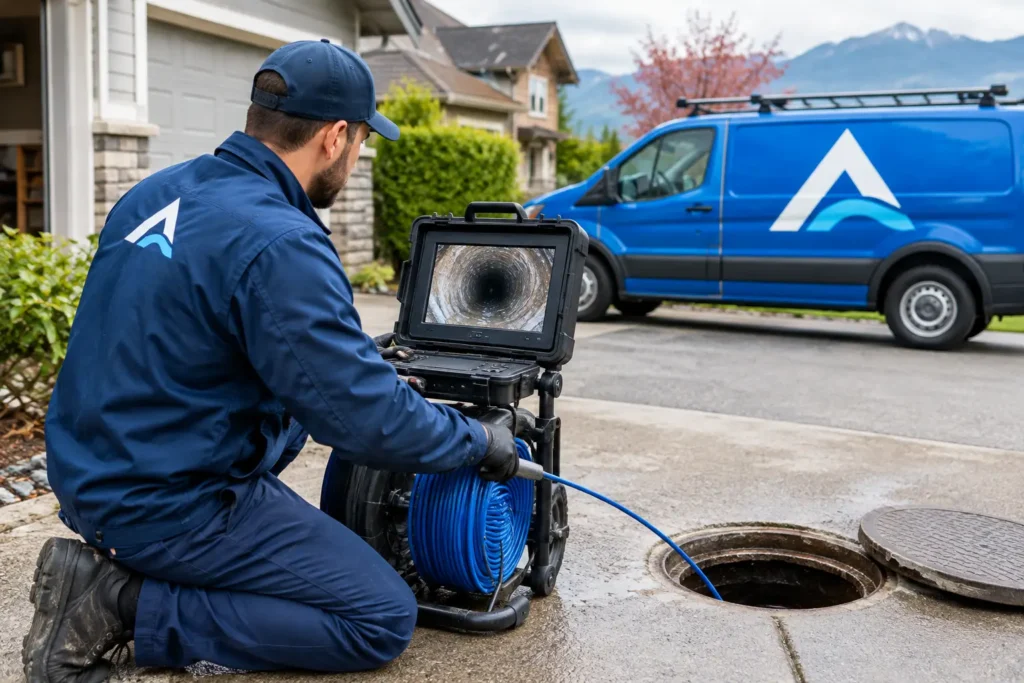
The process begins by choosing a suitable access point, often a cleanout. The technician feeds specialized equipment through the line while monitoring the interior condition and the direction of flow. The goal is to determine what is obstructing the line, where it is located, and whether the pipe itself appears sound.
Common findings include heavy paper buildup, wipes and other non-flushable material, roots entering through joints, construction debris, grease accumulation, mineral scale, displaced connections, cracks, and sections that no longer maintain proper grade. Each finding calls for a different response.
A buildup-related obstruction may be resolved with professional drain cleaning or hydro jetting when the pipe condition supports that approach. Roots may need to be removed, but the plumber should also assess whether the entry point in the pipe needs repair. If the line is cracked, separated, or collapsed, repeated cleaning is only a temporary measure. At that point, a targeted sewer line repair discussion is more appropriate.
This is why a proper diagnosis matters. Treating every backup as a basic clog can waste money and delay the repair that actually protects the property.
A clear result is more useful than a guess
A good diagnostic visit should give you practical answers: whether the issue is in a branch drain or the main sewer, what material is causing the restriction, how far into the line it appears, and what work is recommended next. If the line is flowing properly and no structural concern is visible, that is useful information too. It can prevent unnecessary repair work.
The inspection can also help clarify responsibility where a private building line connects to a municipal sewer. The exact point of responsibility depends on the property and local requirements, but identifying the location of the problem gives owners a stronger starting point when discussing next steps.
Why Repeated Backups Need More Than a Quick Clearing
There is a place for straightforward drain clearing. If a localized blockage is found and removed, the drain may return to normal with no further work needed. The trade-off is that a quick clearing does not always evaluate the full condition of an older or frequently blocked line.
Repeated backups deserve a more complete approach because wastewater can damage flooring, drywall, insulation, stored belongings, and finishes. It can also create sanitation concerns for residents, staff, and customers. The cost of a proper diagnosis is often small compared with responding to multiple backups and cleaning up after each one.
For a Chilliwack home with a finished lower level, this is particularly important. The lowest fixtures are commonly the first place a main-line restriction shows up. A floor drain, shower, or tub may become the exit point when wastewater cannot continue through the sewer line. Acting when the first warning signs appear is far easier than dealing with an overflow during a busy evening or weekend.
Commercial properties have similar concerns, although the symptoms may be noticed differently. Staff may report slow restroom fixtures, recurring odors, or drainage trouble during high-use periods. For landlords and property managers, documenting the condition of the line also helps support informed maintenance decisions instead of relying on temporary fixes.
Preparing for a Professional Sewer Line Diagnosis
You do not need to take apart fixtures or attempt a repair before the plumber arrives. In fact, using harsh chemical drain products before a service call can create safety concerns and may not address a main-line problem at all.
What helps is noting when the issue began, which fixtures are affected, whether the backup has happened before, and what was being used when it occurred. If tenants or staff have reported a pattern, share that information. A plumbing professional can use those details to narrow down the likely location and choose the right diagnostic approach.
If wastewater is backing up into a tub, shower, floor drain, or other interior area, limit water use throughout the building until the problem is assessed. Running dishwashers, washing machines, showers, or repeated toilet flushes can add more water behind the blockage. If active flooding is occurring, treat it as an emergency plumbing issue and arrange help promptly.
Choosing the Right Next Step After the Findings
Not every line needs replacement, and not every blockage can be solved with cleaning alone. The right recommendation should match the actual condition of the pipe and the nature of the obstruction.
If the line is intact but restricted by buildup, cleaning may restore dependable flow. If roots have entered at a compromised connection, clearing the roots may provide short-term relief while repair addresses the reason they entered. If there is major damage or a collapsed section, the focus shifts to repairing the affected portion of the sewer line.
Ask the plumber to explain what was found in plain language and why the proposed work suits that finding. Homeowners and property managers should understand whether the recommendation is intended as maintenance, a repair, or a temporary measure while a larger repair is planned. That clarity is part of good workmanship.
Armacom Plumbing & Heating approaches sewer concerns with the same priority as any serious plumbing repair: identify the source, explain the practical options, and complete only the work the system actually needs. If your drains are sending repeated warning signs, arranging a professional diagnosis before the next backup can protect your property and give you a much clearer path forward.