
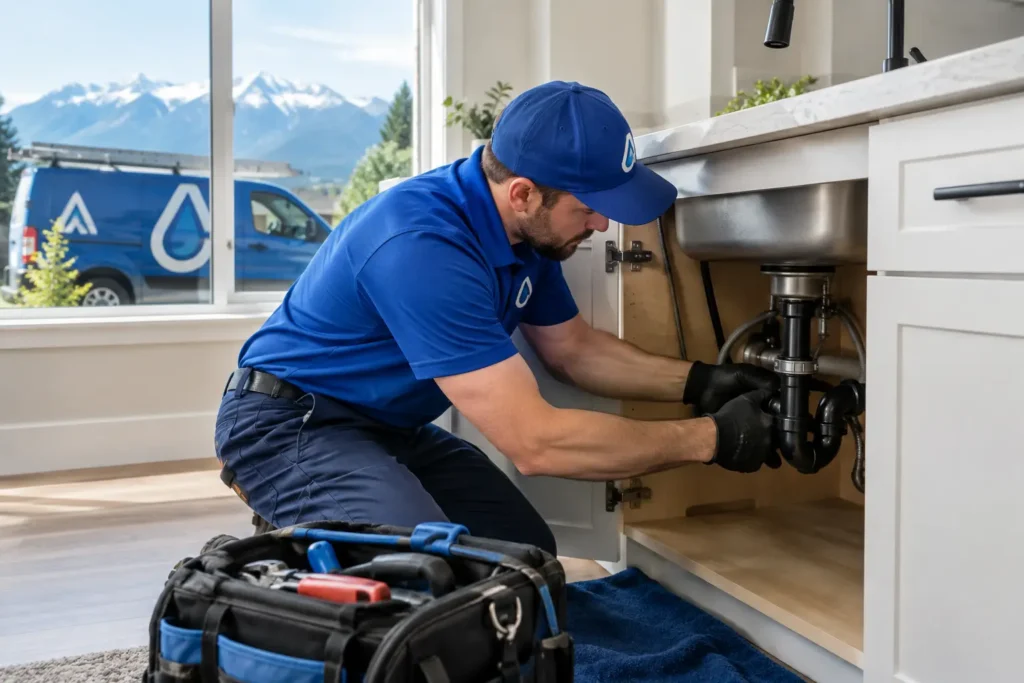
A small plumbing repair can become a much larger problem in a single day. A drip under the kitchen sink may damage the cabinet base, a slow toilet leak can affect flooring, and a drain that only backs up occasionally may be the first warning of a developing sewer issue. The right response is not always to panic, but it is rarely to wait and hope it goes away.
For homeowners, landlords, and business owners in Chilliwack, the practical question is simple: what can safely wait, and what needs a plumber now? Knowing the difference protects the property, limits disruption, and can prevent a straightforward repair from turning into water damage.
When plumbing repair becomes urgent
Any active leak that you cannot stop or contain deserves prompt attention. Water does not need to be spraying across the room to cause damage. A steady leak behind a wall, below a tub, or under a sink can soak drywall, insulation, cabinets, and subflooring before it becomes visible.
Shut off the nearest fixture valve if the leak is limited to a toilet, sink, or washing machine connection. If that valve will not close, or if water is coming from an unknown location, use the main water shutoff for the building. Every homeowner and property manager should know where this valve is before an emergency occurs.
A sewer backup is also an urgent plumbing problem. Water rising in a basement drain, toilet, shower, or tub may indicate a blockage in a shared drain line or the main sewer line. Stop using water throughout the building until the cause is diagnosed. Running another load of laundry or flushing again can add more wastewater to the backup.
Call for emergency plumbing help when there is active flooding, sewage coming back into fixtures, no water to the building, a burst pipe, or a water heater that is leaking heavily. If you smell gas near a gas appliance, leave the area and follow the appropriate emergency safety steps rather than trying to investigate the source yourself.
Problems that should not be put off
Not every issue calls for after-hours service, but many common repairs should be booked before they worsen. A toilet that runs between flushes may seem minor, yet it can waste a meaningful amount of water and often points to a worn fill valve, flapper, or flush mechanism. A toilet that rocks at the floor should also be inspected. Movement can damage the seal at its base and eventually lead to a leak.
Slow drains need attention when plunging no longer solves the problem, multiple fixtures drain slowly, or foul odors return soon after cleaning. Chemical drain cleaners are not a reliable repair. They may sit in the pipe without clearing the obstruction, can be hazardous to handle, and may complicate the work for the plumber who needs to open the drain afterward.
Professional drain cleaning is more effective because the method can match the problem. A localized sink blockage may need mechanical cleaning, while recurring buildup in a larger line may call for hydro jetting. The goal is to remove the obstruction and assess why it formed, not simply create a small opening through it.
Water stains on a ceiling, peeling paint, warm spots on a floor, unexplained moisture, or a water bill that suddenly rises can all indicate a hidden leak. Leak detection is especially valuable when opening walls based on guesswork would create unnecessary damage. A proper diagnosis identifies the likely source before the repair plan is made.
Start with the evidence, not the assumption
A good plumbing repair begins with diagnosis. The visible symptom is not always the failed part. For example, water around a toilet may come from a loose supply connection, condensation, a tank crack, a failing seal at the base, or water splashing from an unrelated issue. Replacing parts without identifying the source can waste time and leave the real problem untouched.
The same applies to low water pressure. If one faucet has poor flow, the issue may be in that fixture or its supply connection. If pressure has dropped throughout the property, the cause may be different and needs a broader inspection. A plumber should ask when the problem began, whether it affects hot water, cold water, or both, and whether recent work or freezing weather may be related.
For drain problems, the location and pattern matter. A single slow bathroom sink is different from a toilet, shower, and laundry drain all backing up at once. The second situation suggests the problem is farther down the drainage system and should not be treated as a simple fixture clog.
This diagnostic approach is what makes repairs last. It is also why the cheapest-looking option is not always the most affordable one. A temporary fix that fails again in a few weeks creates repeat service calls, added damage risk, and more inconvenience for tenants or customers.
Common repairs in Chilliwack homes and buildings
Chilliwack properties include a mix of older homes, newer construction, mobile homes, rental units, and commercial spaces. Their plumbing systems can have very different repair needs.
Older homes may have aging water lines, corroded valves, outdated fixtures, or sections of piping that have reached the end of their useful life. When repairs become frequent in several areas, it may be time to discuss targeted pipe replacement or whole-home repiping rather than continuing to patch isolated failures.
Some homes still have Poly-B piping. The material and fittings should be assessed carefully when there are leaks, visible deterioration, or repeated plumbing concerns. A repair may be appropriate in a limited area, but the condition and extent of the existing piping determine whether a larger replacement plan makes more sense.
Mobile home plumbing requires its own approach. Pipe routing, access underneath the home, freezing exposure, and fixture connections can differ from a conventional house. A repair should address the immediate leak while checking whether insulation, support, access, or vulnerable pipe sections may contribute to a repeat problem.
Commercial plumbing repairs also demand a fast, organized response. A blocked washroom, leaking water line, or failed hot water system affects employees, tenants, and customers. Property managers and business owners benefit from clear findings, practical repair options, and work scheduled to reduce unnecessary downtime where possible.
Water heater repairs need quick attention
A hot water tank that is leaking, making unusual noises, producing rusty water, or failing to keep water hot should be assessed promptly. Some issues can be repaired, such as a faulty valve or connection. Others point to internal tank failure, where replacement is usually the sensible option.
Do not ignore moisture around the base of a hot water tank. Check whether the water is coming from a nearby pipe or valve, but avoid removing panels or attempting repairs on gas-fired equipment. A tank leak can increase quickly once the tank itself has failed.
Tankless water heaters have different service needs. If hot water is inconsistent, the unit displays an error, or flow changes unexpectedly, the diagnosis may involve the water supply, venting, controls, ignition components, or the unit itself. Accurate troubleshooting matters because replacing a part without confirming the cause can create another service call without restoring dependable hot water.
What to do before the plumber arrives
Taking a few safe steps can reduce damage and help the diagnosis go faster. Shut off water if there is an active leak, move valuables away from wet areas, and avoid using affected drains or fixtures. If sewage is involved, keep people and pets away from the area.
Take a few photos of the leak, stain, or backup before cleaning it up if it is safe to do so. Note when it started, what fixtures are affected, whether the issue is constant or intermittent, and whether any recent changes occurred. These details can help identify patterns that are not obvious during a short site visit.
Do not use tape, sealant, or chemical products as a substitute for a proper repair. A temporary measure may be useful to control a minor drip until help arrives, but it should not hide the problem or make the area harder to inspect.
Choose repairs that solve the real problem
The best plumbing repair is one that accounts for the condition of the system, not just the immediate symptom. Sometimes that means replacing a failed toilet component. Sometimes it means cleaning a drain line thoroughly, repairing a damaged water line, or planning a larger update to prevent recurring leaks.
Ask the plumber what caused the failure, whether nearby components should be inspected, and what signs would indicate a future issue. Clear answers help homeowners and property managers decide between a limited repair and a more durable solution.
If you have a leak, recurring drain trouble, unreliable hot water, or a fixture that no longer works properly, acting early is usually the lower-stress option. Armacom Plumbing & Heating can assess the problem with precision and care, then recommend a practical repair that protects your Chilliwack property for the long term.