
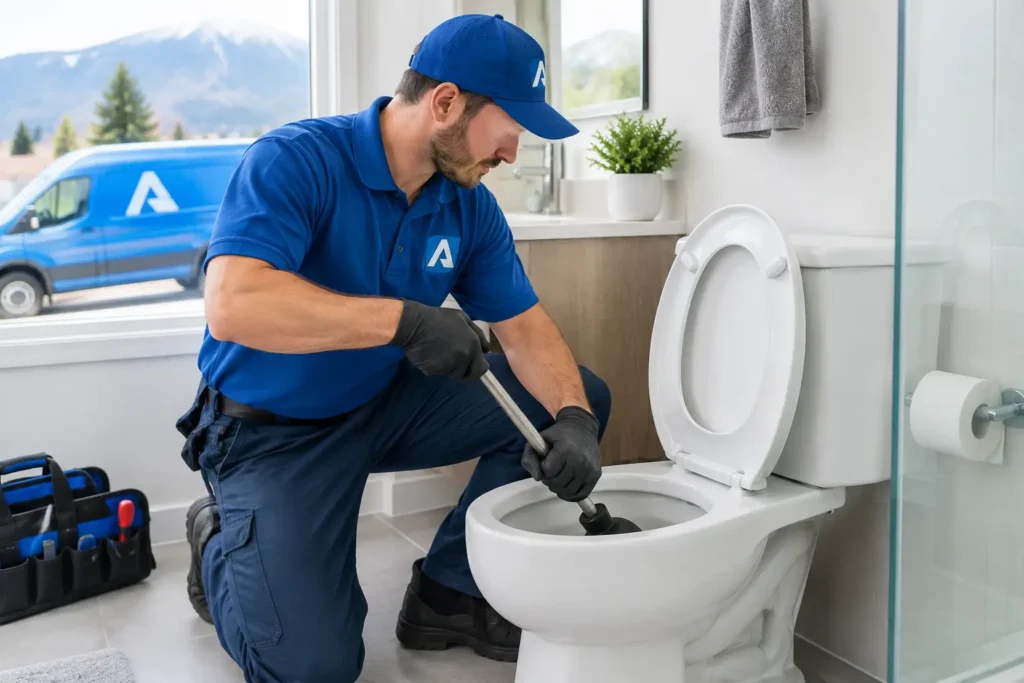
A toilet that rises toward the rim after flushing gives you very little time to think. Knowing how to clear toilet clog safely starts with preventing an overflow, then using the right tool for the blockage. A few careful minutes can solve a simple paper clog. Forcing the issue, pouring in harsh chemicals, or continuing to flush can turn a small toilet repair into water damage and a larger drain problem.
Stop the water before you try to clear a toilet clog
If the bowl is filling instead of draining, remove the tank lid and push the rubber flapper closed at the bottom of the tank. This stops more water from entering the bowl. Do not flush again to “see if it worked.”
If water is already close to overflowing, turn the shutoff valve behind the toilet clockwise. Put towels around the base of the fixture, especially on flooring that can absorb water. Wait until the bowl level drops before using a plunger or toilet auger.
A normal water level with a slow drain is less urgent, but the same rule applies: use one method at a time and test the toilet with a small, controlled flush only after the bowl is draining freely.
Start with a flange plunger
For most ordinary toilet clogs, a proper toilet plunger is the best first tool. It is not the flat cup plunger commonly kept under a kitchen sink. A toilet plunger has a fold-out rubber flange that fits into the opening at the bottom of the bowl and creates a seal.
Make sure there is enough water in the bowl to cover the plunger cup. Set the flange into the outlet opening, press down gently to remove trapped air, then make 15 to 20 firm strokes. Keep the seal intact while you work. The first push should be controlled, since a hard downward stroke can splash dirty water out of the bowl.
After plunging, pull the plunger away and watch the water level. If it drops quickly, the clog has likely moved. Flush once only. If the bowl fills again, stop rather than repeating flushes. The obstruction may be farther down the toilet trap or drain line.
Use a toilet auger for a stubborn clog
A toilet auger, sometimes called a closet auger, is designed to pass through the curved trap inside a toilet. It is the appropriate next step when plunging has not cleared the blockage. Unlike a general drain snake, a toilet auger has a protective sleeve to reduce the chance of scratching the porcelain.
Feed the protected end into the bowl outlet and turn the handle clockwise as the cable advances. When you meet resistance, continue turning gently to break up or retrieve the material. Do not force the cable aggressively. A hard object such as a small toy, toothbrush cap, or hygiene product may need to be pulled back out rather than pushed farther into the line.
Retract the cable slowly, clean the auger, and test the toilet with one flush. If the auger will not pass, the clog returns right away, or the fixture still drains poorly, it is time for professional drain cleaning. Repeatedly attacking the toilet can damage the fixture or compact the blockage deeper in the drain.
What not to put down a clogged toilet
The wrong shortcut can create more work than the clog itself. Avoid chemical drain cleaners in toilets. They often sit in the bowl or trap without reaching the obstruction, and their caustic ingredients can be hazardous if the toilet later needs to be plunged or serviced.
Do not use boiling water. Very hot water can crack porcelain, particularly in a cold bathroom, and it can damage internal toilet components. A small amount of warm water and dish soap may help lubricate a minor paper blockage, but it will not solve a solid obstruction or a drain-line issue.
Wire hangers and improvised metal tools are also a poor choice. They can scratch the bowl, damage the trapway, and leave the actual blockage in place. Toilets are made for toilet paper and human waste only. Wipes labeled flushable, paper towel, facial tissue, cotton products, dental floss, and sanitary items should go into the trash.
When a toilet clog may actually be a drain-line problem
One toilet that clogs after excessive paper use is often a fixture-level blockage. The situation changes when more than one fixture is affected. If a toilet gurgles while a shower, sink, or washing machine drains, the restriction may be in a branch line or the main sewer line.
Other warning signs include sewage backing up into a tub or shower, drains that slow down throughout the building, repeated toilet clogs, or a toilet that clears briefly and then fails again. These are not problems to solve with more plunging. They need a proper diagnosis to identify where the restriction is and what is causing it.
For homes, rental properties, and commercial washrooms in Chilliwack, recurring backups deserve prompt attention. A professional plumber can assess the toilet, drain piping, and the larger drainage system, then use the appropriate equipment to clear the obstruction without guessing. Where buildup or a significant blockage is present, professional drain cleaning can restore flow more reliably than household tools.
A few details that can point to the cause
The timing of the clog matters. A toilet that suddenly stops after a child has used it may have an object lodged in the trap. A toilet that has become progressively slower over weeks may have buildup in the toilet passage or downstream piping. If the toilet is older and needs frequent plunging despite careful use, poor flushing performance or a worn internal part can also contribute.
Pay attention to whether the tank refills normally. A weak flush is not always a clog. A low tank water level, a partially closed supply valve, or a problem with the flush valve can leave too little water to move waste through the trapway. That calls for toilet repair, not more force with a plunger.
In a multi-unit property or business, document which fixtures are affected and when the issue began. That information helps narrow down whether the blockage is isolated to one washroom or affects a shared drain line. It also helps prevent staff or tenants from continuing to use a fixture that may overflow.
When to call a plumber right away
Call for help immediately if wastewater is backing up, water has overflowed onto the floor, multiple drains are affected, or you cannot stop the toilet from refilling. The same applies if an item is trapped in the toilet and cannot be removed with a toilet auger.
A plumber should also inspect a toilet that repeatedly clogs with normal use. Recurrent clogs are not something to accept as part of owning an older home or managing a busy property. The answer may be a blocked line, a toilet issue, or a drainage problem farther along the system. A clear diagnosis can prevent an inconvenient backup from becoming a costly cleanup.
Armacom Plumbing & Heating provides practical plumbing repair and drain cleaning for Chilliwack property owners when a plunger and auger are no longer enough. Until help arrives, keep the affected toilet out of service, avoid running nearby fixtures if backups are occurring, and leave the area as dry and safe as possible.
A toilet clog is manageable when you respond early and use the right tool. Once the problem involves repeated backups, slow drains elsewhere, or wastewater on the floor, stopping use and getting it properly assessed is the safest next move.