
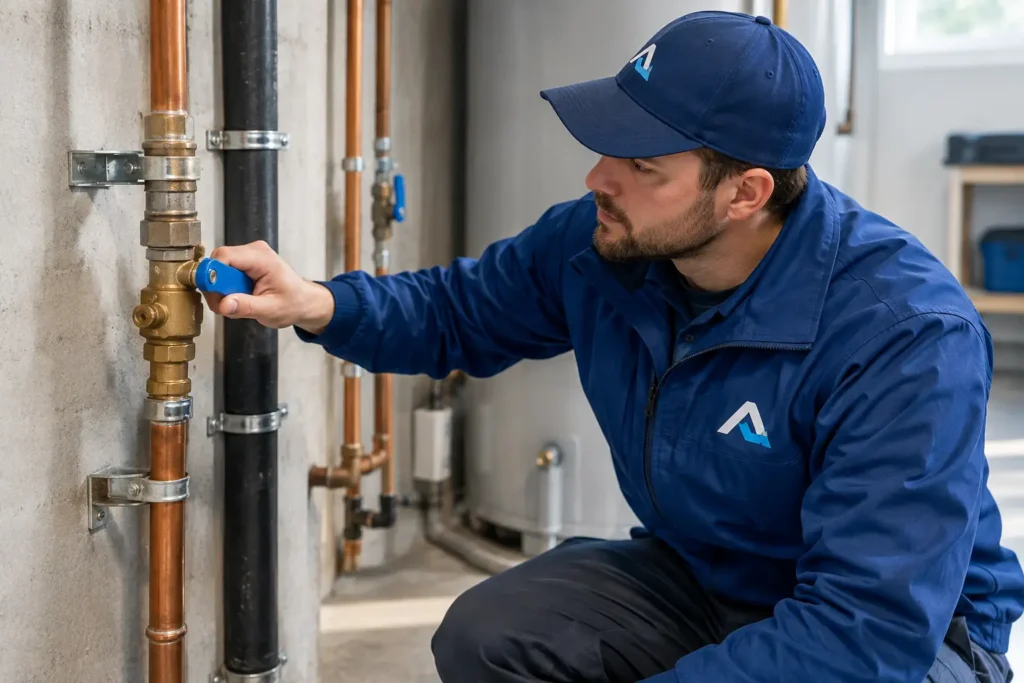
A burst supply line can put a surprising amount of water into a kitchen, basement, or utility room before anyone finds the right valve. Knowing how to locate main shutoff equipment before a leak happens gives you a better chance of limiting damage while help is on the way. Every homeowner, landlord, and property manager in Chilliwack should know where the main water shutoff is, how it operates, and when not to force it.
The main shutoff controls the water supply entering the building. It is different from the small valves below a sink, behind a toilet, or beside a washing machine. Those fixture valves only stop water to one appliance or fixture. The main shutoff is what you use when a pipe breaks, a toilet will not stop running and begins overflowing, or a major leak cannot be isolated quickly.
Start Where the Water Line Enters the Building
In most houses, the main shutoff is installed close to the point where the municipal water line enters the structure. That location varies with the age and layout of the home, but it is usually in a practical service area rather than hidden behind finished walls.
In a typical Chilliwack house with a basement, check along the front foundation wall, near the mechanical room, laundry area, or hot water tank. Look for a larger pipe entering through the foundation, often copper, plastic, or galvanized steel in older homes. The shutoff valve should be on that incoming line before it branches off to serve the rest of the house.
For homes on a slab, the valve may be in a utility closet, garage, laundry room, or near the hot water tank. In a crawlspace home, it may be near the access hatch or where the line comes through the perimeter foundation. Bring a flashlight and avoid stepping on unsupported insulation or plumbing while looking.
Do not assume the valve beside the hot water tank is the main shutoff. That valve may only serve the water heater or be part of the tank installation. Trace the pipe back toward where it enters the home if you are unsure.
What the Main Shutoff Valve Looks Like
Most residential main shutoffs are one of two common styles. A gate valve has a round wheel handle that turns several times. A ball valve has a straight lever handle that turns one quarter of a turn.
For a ball valve, the handle is generally parallel with the pipe when open and perpendicular to the pipe when closed. This is the easier style to confirm at a glance. For a gate valve, turn the wheel clockwise to close it. Gate valves can become stiff or fail internally as they age, particularly if they have not been operated for years.
You may also find a water meter close to the entry point. The meter and its associated shutoff arrangement can help identify the incoming water line, but ownership and responsibility for valves around the meter can vary. Do not tamper with a sealed meter or an outdoor curb stop. If the interior valve will not close and water is actively leaking, call for emergency plumbing service rather than attempting to operate municipal equipment.
How to Locate Main Shutoff Valves in Different Properties
The basic rule is the same, but the building type changes where you need to look.
Detached homes
Look in the basement, mechanical room, garage, crawlspace, or utility area nearest the street-facing side of the home. Water lines often enter from the direction of the street, though lot layout and renovations can make that less obvious. Older homes may have more than one valve added over time, so identify the valve that actually stops the full domestic water supply.
Townhomes and strata properties
A townhome may have an individual shutoff inside the unit, a valve in a utility closet, or a shutoff located in a shared service room. Some plumbing components may be common property, and emergency access procedures can differ by strata. Property managers should keep the location of each unit shutoff documented and make sure staff know who has access to locked mechanical areas.
Mobile homes
Mobile home plumbing needs a closer look because supply lines may run beneath the home and can be exposed to colder conditions. The shutoff may be in a utility compartment, beneath an access panel, or near where the water line rises into the home. If you need to inspect plumbing underneath, do not crawl under a structure with standing water, damaged skirting, or questionable supports. A small leak below a mobile home can travel unnoticed for a long time.
Commercial spaces
Restaurants, retail units, offices, and light commercial buildings may have several isolation valves. There can be a main building shutoff, a suite shutoff, and separate valves for specific fixtures or equipment. The best response is not always to shut down the entire building. A qualified plumber can often isolate the affected area and reduce disruption, which matters when a business needs to stay open.
Test the Valve Before You Need It
Finding the valve is only half the job. A main shutoff that has seized open is not much help during a water emergency. Test it carefully when there is no active problem, ideally with another adult present.
First, let everyone in the building know you are shutting the water off briefly. Avoid running dishwashers, washing machines, or other water-using equipment during the test. Open a cold-water faucet at a sink, then close the main shutoff slowly. The water flow should stop after the pressure in the lines bleeds off.
Once you confirm it works, reopen the valve fully. With a gate valve, avoid leaving it partly open. A ball valve should be returned to the fully open position, with the handle parallel to the pipe. Check the valve body and nearby fittings for drips afterward. If turning the valve causes leaking around the stem, or if it will not operate smoothly, schedule plumbing repair before it becomes an emergency.
Do not use excessive force, pliers, or a pipe wrench on an old valve handle. A corroded valve can crack, snap, or begin leaking when disturbed. This is one of those cases where a small inconvenience can quickly become a larger repair.
What to Do During a Water Leak
If water is spraying from a pipe, fixture, or appliance connection, your first priority is safety and damage control. Keep clear of electrical panels, outlets, extension cords, and appliances in wet areas. If water is near electrical equipment and it is safe to do so, do not enter the area until the electrical hazard is addressed.
If you can safely reach a fixture-specific shutoff, use it first. For example, a toilet supply valve may stop an overflowing toilet without shutting water off to the whole home. If the leak is from an unknown source, a broken pipe, or a failed water heater connection, close the main shutoff.
After closing the valve, open a cold faucet at the lowest practical point in the building to relieve remaining pressure. Put towels, buckets, or a container under the leak if that can be done safely. Take photos of the affected area for your records, but do not delay calling for help to document every detail.
A main shutoff does not drain all the water from the pipes. It stops new water from entering, while water already in the lines can continue to run out. That is normal. It also does not solve a drainage backup. If water is rising from a floor drain, tub, or toilet without an active supply leak, keep water use to a minimum and arrange professional drain cleaning or sewer line assessment.
When a Plumber Should Take Over
Call a plumber if the main valve is seized, leaking, inaccessible, or unclear. The same applies if you have shut the water off but cannot find the source of the leak, see water staining behind walls, or suspect a damaged underground water line. Leak detection can prevent unnecessary wall opening and help pinpoint the repair properly.
Main valve replacement is not usually a good do-it-yourself job. It may require shutting off water at the municipal connection, selecting the correct valve and fittings, and checking the work under pressure. For property managers and business owners, clear labeling is also worth doing after repairs so the next person can act quickly.
At Armacom Plumbing & Heating, we regularly find that customers know a leak is serious but have never been shown which valve protects the building. A quick inspection during a plumbing repair can identify the shutoff, confirm whether it works, and deal with aging valves before they fail at the worst possible time.
Take ten minutes this week to locate the valve, clear the space around it, and show everyone responsible for the property how it works. That small bit of preparation can turn a stressful water emergency into a controlled repair.