
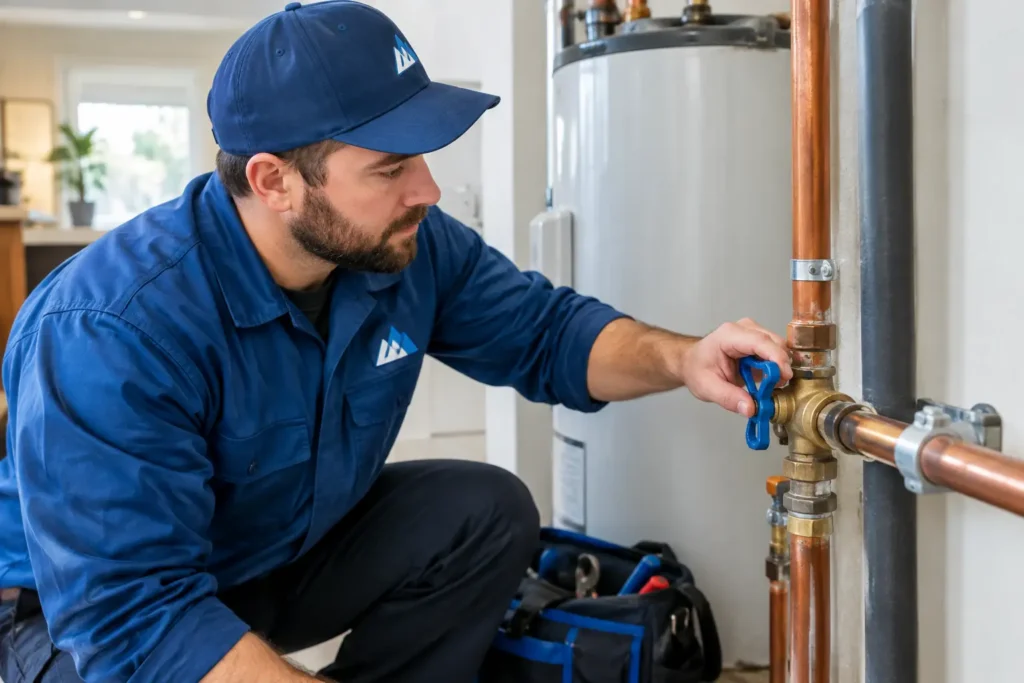
A burst supply line can put a surprising amount of water into a kitchen, bathroom, or utility room in minutes. Knowing how to shut off water before there is an emergency can limit damage, protect flooring and drywall, and give your plumber a safer starting point when they arrive.
For most leaks, the right answer is not immediately shutting off water to the entire building. Start with the smallest valve that stops the problem. If you cannot isolate the fixture quickly, or water is spreading fast, turn off the main water supply and call for emergency plumbing help.
How to Shut Off Water at the Right Valve
Homes and commercial spaces usually have several shutoff points. The best one depends on where the leak is coming from and whether the water can be controlled safely.
A fixture shutoff valve stops water to one appliance or plumbing fixture. These are commonly found below sinks, behind toilets, beside laundry connections, and at water heaters. A main shutoff valve stops incoming water to the entire property. Use it when a pipe has burst, a hidden leak is running freely, or a fixture valve has failed.
Before you need one, take 10 minutes to locate these valves, make sure everyone responsible for the property knows where they are, and clear away stored items that block access. This is particularly worthwhile for landlords, strata managers, and business owners who may not be on site when a leak starts.
Shutting Off Water Under a Sink
Kitchen and bathroom sinks normally have two small valves inside the cabinet: one for hot water and one for cold water. They are connected to the faucet by flexible supply lines.
Turn the valve handle clockwise until it stops. Avoid forcing it. Older valves can seize, and excessive pressure can damage the stem or cause the valve to leak. Once the valve is closed, turn on the faucet to relieve pressure and confirm that the water has stopped.
If the leak is from only the hot or cold supply line, close that valve first. If water continues to flow, the valve may not be sealing properly. Close both fixture valves, then use the main shutoff if necessary.
Shutting Off Water to a Toilet
The toilet shutoff is usually on the wall or floor behind the toilet, connected to the fill valve with a small supply line. Turn it clockwise until snug, then flush once to empty most of the tank.
This is the first valve to reach for if the toilet will not stop running, the supply hose is leaking, or the tank is cracked. Do not keep flushing a toilet that is overflowing. Remove the tank lid and lift the float or flapper only as a temporary measure while you close the supply valve.
A toilet that repeatedly clogs or backs up is different from a leaking toilet. Shutting off the water may stop an overflow, but it will not clear the drain line. That calls for proper drain cleaning rather than repeated plunging that risks sending wastewater onto the floor.
Shutting Off Water to a Washing Machine
Laundry boxes generally have separate hot and cold valves behind the washing machine. Turn both clockwise if a hose is leaking, the washer is being replaced, or the appliance will be unattended for an extended period.
Rubber washing machine hoses can deteriorate without much warning. If you see bulging, cracking, rust at the connections, or moisture inside the laundry box, arrange a plumbing repair before a small issue becomes a major leak.
Find and Use Your Main Water Shutoff Valve
The main shutoff is the valve that controls water entering the building. In many Chilliwack homes, it is inside near where the water line enters the house. Look in a mechanical room, utility area, crawl space access area, garage, or along an exterior wall. In some older properties, the location is less obvious, so it is worth identifying it before an emergency.
There are two common styles. A gate valve has a round wheel that turns clockwise to close. A ball valve has a lever handle. When the lever is perpendicular to the pipe, it is normally off. When it is parallel with the pipe, it is normally on.
To shut off the main water supply:
- Turn off the valve slowly. For a wheel-style valve, turn clockwise. For a lever-style valve, rotate the handle one quarter turn until it sits across the pipe.
- Open a cold-water faucet at the lowest practical point in the building, such as a laundry sink or bathtub. This relieves pressure and lets remaining water drain from the lines.
- Open a higher faucet briefly if needed to help the lines drain. Do not leave faucets running unattended.
- Check that the leaking area has stopped receiving water. Residual water may continue to drain for a short time.
If the valve will not move, do not use a wrench or apply excessive force. A seized or corroded main shutoff can break, creating a larger emergency. Call a plumber instead. A reliable main valve is part of basic property maintenance, especially in older homes where valves may not have been operated for years.
Do Not Confuse the Main Valve With the Meter Valve
Your water meter may have a valve near it, but not every valve around a meter is intended for homeowner use. Municipal equipment and curb-side shutoffs can require a special key and should be left alone unless the local utility has specifically instructed you otherwise.
Use the accessible building-side main shutoff whenever possible. If the main valve has failed and water cannot be controlled, an emergency plumber can assess the situation and coordinate the proper next step.
What to Do if a Water Heater Is Leaking
A leaking hot water tank needs prompt attention, but the response depends on where the water is coming from. If it is leaking from a connected pipe or valve, close the cold-water supply valve above the tank first. This often stops the active flow while leaving the rest of the home supplied with cold water.
If water is coming from the tank body, the bottom of the unit, or an area you cannot clearly identify, shut off the cold-water supply to the tank and arrange service. Water collecting at the base can also come from a fitting above it, so do not assume the tank has failed without an inspection.
For an electric unit, do not leave power on if the tank may be empty or draining. For a gas-fired unit, do not attempt repairs to gas controls or piping. If you smell gas, leave the area, avoid switches and open flames, and follow the gas utility’s emergency instructions. Water heater repairs and replacements need careful diagnosis because a small visible leak can involve pressure, temperature, venting, or connection issues.
Tankless water heaters also have isolation valves, but their piping arrangement varies. If a tankless unit or its connections are leaking, close the cold-water inlet if it is clearly labeled and accessible, then contact a qualified plumber.
When Shutting Off Water Is Not Enough
Turning off water controls the immediate damage. It does not identify why a pipe failed. A leak hidden behind a wall, under a floor, or in a ceiling may continue causing damage from water already trapped in building materials.
After shutting off the supply, take a few practical steps: move valuables away from the area if it is safe, place containers or towels under drips, avoid standing water near electrical equipment, and take photos for your records. Do not cut into walls, remove plumbing connections, or turn the water back on just to test a suspected repair.
For a drain backup, remember that the main water shutoff may reduce the amount of new water entering the system, but it will not remove a blockage in a sewer or drain line. Stop using sinks, toilets, dishwashers, and laundry equipment connected to the affected drainage system. This is often the point where professional drain cleaning or camera inspection prevents a recurrence.
A Simple Test That Can Prevent a Bigger Emergency
If your main shutoff is accessible and in good condition, test it periodically when you have time to deal with a minor issue. Close it gently, open a faucet to verify the water stops, then reopen the valve fully. A gate valve should generally be opened fully rather than left partly closed, since partially closed valves can wear and restrict flow.
If the valve drips, sticks, will not close fully, or appears heavily corroded, have it replaced before an emergency forces the issue. The same applies to old fixture stops under sinks and behind toilets. These small valves are easy to overlook until they are the only thing between a minor leak and water damage.
When water is moving where it should not, act first and troubleshoot second. Shut off the closest safe valve, protect the area, and get a qualified Chilliwack plumber involved before a temporary plumbing problem becomes a larger repair.