
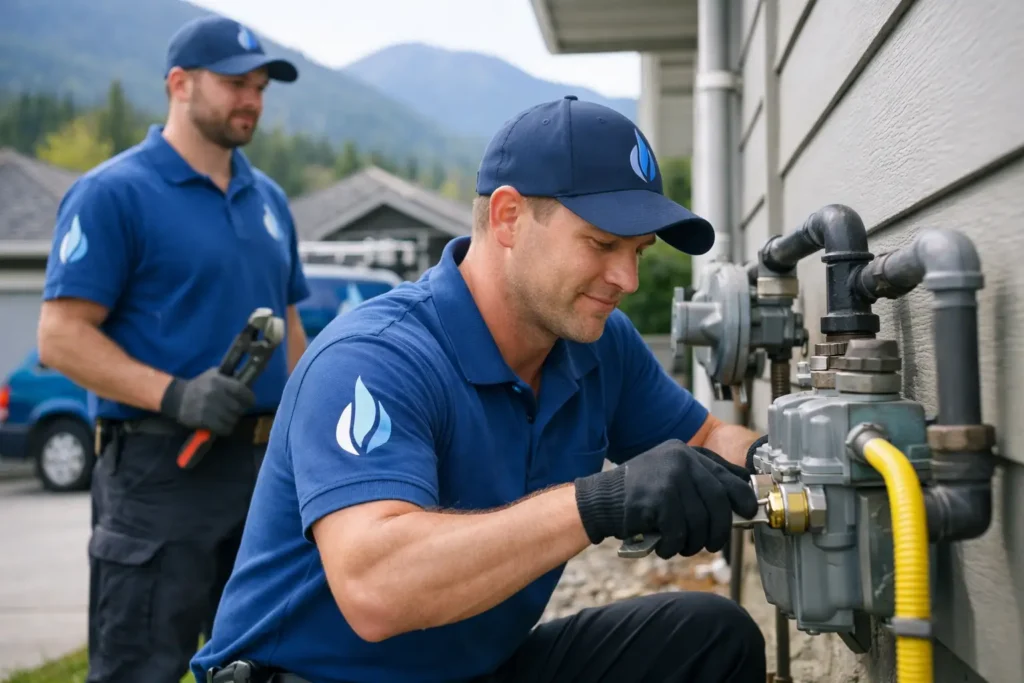
A new gas range, boiler, water heater, or fireplace is not simply an appliance purchase. Before it can run, the gas supply has to be sized, routed, connected, tested, and approved correctly. So, who installs gas lines? In Chilliwack, the right person is a qualified gas fitter working under the appropriate licensing and permit requirements – often a plumber who is also properly certified for gas fitting work.
That distinction matters. Not every plumber performs gas work, and a general handyman should not alter fuel-gas piping. A gas line that is too small, poorly joined, unsupported, or improperly tested can create performance problems and serious safety risks. The work needs to be completed by a trained professional who understands gas code requirements, appliance specifications, pressure testing, ventilation considerations, and local inspection procedures.
Who Installs Gas Lines for Homes and Businesses?
A licensed gas fitter installs, alters, extends, and repairs gas piping from the meter or existing gas supply to approved appliances. Depending on the scope of the project, this may include running a new branch line, replacing old pipe, moving a gas connection during a renovation, or adding capacity for another appliance.
Many experienced plumbing contractors offer gas fitting because the work overlaps with water-heating and boiler installations. However, homeowners should always ask whether the technician assigned to the work is qualified to perform gas fitting and whether permits and inspections are required for the job. Those are basic questions, not inconveniences.
For a straightforward appliance connection, the gas fitter still needs to confirm that the existing pipe can deliver enough fuel at the required pressure. A line may look adequate because it reaches the appliance location, but appearance is not the same as capacity. Pipe diameter, pipe length, the number of fittings, the total load on the system, and the appliance manufacturer’s requirements all affect the calculation.
In a commercial property, the planning is often more involved. Restaurants, strata buildings, retail spaces, and other light commercial properties may have multiple appliances or longer pipe runs. A qualified gas fitter should assess the entire connected system rather than treating the new appliance as an isolated addition.
What a Professional Gas Line Installation Includes
Good gas fitting starts before anyone cuts pipe. The installer should review the appliance type, its required gas input, the proposed location, and the available gas supply. If the appliance is replacing an older unit, the existing line is inspected instead of assumed to be suitable.
The actual installation may involve carefully routing approved pipe through accessible areas, adding shutoff valves where required, protecting pipe where it passes through framing, and securing the line at proper intervals. The connection must be accessible where required and made with materials approved for the application.
Once the line is installed, it must be pressure tested to check for leaks before it is put into service. The appliance is then connected and commissioned according to its installation instructions. Where a permit and inspection are required, the work should be arranged so the installation can be reviewed by the authority having jurisdiction.
This process can feel more detailed than expected when you are eager to use a new appliance. It is also what prevents avoidable callbacks, weak appliance performance, and unsafe installations.
New line versus extending an existing line
Extending an existing gas line can be less disruptive than installing a completely new route, but it is not automatically the cheaper or better option. If the existing piping is undersized, aged, inaccessible, or already near its capacity, adding another branch may require more extensive work.
A new line may make more sense when the appliance is far from the current supply, when the route needs to avoid finished areas, or when future additions are likely. An experienced gas fitter can explain the practical trade-offs before work begins, including access, pipe routing, permit needs, and whether the existing meter capacity needs review.
When to Call a Gas Fitter Instead of Attempting a Repair
There are no safe shortcuts with fuel-gas piping. Do not attempt to disconnect, cap, move, or reconnect a gas appliance yourself. Even a small change can affect the integrity of the system or leave a fitting leaking under pressure.
Call a qualified professional when you are installing a new gas appliance, converting an appliance location, replacing a gas water heater or boiler, adding a gas outlet, or renovating a kitchen or mechanical area where piping needs to move. It is also wise to arrange an inspection if an older line has visible corrosion, has been damaged, or has questionable past work.
If you smell gas, hear a persistent hissing sound near a line or appliance, or suspect an active leak, leave the area and follow the gas utility’s emergency instructions. Do not use flames, switches, or devices that could create a spark nearby. Once the immediate emergency has been addressed, a qualified gas fitter can identify and repair the source.
For water-heating equipment, gas supply issues can sometimes look like appliance failure. A unit that does not stay lit, struggles to meet demand, or shuts down repeatedly may need professional diagnosis. The cause could be the appliance itself, the gas supply, venting, or another installation issue. A proper assessment avoids replacing parts based on guesswork.
Questions to Ask Before Hiring Someone to Install a Gas Line
The right contractor should be comfortable answering clear, practical questions. Ask whether they are qualified and licensed for the specific gas work, whether a permit and inspection will be needed, and whether the quote includes pressure testing and final connection.
You should also ask how they will determine whether your current gas line has enough capacity. A professional answer should involve an assessment of the existing system and appliance load, not a quick visual estimate. If a contractor says a larger appliance can be connected without looking at pipe size or run length, that is a reason to pause.
It also helps to clarify what is included before the work starts. Access behind finished walls, longer-than-expected pipe routes, upgrades to existing piping, and appliance-specific requirements can affect the final scope. A clear plan protects both the customer and the installer.
For landlords, strata managers, and commercial property owners, documentation is especially useful. Keep permit records, inspection information, appliance manuals, and service details with the building records. That makes future repairs, tenant turnover, and equipment replacement more straightforward.
Preparing Your Property for Gas Line Work
You can make the appointment more efficient by clearing access around the appliance location, gas meter area, utility room, or crawl space entry. If the gas fitter will need to route pipe through a finished space, point out any known plumbing lines, prior repairs, or access panels.
Have the appliance model information available if you have already chosen it. The model and fuel requirements allow the installer to verify the load and connection details before arriving with materials. If you are deciding between a standard hot water tank and a tankless model, discuss that decision early, since the gas demand and installation requirements can differ significantly.
For older homes in Chilliwack, access can be the deciding factor in how a gas line is routed. Crawl spaces, additions, finished basements, and previous renovations do not always leave an obvious path. A site visit is often the best way to avoid assumptions and provide an accurate scope of work.
Safe Gas Fitting Is Worth Doing Once
Gas piping is hidden for much of its life, which is exactly why workmanship matters. The lowest initial price is not always the lowest-cost option if the work skips proper sizing, testing, permits, or inspection. Correct installation protects the appliance, supports reliable operation, and gives property owners confidence that the system was handled responsibly.
Armacom Plumbing & Heating provides gas fitting support for homeowners and light commercial properties in Chilliwack, including gas line installations connected to water-heating and boiler projects. When you are planning an appliance upgrade or need a gas line assessed, start with a qualified professional who will evaluate the existing system before recommending the work.