
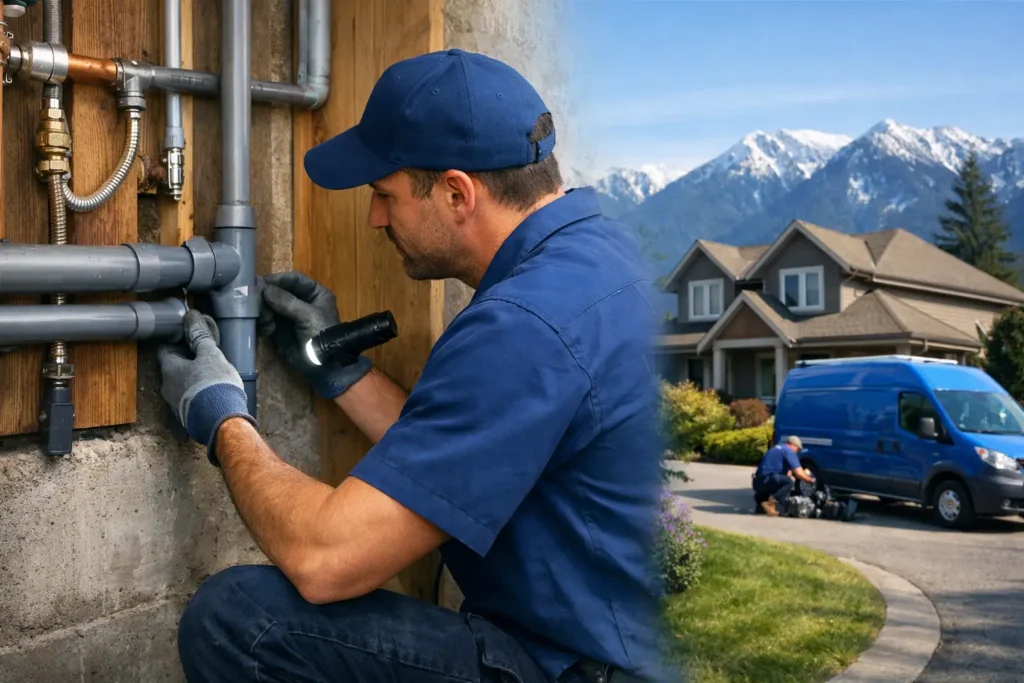
A homeowner usually starts asking about Poly B insurance after receiving a renewal question, spotting gray plastic pipe in a utility room, or hearing that a neighbor had a leak. The concern is reasonable. Polybutylene plumbing can remain dry for years, then develop a fitting or pipe failure that damages flooring, walls, cabinetry, and personal belongings quickly.
The key point is that insurance and plumbing condition are related, but they are not the same question. Your insurer decides whether it will write or renew a policy and what it may cover. A qualified plumber determines what material is present, how it was installed, its present condition, and whether replacement is the sensible next step. For Chilliwack homeowners, getting clear answers before a leak is usually less expensive and far less disruptive than dealing with water damage after one.
What Poly B insurance usually means
Poly B, short for polybutylene, is a gray plastic water supply pipe used in many homes from past building periods. It is often found near hot water tanks, in mechanical rooms, under sinks, in crawlspaces, and behind finished walls. The pipe itself is not always easy to identify because sections may have been repaired or mixed with copper, PEX, or other materials over the years.
When people search for Poly B insurance, they are generally asking one of two things: “Will my insurer cover a leak?” or “Can I keep my policy if my home has Poly B?” The answer depends on the individual insurer, policy wording, the age and condition of the plumbing, prior claims, and the insurer’s current underwriting rules.
Some insurers may ask whether Poly B is present during an application or renewal. Others may ask for details about its extent, request an inspection, apply conditions, or require replacement within a set timeframe. Do not assume your neighbor’s experience, an old online forum post, or a previous policy automatically applies to your home. Call your insurer or broker, explain what you know, and ask for the answer in writing.
Does home insurance cover a Poly B leak?
Many home insurance policies distinguish between sudden, accidental water damage and the cost of correcting the plumbing problem that caused it. For example, a sudden pipe failure may damage a ceiling and room below it. Depending on the policy and circumstances, resulting water damage may be considered differently from the cost to replace the failed section of pipe or the entire Poly B system.
That distinction matters. Insurance is not designed to be a maintenance plan or a guaranteed funding source for proactive repiping. If a pipe shows signs of age, repeated leakage, improper past repairs, or gradual deterioration, coverage can become more complicated. Certain policies also contain exclusions, limitations, deductibles, or requirements related to water damage.
Before relying on insurance, ask direct questions:
- Is Poly B plumbing acceptable under my current policy and at renewal?
- If a sudden leak occurs, what damage and repairs could be eligible for coverage?
- Are there exclusions or special conditions for existing Poly B plumbing?
- Does the insurer require an inspection, proof of replacement, or a specific timeframe to act?
Keep the answers with your policy documents. If an insurer requests a plumbing assessment or proof of repairs, having dated invoices and photos can prevent confusion later.
Why waiting for a leak is a costly gamble
A water line can fail in a place nobody sees until the damage is advanced. A slow leak inside a wall may stain drywall, swell baseboards, affect flooring, and create conditions that require more than a straightforward plumbing repair. A sudden failure can release a large amount of water in a short period, particularly if nobody is home to shut off the main supply.
In my experience, the cost customers remember is not just the pipe repair. It is the disruption: opening finished walls, moving furniture, managing restoration work, taking time off work, and living around the repair. For landlords and property managers, there is also the responsibility of protecting tenants and limiting interruption to occupied units.
Replacement is not automatically necessary for every home with older plumbing, but it is worth evaluating when Poly B is extensive, the home has a history of leaks, accessible sections show concerns, or an insurer has raised the issue. A planned Poly B replacement gives you more control over scheduling, wall access, finishes, and budget than an emergency failure does.
Have the plumbing identified before making decisions
Do not rely on pipe color alone. A proper assessment looks at accessible supply lines, fittings, transitions between pipe materials, shutoff valves, the water heater area, under-sink connections, crawlspaces, and any previous repair locations. A plumber can also identify whether the visible material represents the whole system or only one portion of it.
This is especially useful in homes that have had partial renovations. It is common to find newer piping near a kitchen or bathroom renovation while original Poly B remains elsewhere. Partial replacement can reduce a known concern, but it may also leave older concealed lines in service. Whether a partial repair or full repipe makes sense depends on the layout, accessibility, pipe condition, future renovation plans, and the requirements communicated by your insurer.
A written scope should explain what was inspected, what pipe materials were found, which areas can be confirmed without opening walls, and what work is recommended. That is more useful to both a homeowner and an insurer than a verbal guess.
Signs that deserve prompt plumbing attention
Poly B can be hidden, so watch for the same warning signs you would take seriously with any water supply piping. A damp spot on a ceiling, bubbling paint, a musty odor, an unexplained increase in water use, or a warm area on flooring can point to a concealed leak. Corrosion around fittings, repeated drips in the same area, reduced water pressure, and previous water damage are also reasons to arrange an inspection.
If water is actively flowing, shut off the home’s main water valve if it is safe to do so, then call for emergency plumbing help. Do not wait to see whether the leak slows down. Water can travel along framing and behind cabinets before it becomes visible.
For a suspected hidden leak without an obvious source, professional leak detection can help narrow down the problem before unnecessary demolition begins. Accurate diagnosis is important because not every stain or moisture issue originates from a pressurized water line.
Replacement choices and practical trade-offs
A complete repipe removes the uncertainty of leaving concealed Poly B in service. It can be the strongest long-term option, especially if insurance eligibility is a concern or the system has already had failures. The trade-off is greater upfront cost and some controlled access to walls or ceilings. An experienced crew plans the work to limit openings where possible and coordinates the plumbing restoration so the system is tested before surfaces are closed.
Targeted replacement may be appropriate where the Poly B is limited to an accessible area or where a confirmed failure is isolated. It costs less initially, but homeowners should understand what remains. If older pipe stays in hidden sections, the risk has been reduced rather than eliminated.
Material selection should be based on the home and the job, not a one-size-fits-all pitch. The installation quality, proper support, suitable fittings, accessible shutoffs, pressure testing, and careful connections to existing systems all affect long-term performance.
Preparing for an insurer conversation
Start with facts. Confirm whether Poly B is present and how much of the home is affected. Gather prior plumbing invoices, documentation of water damage claims or repairs, and any inspection report you have. Then ask the insurer or broker what it needs, rather than assuming a replacement is mandatory or assuming no action is required.
If replacement is recommended, request a detailed plumbing estimate that defines the scope. It should be clear whether it includes all accessible and concealed Poly B supply piping, fixture connections, required access, testing, and any limits on wall or ceiling restoration. Plumbing contractors handle the piping work; the details of finishing surfaces should be discussed before work begins so expectations are clear.
For Chilliwack homeowners who need a practical assessment, Armacom Plumbing & Heating can inspect accessible plumbing, explain the condition found, and provide straightforward guidance on repair or repiping options. The goal is not to create alarm. It is to give you enough information to protect the property, make an informed insurance decision, and avoid being forced into a rushed choice after water is already on the floor.