
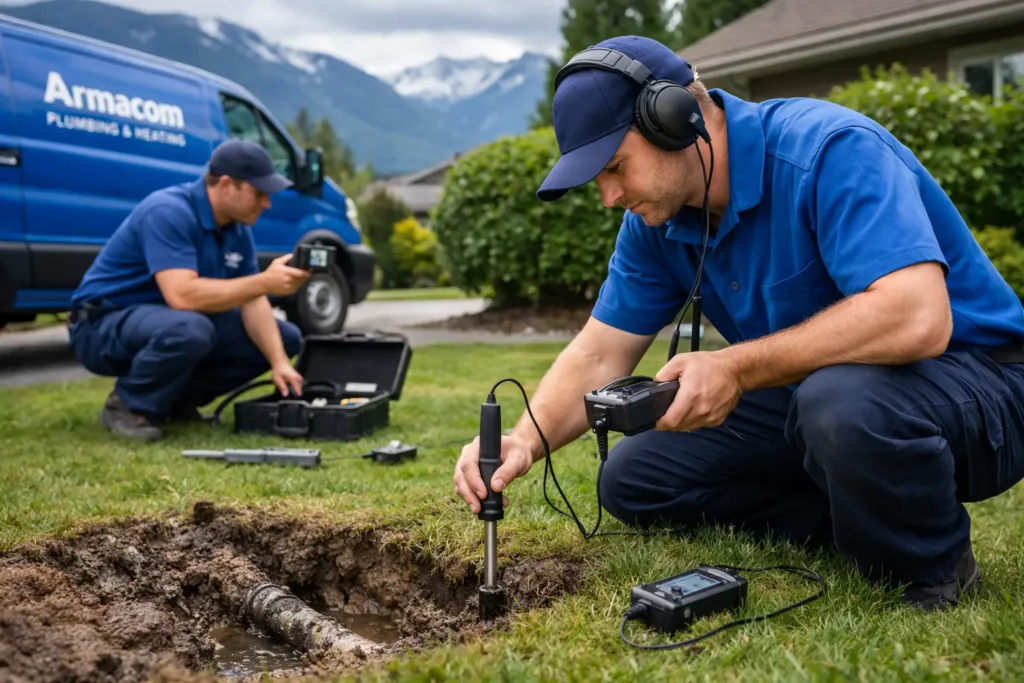
A wet patch that stays green through a dry Chilliwack summer, a water bill that climbs without explanation, or a water meter that keeps moving when every fixture is off can point to the same hidden problem. Can plumbers detect underground leaks? Yes. With the right testing and equipment, a plumber can often locate a leak beneath a yard, driveway, slab, or parking area without starting with unnecessary digging.
The key is identifying what type of underground line is involved. A leaking pressurized water line behaves very differently from a damaged sewer or drain line, so the diagnostic process needs to match the symptoms. A proper investigation saves time, limits property disruption, and helps ensure the repair addresses the actual failure rather than a guess.
Can Plumbers Detect Underground Leaks Without Digging?
In many cases, yes. Detection is not a single tool or a quick look at the lawn. It is a process of checking the plumbing system, narrowing down the affected line, and using non-invasive methods to identify the most likely leak location before excavation is considered.
For a pressurized water line, the first step is often confirming unexplained water use. If the main shutoff is on, all toilets and fixtures are not running, and the water meter still registers flow, water may be escaping somewhere after the meter. A plumber can isolate portions of the plumbing where possible and pressure-test the line to determine whether it is holding pressure.
Once a water-line leak is confirmed, acoustic equipment can help listen for the sound of water escaping under pressure. The noise travels through pipe and soil differently depending on pipe material, depth, water pressure, moisture, and surface conditions. A clear signal can narrow the search area considerably, but experienced interpretation matters. Traffic, rain, nearby equipment, and flowing water inside a home can all interfere with a reading.
For sewer and drain lines, a camera inspection is often more useful than acoustic testing. A camera can show cracks, separated joints, root intrusion, standing water, pipe collapse, or a blockage that is causing recurring backups. In some situations, a smoke test or other diagnostic method may be used to identify where a drain system is allowing water or odors to escape.
No reputable plumber should promise to pinpoint every underground issue to an exact inch before testing. Soil conditions, deep lines, multiple buried utilities, and extensive pipe damage can limit precision. Still, professional detection usually reduces the size of the area that needs to be opened and gives the repair crew a much better starting point.
Signs You May Have an Underground Water Leak
A hidden water leak does not always create a dramatic puddle. Water can travel through gravel, sandy soil, drain rock, or along the outside of a pipe before it reaches the surface. That is why homeowners sometimes notice the consequences before they find visible water.
Watch for a sudden increase in water use, a meter that moves while plumbing fixtures are off, low water pressure in part of the home, or damp ground that does not dry out. A warm area on a concrete floor can also be a concern when a hot-water line runs beneath the slab. In colder weather, a leak may create an unusually thawed or muddy area outside.
For commercial properties and multi-unit buildings, keep an eye on recurring water use anomalies, damp pavement, unexplained settlement, or irrigation-like wet areas when no irrigation is operating. Property managers should not assume a higher bill is only due to occupancy changes. Comparing meter readings against known use can help identify a problem early.
A leaking service line can waste a significant amount of water before it becomes obvious. It can also undermine soil near walkways, driveways, and foundations. If you suspect a water leak, avoid repeatedly turning the main water supply on and off without a reason. Get the system assessed so the source can be confirmed.
Underground Sewer Problems Can Look Similar
Not every underground plumbing issue is a pressurized leak. A damaged sewer line may allow wastewater to seep into surrounding soil or allow groundwater to enter the pipe. More commonly, customers first notice slow drains, gurgling toilets, sewage odors outside, or backups at the lowest fixtures in the building.
A sewer camera inspection lets the plumber see inside the pipe rather than assume the problem is a simple clog. Roots can enter through small openings and catch paper or debris. Older piping can crack, shift, or lose alignment over time. In some cases, the issue is a localized blockage that can be cleared through professional drain cleaning. In others, the camera shows structural damage that needs a sewer line repair.
This distinction matters. Hydro jetting can be effective for removing buildup and certain obstructions in a pipe that is otherwise sound, but it is not a repair for a broken or collapsed line. The condition of the pipe should guide the recommendation.
How a Plumber Finds the Source
A good underground leak investigation starts with the information available on site. The plumber will ask when the issue began, whether the water bill changed, where dampness appears, whether there have been backups, and whether recent landscaping, construction, or freezing weather may be relevant.
The next steps depend on the line involved. For suspected water leaks, the plumber may check the meter, inspect exposed plumbing, test water pressure, isolate fixtures or branches, and test the underground line. Acoustic listening equipment may then be used to narrow the location of a pressurized leak.
For suspected sewer problems, the plumber may inspect cleanouts, evaluate drain behavior, and run a camera through the line. The camera location can be tracked from above ground to identify where a defect or obstruction sits. This gives the homeowner or property manager useful information before approving repair work.
The goal is not to use every possible test. It is to use the tests that answer the right question. If the water meter confirms continuous flow, a sewer camera will not locate a pressurized water-line leak. If toilets are backing up and the water meter is still, acoustic leak detection is unlikely to explain the problem. Clear diagnosis keeps the work focused and the repair plan practical.
What Affects the Repair Plan?
After locating the likely issue, the repair approach depends on pipe material, depth, access, and the condition of the rest of the line. A small, isolated failure may need a targeted excavation and repair. A line with repeated failures, widespread corrosion, poor previous repairs, or deteriorated material may warrant replacement of a longer section.
Access is an important trade-off. A leak under lawn is generally simpler to reach than one beneath concrete, a driveway, or a busy commercial entrance. A precise location can reduce restoration work, but it does not eliminate the need to safely expose the pipe and verify the damage before repairs are completed.
For water-line repairs, the plumber should also consider whether the existing line can reliably support the home or building after a spot repair. For drain and sewer repairs, a camera inspection after cleaning or repair can help confirm flow and pipe condition. The right solution is the one that balances immediate needs with the likelihood of future failures.
When an Underground Leak Needs Urgent Help
Call for prompt plumbing help when water is surfacing near a building, water pressure drops suddenly, a meter shows constant flow, or a sewer backup affects toilets, tubs, or floor drains. If water is entering a structure, shut off the main water supply if it is safe to do so and avoid using plumbing fixtures until the issue is assessed.
Sewer backups also require quick action. Do not keep flushing toilets or running sinks in hopes that the line will clear on its own. Continued use can send wastewater into lower areas of the property and make cleanup more difficult.
If you are unsure whether the issue is on the private plumbing system or the municipal side, a plumber can help determine where the symptoms and testing point. Responsibility often depends on the location of the failure, so accurate diagnosis is especially valuable before work begins.
Hidden underground leaks are rarely problems to watch and wait on. A careful inspection from a qualified Chilliwack plumber can turn a confusing wet spot, high bill, or recurring backup into a clear repair plan. Armacom Plumbing & Heating approaches leak detection with the same goal every homeowner or property manager has: find the real cause, protect the property, and complete a repair built to last.