
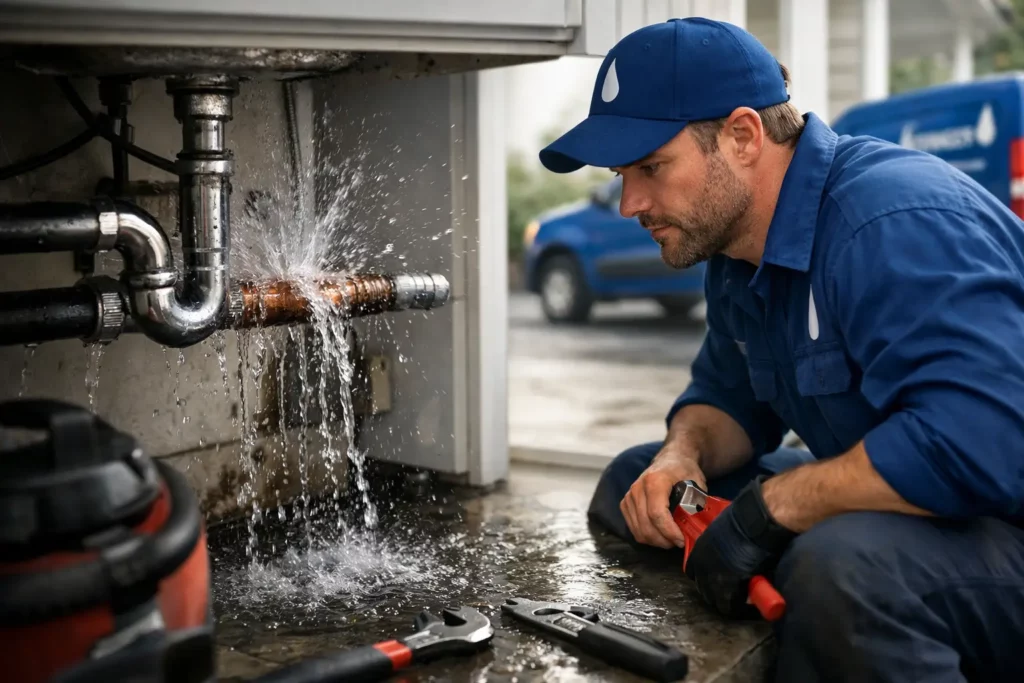
Water coming through a ceiling, spraying from a wall, or pooling across a utility room floor is not a wait-and-see plumbing problem. An emergency burst pipe plumber can stop the immediate damage, identify why the line failed, and make a repair that holds under normal water pressure. The first few minutes still matter. Knowing where your shutoff valve is and what not to touch can save a Chilliwack homeowner or business owner from a much larger cleanup.
Shut Off the Water Before the Damage Spreads
Your first priority is to stop the water supply. In most homes, the main shutoff valve is near where the water service enters the building, often in a mechanical room, crawl space, garage, or basement. Turn the valve clockwise until it stops. If you cannot safely reach it, or the valve will not close, call for emergency plumbing service right away.
Once the main water is off, open a cold-water faucet at the lowest practical point in the home. This relieves pressure and allows remaining water in the piping to drain. Do not keep opening fixtures if water is actively leaking near electrical panels, outlets, lights, or appliances. Keep people clear of the affected area and, if it is safe to do so, turn off power to that section at the electrical panel.
For a localized leak, such as a failed supply line below a sink or toilet, the nearby fixture shutoff may stop the flow. That is useful when the shutoff works properly. It is not a substitute for turning off the main when water is coming from an unknown location, a wall, a ceiling, or a larger pipe.
When an Emergency Burst Pipe Plumber Is Needed
A burst pipe is an emergency whenever water cannot be fully isolated, the leak is concealed, or the water is entering building materials. A slow drip may sometimes be scheduled as a standard plumbing repair, but water can travel a long way behind drywall, under flooring, and through insulation before it becomes visible.
Call for immediate help when you see any of these conditions:
- A pipe has split, separated at a fitting, or is spraying water.
- Water is staining, bulging, or dripping through a ceiling.
- The main shutoff valve will not close or continues to pass water.
- A water line has failed in a crawl space, wall, commercial unit, or mobile home where access is limited.
- Water is near electrical equipment or has affected several rooms.
- You have shut the water off but do not know where the leak is located.
Landlords and property managers should treat a reported loss of water pressure, unexplained running-water noise, or a sudden wet ceiling as urgent as well. Waiting for visible flooding often turns a manageable pipe repair into damage across multiple suites or common areas.
What Causes Pipes to Burst in Chilliwack Homes?
Cold weather is one possible cause, especially when a pipe is installed in an unheated crawl space, exterior wall, garage, or poorly protected section of a mobile home. Freezing water expands, and the pipe may crack or split. The actual leak may not show up until the pipe thaws and pressure returns.
Not every burst is caused by freezing. Aging copper or galvanized piping can develop weak spots from corrosion. Poly-B piping and old fittings can be prone to failures as they age. A poorly supported line can stress at a connection, while excessive water pressure can expose a weak pipe, valve, or fitting. Renovation damage is another common issue – a screw, nail, or accidental cut may not leak immediately but can fail later.
The location and material matter. A visible break in accessible PEX may be straightforward to repair. A repeated leak in older piping, or a failure inside a finished wall, calls for a broader assessment. Repairing one opening is necessary, but it may not address an aging water line system that is beginning to fail in other areas.
Protect the Property While You Wait
After shutting off the water, move furniture, rugs, boxes, and electronics away from the wet area if doing so is safe. Place containers under drips, but do not puncture a bulging ceiling or remove wet drywall without considering what may be behind it. A ceiling holding a large amount of water can collapse unexpectedly.
Take clear photos and short videos of the leak, the damaged area, and the shutoff position. This documentation can be useful for your insurer and helps show what occurred before repairs began. If the burst pipe is in a rental or commercial space, notify the appropriate property contact promptly so water damage response can be coordinated.
Avoid using tape, putty, hose clamps, or temporary patches on a pressurized damaged pipe unless a qualified plumber has specifically advised it. These products may reduce a small drip in limited situations, but they do not make a split pipe safe. A failed temporary patch can release water again after you leave the area.
What a Professional Burst Pipe Repair Should Include
A proper emergency response starts by confirming that the water is isolated and finding the exact source of the failure. That may require opening a small section of drywall, accessing a crawl space, or tracing a line that is leaking away from the visible water damage. The goal is to repair the failed section without causing unnecessary disruption.
The damaged pipe and any compromised fittings should be removed, not simply covered. The replacement material must be suitable for the existing plumbing system and installed with the correct connections, support, and protection. Once the repair is complete, the line should be brought back under pressure and checked carefully for leaks.
A good diagnosis also asks why the pipe failed. If freezing was involved, the exposed section may need better protection and the surrounding area should be checked for other vulnerable lines. If corrosion, Poly-B deterioration, or repeated pinhole leaks are present, it may be time to discuss more substantial water line repair or targeted repiping. There is a trade-off: a focused repair costs less now, while replacement can reduce the risk of repeated emergency calls when a system has reached the end of its reliable service life.
At Armacom Plumbing & Heating, the work is approached as more than stopping a leak. The repair needs to be safe, accessible where possible, and built to provide long-lasting results under everyday use.
Do Not Forget the Water Heater and Other Equipment
If the main water supply has been off for a prolonged period, be careful when restoring service. Water heaters, boilers, and other plumbing equipment rely on proper water supply and pressure. Do not turn an electric hot water tank back on if you suspect it has been drained or does not have a full tank. Running an electric element dry can damage it.
When water is restored after a repair, open a faucet slowly and allow air to leave the system. Check repaired areas, nearby fittings, and fixtures for leaks. If the burst was caused by freezing, look for other signs of trouble such as weak flow, damp insulation, or new drips once lines thaw completely.
Reducing the Chance of Another Burst Pipe
The best prevention is practical maintenance before the next cold spell or before a small leak becomes a major one. Insulate vulnerable piping in unheated areas, seal openings that allow cold air into crawl spaces, and keep interior heat steady during freezing conditions. Outdoor hose connections should be disconnected and shut off where the plumbing arrangement allows.
Know the location of the main shutoff valve and test it periodically. A valve that cannot close during an emergency is a problem worth correcting before there is water on the floor. Property managers should also make sure tenants and on-site staff know who to call and where the building shutoff is located.
If your home has recurring leaks, visibly aging pipe, Poly-B, or unexplained water damage, arrange an assessment before the next failure forces the decision. A burst pipe rarely arrives at a convenient time, but a fast shutoff and a qualified repair can keep one damaged line from becoming a much bigger property problem.