
A drain rarely goes from working normally to fully blocked without giving some warning. Water that takes longer to disappear, a toilet that bubbles when the washer drains, or an odor near a floor drain are all early signs that deserve attention. The question of when should drains be cleaned is less about following one fixed calendar and more about recognizing how the plumbing system is performing.
For many Chilliwack homeowners, professional drain cleaning becomes necessary when slow drainage starts affecting more than one fixture, when a recurring clog returns after basic clearing, or when there is any sign of a sewer backup. Acting before wastewater comes up through a lower drain is usually simpler, cleaner, and less expensive than waiting for a complete blockage.
When should drains be cleaned as routine maintenance?
A well-functioning household drain system does not always need annual machine cleaning. If sinks, tubs, toilets, and floor drains are draining freely, there is no recurring odor, and no fixtures are backing up, routine professional cleaning may not be necessary every year.
That said, some properties benefit from a planned schedule. Older homes with mature trees, properties with a history of sewer root intrusion, rental units with frequent turnover, and commercial spaces with regular food preparation or heavy washroom use may need service more often. In those situations, cleaning the line on a schedule can reduce emergency calls and help a plumber spot changes before they turn into a backup.
For a typical home without known sewer issues, it makes more sense to watch for symptoms than to clean every drain on a strict timetable. A kitchen sink may need attention sooner than a bathroom sink because soap residue, food particles, and cooking oils build up differently. A main sewer line has its own set of warning signs and should be assessed separately.
The signs that mean it is time to call a plumber
One slow fixture can be a local clog. Several slow fixtures at once often point to a restriction farther down the system. Knowing the difference helps determine whether a plunger, a basic trap cleaning, or professional drain cleaning is the appropriate next step.
Slow drains that keep coming back
A sink or tub that drains slowly after a homeowner has removed visible hair or cleaned the stopper may have buildup farther inside the branch line. Bathroom drains commonly collect hair, soap residue, and products that harden along the pipe wall. Kitchen lines can collect grease and food debris, particularly if hot water and dish soap have only pushed the material farther down the line.
A recurring slow drain is worth addressing before it becomes a no-drain situation. Chemical drain cleaners are not a reliable long-term answer. They may not reach the full blockage, can sit in the pipe when a drain is stopped, and create a hazardous work area for whoever has to repair or clear the line later.
Gurgling, bubbling, or changing water levels
Gurgling is often a plumbing system asking for help. If a toilet bubbles when a nearby sink, tub, washing machine, or dishwasher drains, wastewater may be moving past a partial blockage and pulling air through the wrong fixture. Water level changes in a toilet bowl can indicate a similar issue.
These symptoms do not always mean the main sewer is blocked, but they should not be ignored. A qualified plumber can determine whether the problem is isolated to one drain line or involves the larger building sewer.
Water appearing where it should not
Water coming up through a shower, tub, basement floor drain, or other low fixture is an urgent warning sign. In most homes, the lowest drain is where a sewer backup will show up first. Stop using water fixtures as much as possible until the line has been assessed. Running another load of laundry or flushing repeatedly can add more water to an already restricted system.
If wastewater is backing up, this is no longer a maintenance issue. It is an emergency plumbing situation that needs prompt diagnosis and clearing.
Persistent sewer odors
A drain odor can have a simple cause, such as a dry floor drain trap in a seldom-used room. Running water into that drain may restore the water seal and stop the odor. But a persistent sewage smell, especially along with slow draining or gurgling, can point to buildup, a blockage, or a problem with the drain piping.
Odors in a commercial washroom, restaurant kitchen area, or multi-unit property should be taken seriously. They affect tenants, customers, and staff, and they can signal a developing drainage issue that will become more disruptive if left alone.
Why Chilliwack sewer lines can need closer attention
Drain problems inside a building and problems in the sewer line are not the same thing. Interior branch drains typically clog from everyday use. Sewer lines can be affected by roots, pipe condition, shifting ground, accumulated debris, or a low area in an aging line where material repeatedly settles.
In established Chilliwack neighborhoods, mature landscaping can be a factor when a sewer line has joints or cracks that allow roots to enter. Roots seek moisture and can grow into small openings over time. Clearing the roots restores flow, but the frequency of recurrence matters. If the same line needs clearing repeatedly, a camera inspection can help identify what is happening underground and guide an appropriate sewer line repair decision.
Heavy rain does not automatically mean a home sewer is blocked, but wet conditions can make an existing drainage weakness more noticeable. If a drain issue appears only during certain conditions or after high water use, explain that pattern to the plumber. The timing can help narrow down the cause.
Drain cleaning methods should match the problem
Good drain cleaning is not simply putting the largest machine possible into a pipe. The correct method depends on the pipe size, material, blockage location, and what has accumulated in the line.
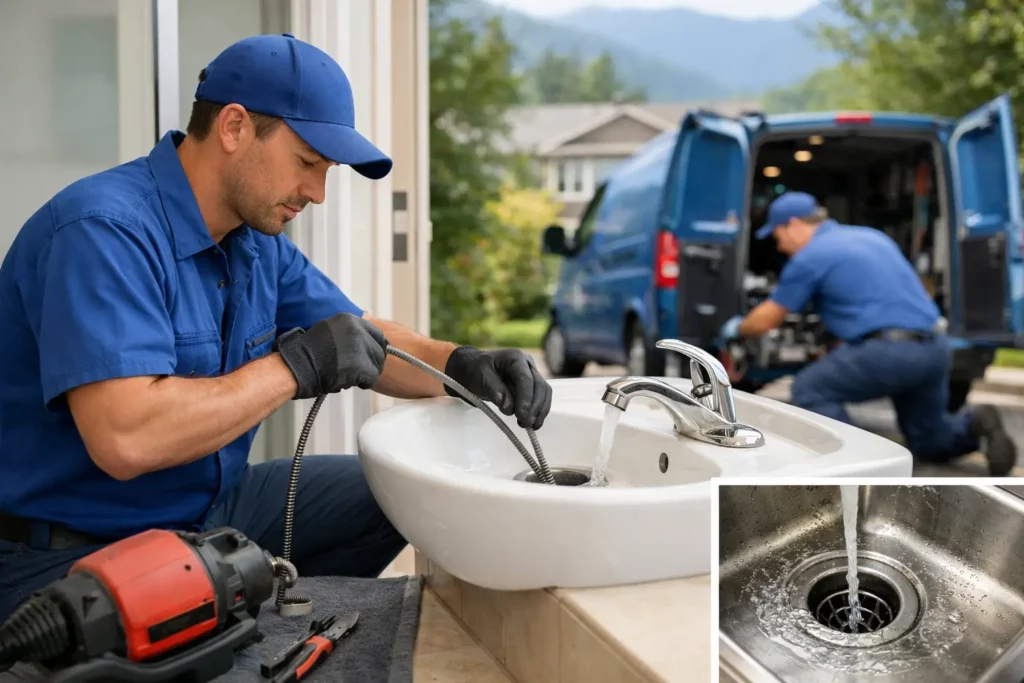
A cable machine is often effective for cutting through a localized clog, opening a line affected by roots, or retrieving certain obstructions. It creates a path for water to flow, but it may not fully remove heavy residue from the pipe walls.
Hydro jetting uses controlled high-pressure water to scour buildup from the inside of suitable drain and sewer lines. It can be especially useful where grease, scale, sludge, or recurring buildup is the issue. Before hydro jetting, the plumber should consider the condition of the piping. A severely damaged or fragile line may need a different approach, and inspection can be valuable when the history is unclear.
For repeated backups, drain camera inspection adds useful information. It can show whether the issue is roots, a damaged section, a belly in the line, heavy buildup, or an object caught in the pipe. That prevents repeated guesswork and helps property owners make a repair decision based on the actual condition of the line.
Practical ways to reduce clogs between cleanings
No home can avoid every drain issue, but everyday habits make a measurable difference. Keep cooking oils, grease, coffee grounds, and food scraps out of the kitchen sink. Use sink strainers where practical, and remove hair from shower and tub drain covers before it works its way into the piping.
Use enough water when operating disposals or flushing toilets, but do not treat toilets as trash cans. Wipes, paper towel, hygiene products, dental floss, and similar materials do not break down like toilet paper. Even products labeled flushable can contribute to restrictions in the plumbing system.
For seldom-used floor drains, run water into them occasionally to maintain the trap seal. If a floor drain repeatedly smells, drains slowly, or has water standing around it, arrange an inspection rather than covering the issue with cleaners or fragrance products.
Property managers can reduce surprises by recording where and when drainage complaints occur. A note that three units reported slow kitchen sinks over two weeks is more useful than a general report of “bad drains.” For commercial properties, keeping track of repeat problem areas helps schedule service before a busy day is interrupted by a backup.
Do not wait for a full sewer backup
A complete blockage is usually the most inconvenient time to discover that a line needed cleaning. Once wastewater enters a finished area, cleanup and repairs can extend beyond the plumbing work itself. Early service is particularly worthwhile when drains are slowing down, noises are increasing, or a past problem is beginning to return.
Armacom Plumbing & Heating can assess whether a Chilliwack drain issue calls for basic clearing, hydro jetting, camera inspection, or further sewer line work. The right service is the one that addresses the cause without doing unnecessary work.
If your drains are showing early warning signs, book the inspection while the system is still moving water. A clear answer today can prevent a much messier problem tomorrow.