
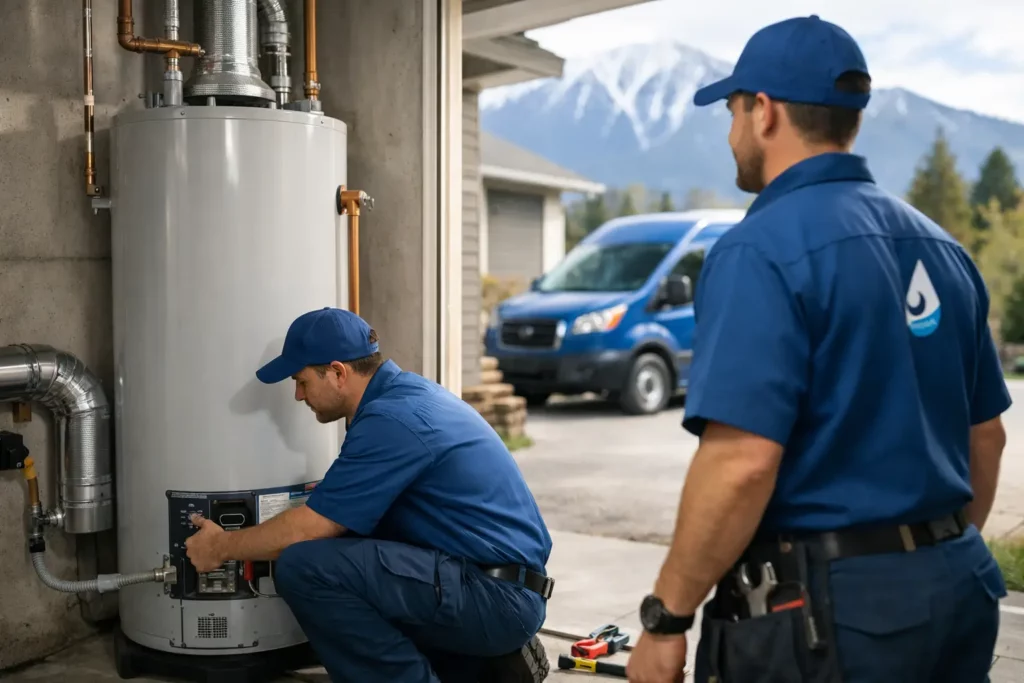
A gas water heater rarely gives up at a convenient time. It may start leaking from the base, run out of hot water halfway through the morning, or shut down with a pilot or ignition problem when the weather turns cold. This gas water heater review is meant to help Chilliwack homeowners and property managers look past the label and choose a replacement that fits the building, hot-water demand, venting arrangement, and budget.
The right unit is not always the largest one or the model with the highest efficiency number. A properly selected water heater delivers enough hot water when it is needed, can be safely installed with the available gas and venting system, and remains serviceable years down the road. Those details matter more than a showroom comparison.
What a Gas Water Heater Review Should Actually Cover
Most gas water heater comparisons focus on tank capacity, warranty length, and efficiency. Those are relevant, but they do not tell the whole story. Before recommending a unit, a plumber should consider the existing equipment, household usage, fixture count, gas piping, exhaust vent route, combustion air requirements, water pressure, and available space for service.
A 40-gallon tank may be adequate for a smaller household with one full bathroom and moderate usage. The same tank can be frustrating in a home where several people shower in a short window, laundry runs at the same time, and a dishwasher is started after dinner. Tank size matters, but so does first-hour rating, which estimates how much hot water the heater can provide during a high-demand hour.
For rental properties and commercial spaces, usage patterns are often more important than the number of occupants. A suite with irregular turnover may have different needs than a family home. A restaurant staff washroom, office kitchen, or small commercial wash area should be assessed based on actual hot-water fixtures and expected use rather than guesswork.
Gas Water Heater Review: Tank or Tankless?
The first major decision is whether to install another storage-tank water heater or move to a tankless unit. Both can be good choices. The best option depends on the building and how hot water is used.
Conventional Gas Tank Water Heaters
A storage-tank heater keeps a reserve of heated water ready for use. It is familiar, generally less expensive to install when replacing a similar unit, and straightforward for many homes. When a tank fails unexpectedly, replacing it with a compatible model can often be the practical path to restoring hot water quickly.
The trade-off is standby heat loss. The burner must periodically maintain the temperature of water sitting in the tank, even when no one is using it. Tanks also have a finite service life because the interior lining, anode rod, fittings, and tank bottom are exposed to years of heat and mineral deposits.
Tank water heaters are often a sensible choice when the existing venting and gas connection are in good condition, the home has predictable demand, and there is room for the tank and required clearances. They can also offer a simpler replacement solution for properties that need reliable hot water without significant changes to the mechanical area.
Tankless Gas Water Heaters
Tankless water heaters heat water as it passes through a heat exchanger. Their main appeal is continuous hot water within their rated flow capacity. They do not store a large volume of hot water, and they avoid the standby losses associated with a conventional tank.
That does not mean every tankless unit supplies unlimited hot water under every condition. Its available flow is affected by the incoming water temperature and the requested temperature rise. During colder months, a unit may produce less flow at a high set temperature than it does in summer. If two showers, a dishwasher, and a washing machine operate at once, an undersized tankless heater can still leave occupants with reduced flow or temperature changes.
Tankless installation can also require changes to gas piping, venting, drainage, electrical connections for controls, and the location of the unit. These are not reasons to avoid tankless equipment. They are reasons to have a qualified professional assess the installation before choosing a model.
Efficiency Is Valuable, but Installation Still Matters
A high-efficiency unit can reduce fuel waste, but the overall result depends on correct sizing and installation. A heater with poor combustion air, an improper vent configuration, inadequate gas supply, or neglected maintenance will not perform as intended.
In a Chilliwack home, the existing mechanical-room layout often decides whether a higher-efficiency tank or a tankless upgrade makes sense. An older atmospheric-vented tank may connect to a vent system that is not suitable for a new appliance. That needs to be reviewed during the estimate, not discovered after a replacement unit arrives.
Sizing a Gas Water Heater for Real Household Demand
Sizing begins with how many hot-water fixtures can reasonably run at one time. The goal is not to plan for every tap in the building operating simultaneously. It is to cover the busiest normal period without sacrificing comfort.
For a tank water heater, a plumber will look at the first-hour rating, recovery rate, and the household’s demand pattern. A larger tank provides more stored water, while a stronger burner can reheat the tank more quickly. In some homes, a better recovery rate is more useful than simply increasing tank capacity.
For tankless equipment, the focus is flow rate at the required temperature rise. A household with multiple bathrooms may need a unit capable of serving two showers at once, but fixture flow rates and incoming water temperature need to be factored into that decision. Oversizing can add unnecessary cost, while undersizing creates the very comfort problem the upgrade was meant to solve.
Long pipe runs are another factor. If a bathroom is far from the water heater, occupants may wait for hot water even with a perfectly sized appliance. A tankless system does not automatically eliminate that wait. Pipe layout, insulation, and any recirculation strategy should be discussed separately from the heater’s heating capacity.
Venting, Gas Supply, and Safety Are Not Add-Ons
A water heater replacement involves more than connecting two water pipes. Gas appliances must be installed according to the manufacturer’s instructions and applicable requirements. The gas line must be properly sized for the appliance load, the venting material and route must match the unit, and the installation needs the correct safety components and service access.
Do not assume that an existing gas connection can support a larger tankless heater. Tankless units can have substantial input requirements, particularly when serving multiple fixtures. The gas piping may need evaluation from the meter to the appliance location, especially if other gas appliances operate in the building.
Venting is equally important. Some units use sealed direct venting, while others use different approved venting methods. Vent lengths, fittings, termination location, slope, and clearances are all manufacturer-specific. Improvised venting or a poorly planned termination can cause repeated shutdowns, condensation problems, or unsafe operation.
A proper installation should also leave room to inspect and service the unit. If a water heater is squeezed into an inaccessible corner, routine maintenance becomes harder and a future repair takes longer. This comes up often in utility rooms, crawlspaces, and mobile homes, where clearances and access need particular attention.
When Repair Makes Sense and When Replacement Is Better
Not every no-hot-water call means the entire heater is finished. A tank unit may have an ignition issue, thermocouple or sensor problem, control fault, or a failed gas valve. Tankless equipment can shut down because of an error condition, scale buildup, blocked venting, condensate drainage concerns, or a component failure. Accurate diagnosis comes first.
Replacement is usually the more reliable choice when a storage tank is leaking from the tank body or base. External fittings can sometimes leak and be repaired, but a corroded tank itself cannot be safely patched. Rust-colored water, recurring breakdowns, rising repair costs, and poor hot-water capacity are also reasons to compare replacement options.
For landlords and property managers, timing matters. Waiting until a marginal heater fails can create a tenant emergency, water damage risk, and a rushed equipment decision. If a unit is aging and showing clear warning signs, planning a replacement allows time to assess tank versus tankless options and confirm the required gas and venting work.
Questions to Ask Before Approving a Replacement
A useful estimate should explain the scope of work in plain language. Before moving forward, ask these questions:
- Is the proposed water heater sized for our actual peak hot-water use?
- Does the existing gas line and venting system suit this specific model?
- Will any changes be needed to drainage, venting, or the appliance location?
- What maintenance does this model need, and can it be accessed for future service?
- If this is a tankless upgrade, what flow can we expect during colder incoming-water conditions?
Clear answers help prevent unpleasant surprises after installation. They also make it easier to compare estimates fairly, because a low initial quote may not include necessary changes to gas piping, venting, or related plumbing work.
If your current gas water heater is leaking, producing inconsistent hot water, or repeatedly shutting down, arrange an inspection before the problem becomes an after-hours emergency. Armacom Plumbing & Heating can assess the condition of the equipment and the installation itself, then provide a practical recommendation based on your home or property’s real needs rather than a one-size-fits-all replacement.