
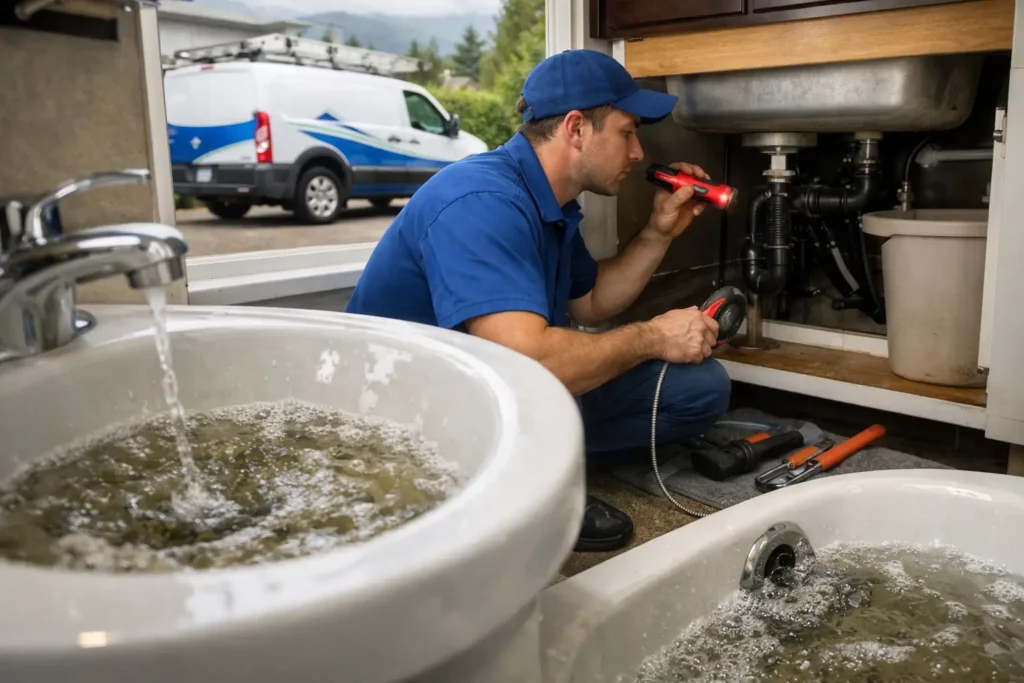
A drain rarely goes from working normally to a full backup without warning. The top signs of a drain blockage usually start small: a sink that takes longer to empty, a toilet that sounds different when it flushes, or a smell that returns after cleaning. Paying attention early can often prevent a messy emergency, water damage, and a more involved sewer line repair.
For Chilliwack homeowners, landlords, and business owners, the key is identifying whether the issue is limited to one fixture or affecting the plumbing system as a whole. That distinction helps determine whether you are dealing with a simple local clog, a branch drain problem, or a blockage in the main sewer line.
Top Signs of a Drain Blockage to Watch For
Slow drains that keep coming back
A slow sink, tub, or shower is often the first noticeable symptom. Hair, soap residue, toothpaste, food particles, and other debris can collect inside the fixture drain or nearby piping. A plunger or basic drain cleaning may improve the flow temporarily, but a recurring slow drain usually means material is still attached to the pipe wall or sitting farther down the line.
The location matters. If only one bathroom sink drains slowly, the restriction may be close to that fixture. If the kitchen sink, dishwasher connection, and laundry drain are all sluggish, the problem may be farther along the shared drain line.
Avoid assuming a slow drain will resolve on its own. Water can still pass through a partial blockage, but the opening tends to get smaller as more debris catches on it. Professional drain cleaning removes the buildup rather than simply punching a narrow path through it.
Gurgling sounds from drains or toilets
Gurgling is a plumbing system asking for air. As water moves through a partially blocked drain, it can pull air through the nearest opening, creating bubbling or glugging sounds in a sink, tub, or toilet.
A toilet that gurgles when a nearby sink empties deserves attention. So does a tub drain that bubbles while the washing machine discharges. These are common signs that water and air are struggling to move through a shared line. A venting issue can sometimes produce similar noises, but a persistent gurgle often points to a developing drain obstruction.
Water backing up into another fixture
Cross-fixture backup is one of the clearest warning signs of a larger drain problem. For example, flushing a toilet may cause water to rise in the bathtub. Running a washing machine may send dirty water into a floor drain. Using the kitchen sink may cause water to appear in a lower-level fixture.
This happens because wastewater reaches a restriction and follows the easiest available route. In many homes, tubs and showers sit lower than other fixtures, so they are often where backup first becomes visible.
Do not continue testing fixtures when this happens. Stop using water throughout the affected area, including dishwashers and washing machines. Continuing to add wastewater can turn a manageable blockage into an indoor sewage backup.
A toilet that frequently clogs or flushes poorly
One clog after too much toilet paper is not necessarily a major concern. A toilet that repeatedly clogs under normal use is different. The obstruction may be in the toilet trap, the branch line serving that bathroom, or farther down the drainage system.
Other clues include a weak flush, water rising higher than usual before draining, or the bowl level changing without being used. A plunger is appropriate for a simple toilet clog, but repeated plunging is not a repair strategy. It can mask the underlying issue and, in some cases, force wastewater through a weak seal or cause a spill.
Unpleasant drain odors that do not go away
A drain odor is not always a blockage. A dry floor drain or infrequently used bathroom fixture can lose the water seal in its trap and allow odors into the room. Running water for a few seconds may solve that specific issue.
However, an ongoing sewer-like smell, especially when paired with slow draining or gurgling, may indicate standing wastewater and decaying organic material in the line. Kitchen drains can develop odor from food buildup, while bathroom drains often collect hair and soap residue. The source should be identified rather than covered with air freshener or repeatedly treated with harsh chemicals.
A floor drain that drains slowly or overflows
Floor drains are often overlooked until water appears around them. In a basement, utility room, commercial wash area, or mechanical space, a slow or overflowing floor drain can signal that the main building drain is restricted.
If wastewater is coming up through a floor drain, treat it as urgent. This is especially true if the water is discolored, has a strong odor, or appears when toilets are flushed or appliances drain. Keep people and pets away from the affected area and arrange emergency plumbing service promptly.
Several drains failing at the same time
Multiple fixtures draining poorly is a major clue that the problem is not a single sink or shower clog. When several drains on the same level of a building are slow, or when plumbing issues appear in different rooms, the blockage may be in a common branch drain or the main sewer line.
In older homes, drain piping can accumulate scale, corrosion, or debris over time. Outside the home, roots may enter a sewer line through joints or damaged sections. Soil movement, pipe age, and previous repairs can also affect how wastewater flows. The right diagnosis may require a drain inspection before deciding whether standard cleaning, hydro jetting, or sewer line repair is appropriate.
Local Clog or Main Sewer Blockage?
A useful rule is to count the fixtures involved. One slow bathroom sink usually suggests a local blockage. A toilet, tub, and sink in the same bathroom may share a branch-line issue. Fixtures in separate parts of the building that gurgle, drain slowly, or back up at the same time point more strongly toward the main drain.
The timing also matters. If the problem occurs only when one fixture is used, start by looking at that fixture. If it happens when a large amount of water is released, such as during a laundry cycle or several consecutive toilet flushes, the drain line may have a partial restriction that cannot handle normal flow.
For property managers and commercial owners, recurring backups should be documented with the fixture locations and time of occurrence. That information helps a plumber narrow down the affected section of piping and reduce downtime for tenants, staff, or customers.
What Not to Do When a Drain Is Blocked
Chemical drain cleaners are a poor solution for many blockages. They may not reach the material causing the problem, and strong products can create heat inside the pipe, damage certain plumbing components, or leave hazardous chemicals behind for the person servicing the drain. They are particularly risky when a drain is completely stopped and the product is sitting in standing water.
Do not keep flushing a toilet that is rising toward the rim. Do not run a washing machine or dishwasher if drains are backing up elsewhere. And do not use a drain snake aggressively unless you know the pipe layout and have the correct equipment. A cable can damage a fixture, get stuck, or pass through a compromised pipe.
A plunger can be helpful for a simple toilet or sink blockage, provided it is used carefully and the fixture is not already overflowing. For anything involving sewage backup, multiple fixtures, or repeated clogs, professional diagnosis is the safer choice.
When to Call a Plumber in Chilliwack
Call for professional drain cleaning when a blockage keeps returning, several fixtures are involved, or water is backing up where it should not. Same-day attention is sensible for a toilet that will not flush, a kitchen drain that has stopped working, or a commercial washroom with limited usable fixtures.
Treat sewage coming up through a tub, shower, toilet, or floor drain as an emergency plumbing issue. Shut off water use where possible and avoid contact with contaminated water. A qualified plumber can determine whether the line needs mechanical cleaning, hydro jetting, camera inspection, or repair based on the actual condition of the pipe.
Armacom Plumbing & Heating approaches drain problems by finding the cause first, not just clearing the immediate symptom. That matters when you want a repair that holds up after the service call is over.
A drain blockage is easier, cleaner, and usually less disruptive to handle before wastewater enters the home or business. If the warning signs are showing up more than once, schedule an assessment while the problem is still on your terms.