
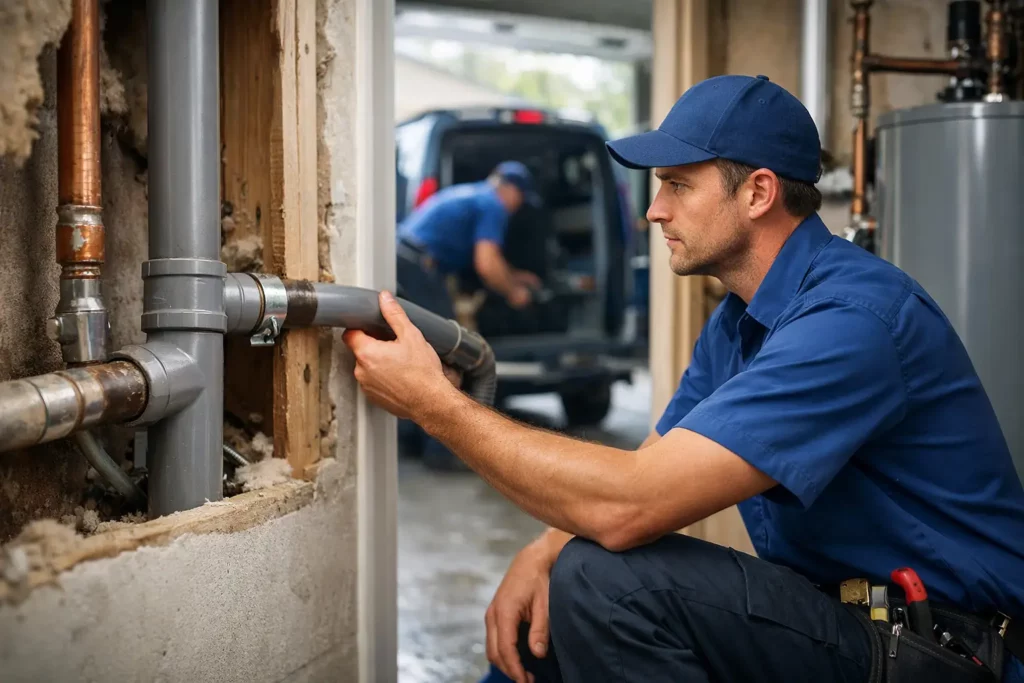
A homeowner in Chilliwack may not know they have Poly-B until a fitting begins dripping inside a ceiling, behind a finished wall, or beneath a bathroom vanity. So, what is poly b piping? It is a gray plastic water supply pipe installed in many Canadian homes from roughly the late 1970s through the 1990s. It was popular because it was flexible, fast to install, and less expensive than copper. The problem is that Poly-B has a documented history of premature failures, especially at fittings and stressed sections of pipe.
If your home has Poly-B, it does not automatically mean there is an active leak or an emergency. It does mean the plumbing should be identified, inspected, and factored into your maintenance and replacement plans. In a home where a hidden water leak can damage drywall, flooring, insulation, and personal belongings, waiting for a failure is rarely the best strategy.
What Is Poly B Piping Made Of?
Poly-B, short for polybutylene, is a flexible plastic piping material used to carry hot and cold domestic water. It is usually light gray, although color alone is not enough for a positive identification. The pipe may be stamped with markings such as “PB” or “PB2110.” It is generally found near the water heater, under sinks, around laundry connections, in mechanical rooms, crawl spaces, and unfinished basements.
Poly-B is different from modern PEX piping. Both are flexible plastics, but they are different materials with different performance histories and connection systems. A gray pipe is worth checking, but a plumber should confirm what it is before recommending repairs or a full repipe.
Many homes built or substantially renovated during the Poly-B era still have the original piping concealed behind walls. This is common in Chilliwack neighborhoods with housing from the 1980s and 1990s, as well as townhomes and multi-unit properties throughout the Fraser Valley.
Why Poly-B Piping Can Fail
Poly-B failures are not usually caused by one single issue. Age, installation quality, water conditions, pressure, heat, and the fitting type all affect how long the system lasts. Some homes go many years without a visible problem. Others experience repeated leaks at fittings or cracks in the pipe itself.
The concern is that polybutylene can become brittle over time. Chemical disinfectants in municipal water, particularly chlorine-based compounds, may contribute to deterioration from the inside. Heat and pressure cycles also place stress on water lines. A pipe that has handled these conditions for decades may be more vulnerable than it looks from the outside.
Fittings matter as well. Early Poly-B systems often used plastic insert fittings secured with metal crimp rings. These joints can be a common failure point. Metal fittings were also used in some installations, but no fitting type makes an aging Poly-B system risk-free. A close inspection should include accessible fittings, valves, and transitions near fixtures and the water heater.
A small drip is not something to ignore just because it appears minor. Water can travel along framing or pipes and show up far from the actual leak. If you notice staining, a musty smell, damp drywall, peeling paint, unexplained higher water use, or a drop in water pressure, arrange professional leak detection and repair before the damage expands.
How to Tell if Your Home Has Poly-B
Start with the exposed plumbing. Look in the mechanical room, under bathroom and kitchen sinks, beside the water heater, in a crawl space, or at the laundry supply lines. Poly-B is commonly gray and flexible, typically about 1/2 inch to 1 inch in diameter for residential supply piping.
Read the print on the pipe if it is accessible. Markings that include “PB” or “PB2110” are strong indicators. Do not rely on the pipe color alone, since other plumbing products can also be gray. A professional inspection is particularly useful when piping disappears into finished walls and only short sections are visible.
The age of the building can provide a clue, but it is not proof. A home built in the 1980s may have been partially repiped, while a newer home may have Poly-B in an addition completed with older materials. For buyers, owners, and property managers, confirming the material before a purchase, renovation, or insurance review can prevent surprises later.
Should You Repair or Replace Poly-B?
The right decision depends on the condition and extent of the piping. If a single accessible fitting is leaking and the rest of the plumbing has been inspected, a targeted repair may be reasonable. This is often the practical choice when a replacement is already planned for the near future or when only a small, isolated section is involved.
However, repeated leaks are a different situation. Once multiple Poly-B fittings have failed, repairing one section at a time can become costly and disruptive. Each repair addresses the immediate leak, not the age-related risk in the remaining concealed pipe. A whole-home repipe is often the more predictable long-term option when Poly-B is widespread, leaks have occurred, or major finishing work is planned.
A proper recommendation should consider the home’s layout, the number of bathrooms, accessible routes for new lines, water heater connections, and whether walls or ceilings have already been opened for a repair. In many cases, a well-planned repipe can limit drywall access points compared with repeated emergency repairs over several years.
For commercial spaces, strata properties, and rental units, the decision also includes operational risk. A leak in a vacant suite, restaurant washroom, office ceiling, or multi-family building can affect several occupants and create a much larger repair scope. Property managers should document previous leaks and have accessible Poly-B sections assessed before another failure occurs.
What Does Poly-B Replacement Involve?
Poly-B replacement means installing new water supply piping from the main distribution points to fixtures throughout the building. Modern plumbing materials are selected based on the system design, local requirements, and the specific application. The goal is not simply to remove gray pipe. It is to create a reliable water distribution system with properly supported lines, secure connections, accessible shutoffs where appropriate, and thorough testing before walls are closed.
The process starts with a site assessment. A plumber identifies accessible pipe routes, fixture locations, the water heater setup, and areas that may require limited wall or ceiling access. Water is shut off during active work, and the new lines are pressure tested before the system is returned to service.
In occupied homes, planning matters as much as installation. Homeowners need a clear understanding of where access openings may be needed, how long water interruptions could last, and what is included in the plumbing scope. If a pipe has already leaked, drying and repairing affected building materials may need to happen alongside the plumbing work.
When to Call a Plumber Right Away
Poly-B does not always fail with a dramatic burst. Call for service promptly if you see active dripping, wet cabinets, bubbling paint, staining on a ceiling, warm spots on flooring, or hear water running when all fixtures are off. Shut off the home’s main water valve if water is actively escaping and you cannot control it at the fixture.
You should also arrange an inspection if you are buying a home with gray water lines, have had more than one unexplained leak, or are planning a bathroom, kitchen, or laundry renovation. Opening walls for other work can be a sensible time to replace exposed Poly-B sections or plan a larger repiping project.
For Chilliwack homeowners, the most useful next step is not guessing from a photo or waiting for a pipe to burst. Have the material and accessible fittings checked by an experienced plumber, then make a replacement decision based on the condition of your system, your budget, and the consequences of a future leak. A planned repair provides far more control than an emergency call after water has already damaged the home.