
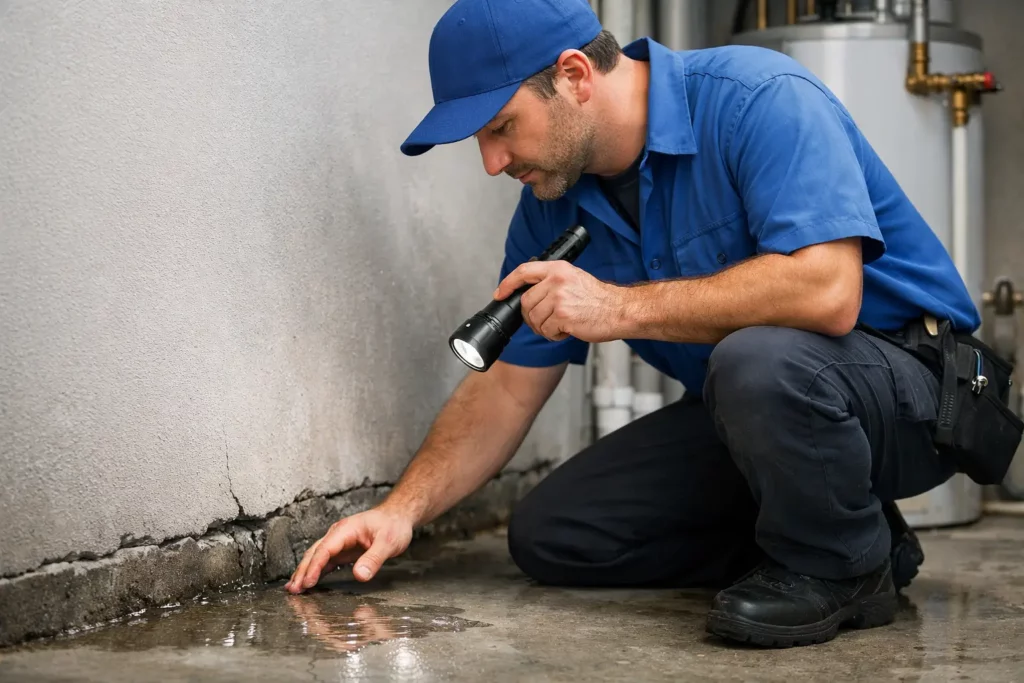
A slab leak rarely announces itself with water pouring across the floor. More often, it starts with a water bill that seems out of character, a warm patch underfoot, or the faint sound of water when every fixture is off. These slab leak warning signs deserve a prompt inspection, especially in Chilliwack homes where a hidden leak can damage flooring, insulation, framing, and the concrete-supported areas below the home before anyone sees a visible puddle.
A slab leak is a leak in a water line or drain line located beneath a concrete slab or in the ground below it. Not every home has plumbing routed this way, and not every unexplained water issue is a slab leak. The right response is not to start breaking concrete. It is to narrow down the cause with careful leak detection, then make a repair plan based on where the line runs, how badly it is damaged, and the condition of the rest of the piping.
8 Slab Leak Warning Signs to Take Seriously
1. Your water bill rises without a clear reason
A steady increase in water use is one of the most common early clues. If your household habits have not changed, there is no outdoor watering explanation, and the bill keeps climbing, water may be escaping from a pressurized line underground.
Start with the water meter. Shut off faucets, appliances that use water, and irrigation if applicable. If the meter’s leak indicator continues moving, or the reading changes over time, there is likely water moving somewhere in the system. That does not confirm a slab leak by itself. A running toilet, leaking water heater connection, or buried exterior water line can cause the same result. A plumber needs to isolate the source before recommending repairs.
2. You hear water running when nothing is on
A quiet hissing, rushing, or trickling sound in a wall, floor, or utility area can point to a pressurized water leak. It is often easiest to hear late at night, when the home is quiet and no fixtures are being used.
Pay attention to whether the sound stops when the main water shutoff is closed. If it does, the problem is likely on the domestic water system. If a sound continues, the cause may be unrelated to the water supply, so it should be investigated rather than assumed to be a pipe leak.
3. A section of floor feels unexpectedly warm
Warm flooring can be a particularly useful sign in homes with hot-water piping below the slab. A leaking hot-water line may heat a small, defined area of tile, vinyl, laminate, or carpet. The spot may feel noticeably warmer than the surrounding floor, even when the room itself is cool.
Do not rely on this sign alone. Sun exposure, heating equipment, and radiant floor systems can create warm areas too. But a warm patch combined with higher water usage or reduced water pressure warrants a professional inspection soon.
4. Flooring begins to cup, lift, or discolor
Moisture from below can affect flooring long before water appears on the surface. Wood and laminate may cup or separate. Vinyl can loosen. Carpet may feel damp near an edge or develop an odor. Tile can crack or lose adhesion, although cracked tile also occurs from normal movement or installation issues.
A flooring problem is not always plumbing-related, but it is not something to cover up and revisit later. Moisture testing and leak detection can help determine whether the water is coming from underneath, from a nearby fixture, through an exterior wall, or from another source.
5. Water pressure drops or becomes inconsistent
A substantial leak in a water line can reduce available pressure, especially when multiple fixtures are running. You might notice a shower weakening when someone opens a kitchen faucet, or you may find that pressure varies at different times of day.
Pressure issues have several possible causes, including pressure-regulating valves, clogged fixture cartridges, and municipal supply conditions. In a Chilliwack home with a rising meter reading and no obvious leak, however, pressure loss should be considered part of the larger picture. It is a reason to arrange plumbing repairs before a small leak becomes a larger failure.
6. Moldy smells or damp spots appear near the floor
A musty smell near baseboards, closets, or low-level finished areas can be caused by hidden moisture. When water migrates upward or sideways from a leak below a slab, it may dampen materials that are not immediately visible. You may also see darkened baseboards, peeling paint near the floor, or unexplained moisture along an interior wall.
The location of the dampness does not always match the location of the leak. Water follows paths of least resistance, which means the visible symptom can be several feet away from the damaged pipe. That is why a proper diagnosis matters before removing flooring or opening walls.
7. Cracks appear alongside other moisture symptoms
Concrete can crack for many reasons, including normal settling and seasonal movement. A crack alone does not mean there is a slab leak. The concern increases when new cracking appears alongside warm floors, damp areas, water loss, or shifting flooring.
An ongoing leak can wash away or soften supporting material in some situations, creating conditions that contribute to movement. The goal is not to blame every crack on plumbing. It is to rule out active water loss before a cosmetic repair hides a developing issue.
8. Your hot water seems to run out faster
When a hot-water line leaks continuously, the water heater may cycle more often to replace heat lost through the escaping water. Some homeowners notice that hot water does not last as long as usual, or that the heater seems to be working harder despite no change in demand.
This symptom can also point to a water heater problem, a faulty mixing valve, or sediment-related performance loss. A plumber can test the system and determine whether the issue is at the heater, in the distribution piping, or below the slab.
What to Do When You Suspect a Slab Leak
First, avoid the temptation to ignore a small sign because there is no visible flood. Hidden water can continue causing damage every hour it is left active. Take photos of damp areas, note changes in your meter reading, and keep a copy of the unusual water bill. Those details help establish whether the issue is ongoing.
If water is actively surfacing, flooring is becoming saturated, or you can hear a strong flow behind finished surfaces, shut off the main water supply if it is safe to do so. For a suspected hot-water leak, shutting off the water heater may also be appropriate, but do not shut off gas equipment unless you understand the correct procedure. Call for emergency plumbing help when water is actively damaging the property or you cannot control the flow.
For less urgent symptoms, schedule leak detection rather than authorizing exploratory demolition. A professional diagnosis may involve checking the meter, testing line pressure, using acoustic listening equipment, thermal imaging where suitable, and reviewing the home’s plumbing layout. The method depends on the construction and the symptoms. In some cases, the culprit turns out to be a leaking toilet supply, a failed underground water line, or a drain issue rather than a pipe under the slab.
Repair Options Depend on the Pipe and Access
Once the leak is located, the repair approach should fit the problem. A single accessible failure may be repaired locally. If the line is deteriorated in several areas, rerouting a section of piping can make more sense than opening concrete repeatedly. Older homes with aging supply piping may benefit from a broader repiping assessment if multiple leaks have already occurred.
There is a trade-off in every option. A small direct repair can have the lowest immediate cost, but it may not address widespread pipe deterioration. Rerouting can avoid disturbing a finished slab area, yet it requires planning around walls, ceilings, and fixture locations. A good plumber should explain what is known, what remains uncertain, and why one option is being recommended.
For Chilliwack homeowners and property managers, fast diagnosis is the best way to limit disruption and protect the building. Armacom Plumbing & Heating approaches suspected hidden leaks with precision and care, focusing on the actual source before recommending a repair. A water bill or warm floor may seem minor now, but acting while the evidence is still early can prevent a much more disruptive repair later.