
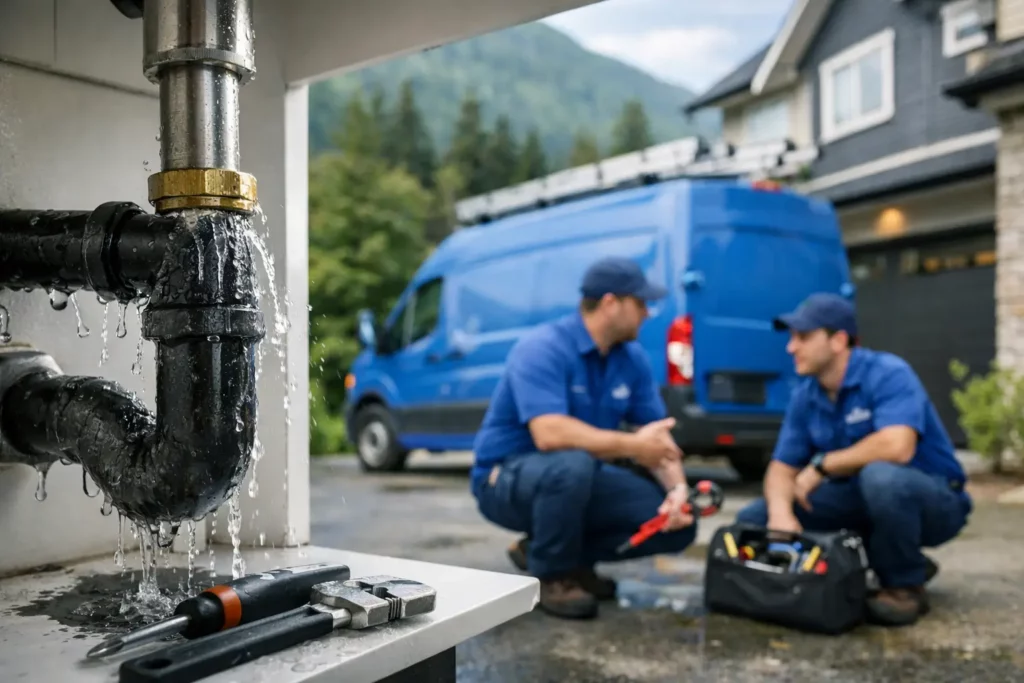
A pipe leak rarely starts with a dramatic burst. More often, it begins as a warm spot on the floor, a brown mark spreading across drywall, a cabinet base that feels damp, or a water bill that suddenly makes no sense. For pipe leak repair Abbotsford property owners need, the first priority is limiting water damage. The second is finding the actual source before a small failure turns into damaged finishes, mold growth, or a larger plumbing emergency.
What to Do When You Find a Pipe Leak in Abbotsford
If water is actively coming from a pipe, fixture, ceiling, or wall, shut off the closest isolation valve if you can identify it safely. A toilet, sink, washing machine, and some water heaters may have their own shutoff valves. If the leak is not isolated by a fixture valve, turn off the home’s main water supply.
The main shutoff is commonly near where the water service enters the building, near the water heater, in a mechanical room, crawl space, garage, or utility area. In some older Fraser Valley homes, access can be less obvious, especially where renovations have covered original plumbing routes. Every homeowner and building manager should know where this valve is before a leak occurs.
After shutting off the water, open a cold-water faucet at the lowest practical point in the building to relieve pressure. Move furniture, rugs, boxes, and electronics away from the affected area. If a ceiling is bulging with water, keep clear of light fixtures and electrical equipment. Water can travel along framing, pipes, and drywall, so the visible wet area is not always directly below the leak.
A temporary patch can slow a drip, but it should not be treated as a repair. Tape, sealants, and clamp-style patches may help protect the property while help is on the way, but a failed pipe, fitting, or valve needs a proper diagnosis and replacement of the damaged section.
Why Pipes Leak in Abbotsford Homes and Buildings
The right repair depends on why the pipe failed. Replacing the visible leak without addressing the underlying issue can lead to another call a few months later.
Aging fittings and pipe materials
Older copper piping can develop pinhole leaks after years of service. The first sign may be a greenish stain on copper, a tiny spray under pressure, or water appearing below a concealed line. Corrosion can be limited to one area, but repeated pinholes are a reason to assess the condition of the broader plumbing system.
Poly-B water lines are another concern in many Fraser Valley homes built during certain periods. The pipe or its fittings may become more vulnerable with age. If a Poly-B fitting leaks, repairing that one point may be appropriate for an isolated issue. If there are multiple past repairs, visible deterioration, or widespread Poly-B throughout the home, planning a larger replacement can be the more sensible long-term decision.
Frozen or stressed pipes
Cold snaps can affect exposed lines in crawl spaces, garages, exterior walls, and unheated commercial areas. A frozen pipe may not leak immediately. The pipe can split while frozen, then release water after it thaws and pressure returns. If a pipe has frozen, it should be inspected even if water is flowing normally afterward.
Pressure changes, vibration, and poorly supported piping also place stress on joints. This is common around mechanical rooms, utility sinks, water heaters, and areas where plumbing has been altered during renovations. The repair should include securing the pipe correctly, not just changing the leaking fitting.
Drain leaks are different from water-line leaks
A pressurized water pipe can leak continuously, even when no fixture is being used. A drain line leak usually appears only when a sink, shower, tub, dishwasher, or toilet is draining. This distinction helps narrow down the source, but it does not eliminate the need for inspection.
Drain leaks may come from loose connections, cracked plastic, deteriorated seals, damaged cast iron, or a problem where a pipe passes through framing. A slow drain can also contribute to trouble by allowing water to sit at a weak connection. If drainage is poor along with signs of leakage, professional drain cleaning may be part of the solution.
Finding Hidden Leaks Without Opening Everything
A plumber should start with the evidence: where water appears, when it appears, whether the water meter moves with all fixtures off, and whether moisture is tied to hot water, cold water, or drainage use. Good diagnosis avoids opening a wall simply because it is wet.
For concealed water-line leaks, pressure testing and moisture readings can help identify the affected area. Thermal imaging may also be useful in the right conditions, particularly around hot-water lines or wet building materials. These tools guide the work, but they do not replace hands-on inspection. A small access opening is sometimes necessary to confirm the pipe material, fitting condition, and extent of water damage.
In a slab-on-grade building, signs can include warm floor areas, unexplained moisture at flooring edges, or the sound of water movement when every fixture is off. In crawl space homes, the source may be easier to reach, but moisture can still travel across vapor barriers and framing. The repair approach depends on access, pipe condition, and whether a direct repair will remain reliable.
Choosing the Right Pipe Leak Repair
A proper repair is more than stopping visible water. The damaged portion of pipe needs to be removed or isolated, compatible materials must be installed, and the repair must be tested under normal pressure and use.
For a single accessible leak on copper, PEX, or another common water line, replacing a short section is often straightforward. Access and restoration are frequently the larger part of the job. A leak behind a finished wall, under cabinetry, or above a commercial ceiling may require careful opening and coordination with restoration work after the plumbing repair is complete.
When the affected pipe is in poor condition over a larger area, repeated spot repairs can become false economy. This is especially true with aging Poly-B, extensively corroded copper, or plumbing that has already leaked in several locations. A targeted repiping plan can reduce the disruption of repeated emergency repairs and provide more predictable results.
For underground water lines, low pressure, wet patches outdoors, or a meter that runs while all water is off can indicate a service-line leak. These repairs require locating the damaged section and considering pipe depth, site access, and the condition of the remaining line. The least expensive immediate fix is not always the best value if the line has failed in more than one place.
When a Leak Is an Emergency
Call for urgent plumbing help when water cannot be shut off, the leak is affecting ceilings or electrical areas, sewage is present, or a commercial space cannot safely operate. Restaurants, strata properties, offices, and retail spaces need a fast response because water damage can affect customers, tenants, inventory, and business operations.
A leak behind a wall is also urgent when moisture is spreading quickly, even if the water is not pouring out. Drywall and insulation hold water, and waiting until regular business hours can increase the scope of repairs. If the source is safely isolated and the area is dry, a scheduled repair may be reasonable. If there is uncertainty, it is better to have the issue assessed early.
Preventing the Next Plumbing Leak
Prevention is mostly about noticing changes early. Check under sinks, behind toilets, around water heaters, and in mechanical spaces a few times each year. Look for corrosion, staining, warped cabinet bases, damp insulation, or a musty smell. A water meter that moves after all fixtures and appliances are off is another useful warning sign.
Do not ignore a dripping shutoff valve, a toilet supply line with corrosion, or a pipe that has been patched previously. These are small jobs when handled early and much larger jobs when a fitting fails while the property is empty.
For dependable pipe leak repair in Abbotsford, the best outcome comes from acting quickly, identifying the true source, and choosing a repair that fits the age and condition of the plumbing. Armacom Plumbing & Heating can assess active leaks, concealed moisture concerns, and recurring pipe failures with precision and care, so the repair addresses more than the immediate drip.