
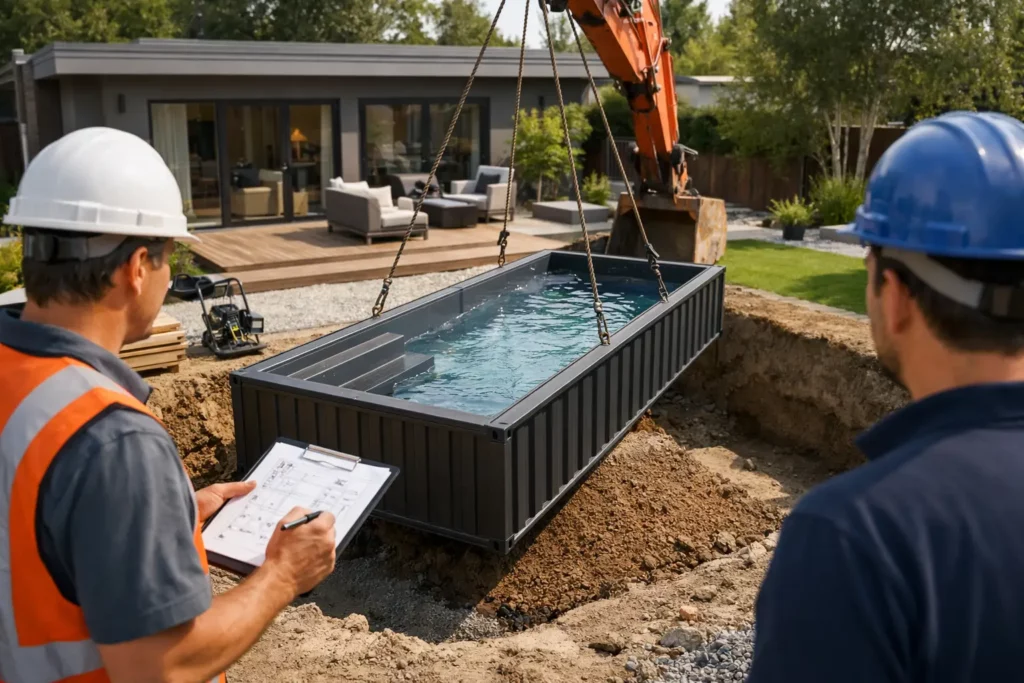
A shipping-container pool can arrive looking nearly finished, but that does not make it a plug-and-play project. A qualified modpool installation contractor helps coordinate the parts that determine whether the pool operates reliably: the base, access, water supply, drainage, electrical work, gas connections where applicable, and final plumbing connections. Getting those details right before delivery prevents expensive rework once a large pool is sitting in the yard.
For homeowners in Mission, a sloped property, wet-season drainage, limited side-yard access, and older utility layouts can all affect the plan. The pool itself may be prefabricated, but the site work and utility connections still need the same care as any other permanent backyard installation.
What a Modpool Installation Contractor Actually Handles
A modpool contractor is not always one company performing every trade. Depending on the project, there may be an excavation contractor, concrete crew, electrician, crane operator, pool installer, plumber, and licensed gas professional. The important part is having a clear installation sequence and knowing who is responsible for each connection, inspection, and startup requirement.
From the plumbing side, the work begins by reviewing the pool manufacturer’s specifications and the site plan. The contractor needs to confirm where water will be supplied, where draining or winterization water can go, how equipment will be accessed, and whether the proposed lines conflict with existing services. A clean-looking backyard installation can hide a complicated network of underground piping, valves, conduits, and drainage provisions.
The goal is not simply to get water into the pool. It is to provide connections that can be serviced later without tearing up finished landscaping or dealing with avoidable leaks.
Start With the Site, Not the Pool Delivery Date
The first practical question is whether the site can receive and support the pool. Modular pools are heavy, and the base must be level, properly prepared, and built to the manufacturer’s requirements. A small error in elevation can create problems with pool operation, surrounding hardscaping, and drainage.
Before work starts, identify utility routes, including water lines, sewer lines, gas lines, electrical feeds, and irrigation piping. This step matters especially on established properties where previous renovations may not match old drawings. If a homeowner plans to add a pool house, outdoor kitchen, shower, or bathroom later, it is often more cost-effective to plan underground plumbing sleeves and utility routes at the same time.
Drainage deserves the same attention as the pad. In the Fraser Valley, heavy rain can expose weak grading quickly. Surface water should move away from the pool structure, equipment area, house foundation, and neighboring properties. A contractor should not treat drainage as an afterthought once landscaping is already complete.
Access Is a Real Installation Cost
A crane needs a safe position and enough reach to set the pool. Trucks, equipment, and crews also need a route into the property. Tight access does not necessarily stop a project, but it can change the lifting plan, site preparation, timing, and cost.
This is one reason to arrange a site review before committing to a delivery schedule. Photos are helpful, but they do not always show overhead wires, grade changes, soft ground, retaining walls, or the distance between the street and final pool location.
Plumbing Connections That Need Proper Planning
Pool plumbing is more than a hose connection. It must be compatible with the pool equipment, installed in a way that permits maintenance, and protected from damage or freezing conditions. The exact scope depends on the pool model and whether it includes integrated equipment, heating, jets, or other features.
A water supply line may be needed for filling, topping up, or a dedicated make-up water connection. The line should include an accessible shutoff and be routed where it will not be crushed, disturbed by future landscaping, or exposed to accidental damage. On properties with older plumbing materials or marginal water pressure, it is wise to assess the existing water service before adding new demand.
Draining and winterizing also require a plan. Water should not be discharged in a way that floods a yard, affects a foundation, or overwhelms a drain system. Local requirements and the pool manufacturer’s guidance should be reviewed before establishing a permanent discharge point.
If the project includes an outdoor shower, change room, or poolside bathroom, that becomes a more conventional plumbing project with water lines, drain piping, venting, fixtures, and possible sewer connection considerations. This is where early coordination saves substantial money. Running a new sewer line through a completed patio is rarely anyone’s preferred solution.
Heating Choices Affect the Entire Installation
Many owners want their pool usable beyond the hottest part of summer. That makes heating selection an important early decision, not a last-minute add-on. Electric heat pumps, gas-fired equipment, and integrated pool systems each have different requirements for space, electrical capacity, gas supply, ventilation clearances, and operating cost.
A gas-heated setup may require a new or upgraded gas line from the meter, subject to load calculations and applicable permitting. Existing gas capacity may already be serving a furnace, water heater, fireplace, range, or barbecue connection. Adding pool equipment without confirming that capacity can lead to poor performance or an unsafe installation.
Electrical equipment also needs proper sizing and placement. The plumbing contractor, electrician, and pool installer should coordinate before trenching so water piping, gas piping, electrical conduit, and drainage are kept organized and accessible. Separate trades working from separate assumptions are a common source of unnecessary delays.
Questions to Ask Before Hiring a Modpool Contractor
A good contractor should be comfortable discussing the work in plain language and identifying what is included versus what must be handled by another trade. Ask who coordinates the overall schedule, whether the site plan has been reviewed, and what permits or inspections may apply to your project.
You should also ask how underground lines will be protected and marked, where shutoffs and service points will be located, and how drainage will be managed around the pool and equipment pad. If gas heating is part of the plan, ask whether the existing gas system has been assessed rather than assuming a nearby gas line has enough capacity.
For a property manager or builder, written scope matters even more. It should clarify excavation, base preparation, lifting coordination, plumbing, electrical, gas work, equipment hookup, restoration, and startup responsibilities. A quote that appears lower may simply leave out site work or utility work that will be billed later.
Common Problems That Are Easier to Prevent Than Repair
The most expensive pool issues are often coordination issues. A pool gets set before the utility trench is ready. The equipment area is too tight for service access. A water line is installed without a practical shutoff. Finished concrete covers a connection that later needs attention. Drainage is directed toward the home because the final grades changed after installation.
Another issue is treating the manufacturer’s requirements as optional. Prefabricated pools have specific installation, connection, and support requirements. Follow those requirements closely and ensure each trade understands where its work begins and ends. Modifying pipe routing or equipment placement without approval can create warranty and service complications.
Homeowners should also avoid burying every valve and connection for the sake of appearance. Landscaping can conceal equipment while still allowing access, but serviceability needs to remain part of the design. A valve that cannot be reached is not useful when a repair is needed quickly.
When to Bring in a Plumbing Professional
Bring a plumbing professional into the project during planning, ideally before the final pool location, equipment layout, and hardscape design are locked in. This is especially valuable when the project involves a gas heater, outdoor fixtures, new drainage, a pool house, or an older home with uncertain underground utilities.
At Armacom Plumbing & Heating, the practical focus is on planning utility connections with precision and care, then completing the plumbing and gas work in a way that supports long-term service. For homeowners and contractors, clear coordination early on is usually the difference between a smooth pool installation and a backyard project that keeps reopening finished work.
Before scheduling delivery, walk the site with the trades who will be responsible for the connections. A few careful decisions about access, drainage, shutoffs, and equipment placement can protect the investment long after the crane leaves.