
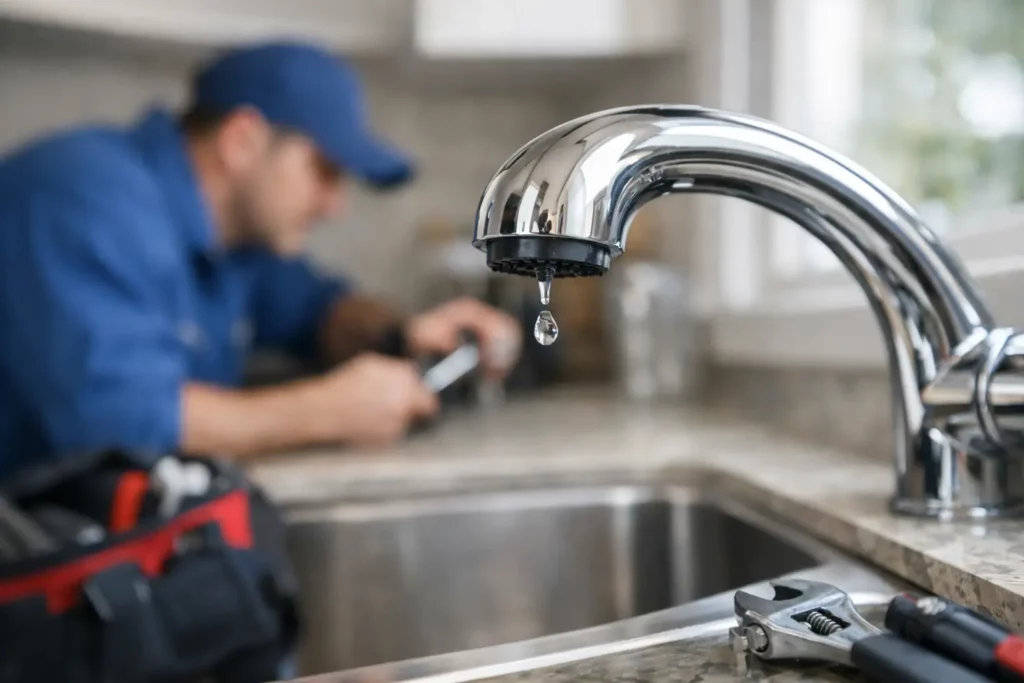
A faucet that drips once every few seconds is easy to ignore until the sound starts keeping you awake or a water bill comes in higher than expected. If you are asking, why is my faucet dripping, the usual answer is not a major plumbing failure. Most often, a small internal sealing part has worn out, shifted, or been damaged by mineral buildup. The right repair depends on the faucet style and whether the leak occurs from the spout, handle, or base.
In Chilliwack homes, we see dripping faucets in everything from older two-handle bathroom fixtures to newer kitchen pull-down faucets. A proper repair is usually straightforward, but using the wrong replacement part or overtightening a fitting can turn a minor drip into a damaged valve body or a leak below the sink.
Why Is My Faucet Dripping From the Spout?
A drip from the end of the spout after the faucet is turned off means water is getting past a sealing surface inside the faucet. That seal may be a rubber washer, cartridge, ceramic disc, O-ring, or valve seat, depending on the fixture.
Two-handle faucets commonly use washers that press against a valve seat. Over years of use, the washer flattens, hardens, or tears. The valve seat itself can also become rough or pitted. When that happens, installing a new washer may reduce the drip but not fully stop it because the new part cannot seal against an uneven surface.
Single-handle faucets usually rely on a cartridge. The cartridge controls both water flow and temperature, and its internal seals wear with normal use. A slow drip that continues after the handle is firmly in the off position is a common sign that the cartridge needs replacement. Ceramic-disc faucets tend to last well, but grit or scale can scratch the discs and prevent a complete seal.
The key is to identify the faucet before buying parts. Cartridges are not universal. Even two cartridges that look nearly identical can have different stem lengths, locating tabs, or water ports. Bringing the old part to a plumbing supplier is better than guessing from a photo.
Drips Around the Handle or Faucet Base
Not every faucet leak comes out of the spout. Water around the handle generally points to an O-ring, packing nut, or cartridge seal issue. You may only see it when the faucet is running, especially when the handle is moved toward hot or cold.
Water collecting around the base of a kitchen faucet often comes from worn O-rings on the rotating spout. On pull-down faucets, check whether water appears only while the spray head is in use. A damaged hose, loose connection, or failed spray-head seal can allow water to run down inside the faucet body and collect at the counter.
Do not assume water at the base is harmless. It can slip through an opening in the countertop and wet the cabinet below. In particleboard cabinets, even a small recurring leak can cause swelling, staining, and mold-friendly conditions. Open the cabinet, dry the area, and place a paper towel around the supply connections and drain to help pinpoint where water is starting.
A Safe Way to Check a Dripping Faucet
Before taking a faucet apart, shut off both water supply valves below the sink. Turn the faucet on afterward to confirm that pressure is gone. Plug the drain or cover it with a cloth so small screws and clips do not disappear into the trap.
Remove the handle carefully. Some faucets have a visible set screw, while others hide it under a decorative cap. Once the handle is off, take a clear photo before removing the retaining nut, clip, or cartridge. That photo can save time during reassembly.
Inspect the parts for obvious wear: flattened washers, cracked O-rings, corrosion, white mineral deposits, or a cartridge that is difficult to move. Clean loose debris from the faucet body with a soft cloth. Avoid scraping sealing surfaces with a screwdriver or using harsh chemicals inside the valve body. A small scratch can create the very leak you are trying to solve.
If the faucet is older, seized, or heavily corroded, it may be wiser to stop there. Forcing a cartridge out can crack the body or damage the water lines below the sink. This is particularly true with older fixtures that have not been serviced for many years.
When a Simple Part Replacement Is Enough
Replacing a washer, O-ring, or cartridge is usually a good repair when the faucet body is in sound condition and replacement parts are available. After installing the correct part, turn the water supplies back on slowly and test both hot and cold operation. Check under the sink for leaks before closing the cabinet.
A faucet repair is less appealing when the fixture is badly corroded, parts are discontinued, the finish is failing, or the valve body has cracked. In those cases, replacement can be the more affordable choice over time. It also avoids repeated service calls for a fixture that has reached the end of its useful life.
For commercial washrooms, staff kitchens, and rental properties, a recurring faucet drip deserves prompt attention. Beyond wasted water, a faucet that does not fully shut off can frustrate tenants, create complaints, and contribute to water damage if a separate leak is missed. Property managers in Chilliwack and Abbotsford are often better served by repairing the immediate issue and checking nearby shutoff valves and supply hoses at the same visit.
Mineral Buildup Can Make the Problem Worse
Scale and sediment do not always cause the original failure, but they can shorten the life of faucet components. Deposits can collect in aerators, restrict flow, and make homeowners crank a handle tighter than necessary. That extra force can wear washers and cartridges faster.
If your faucet has a weak or uneven stream as well as a drip, remove and rinse the aerator first. Sediment in the aerator is a separate issue from a valve that will not shut off, but clearing it helps you assess the faucet’s actual performance after the repair.
A sudden change in pressure, discolored water, or leaks at more than one fixture should not be treated as a faucet-only problem. Those signs can point to a broader plumbing issue that needs diagnosis, particularly in older homes with aging supply piping.
When to Call a Plumber for a Dripping Faucet
Call for professional plumbing repair when the shutoff valves will not close, the faucet is leaking below the counter, the fixture is corroded, or the repair does not stop the drip. A plumber should also inspect the problem if moisture has reached the cabinet, wall, or flooring.
There is value in a precise diagnosis. A faucet may look like it needs a cartridge, but the real issue can be a damaged valve seat, cracked fitting, loose supply connection, or failed hose. Replacing parts without finding the source can waste time and leave a hidden leak in place.
At Armacom Plumbing & Heating, the approach is to identify the faucet type, isolate the leak, and repair or replace the fixture with attention to the shutoffs and connections that support it. For Chilliwack homeowners, that means addressing the annoying drip without overlooking the water damage risk beneath the sink.
A drip is small by definition, but it should not become background noise in your home. Dry the cabinet, note where the water appears, and deal with it while the repair is still simple.