
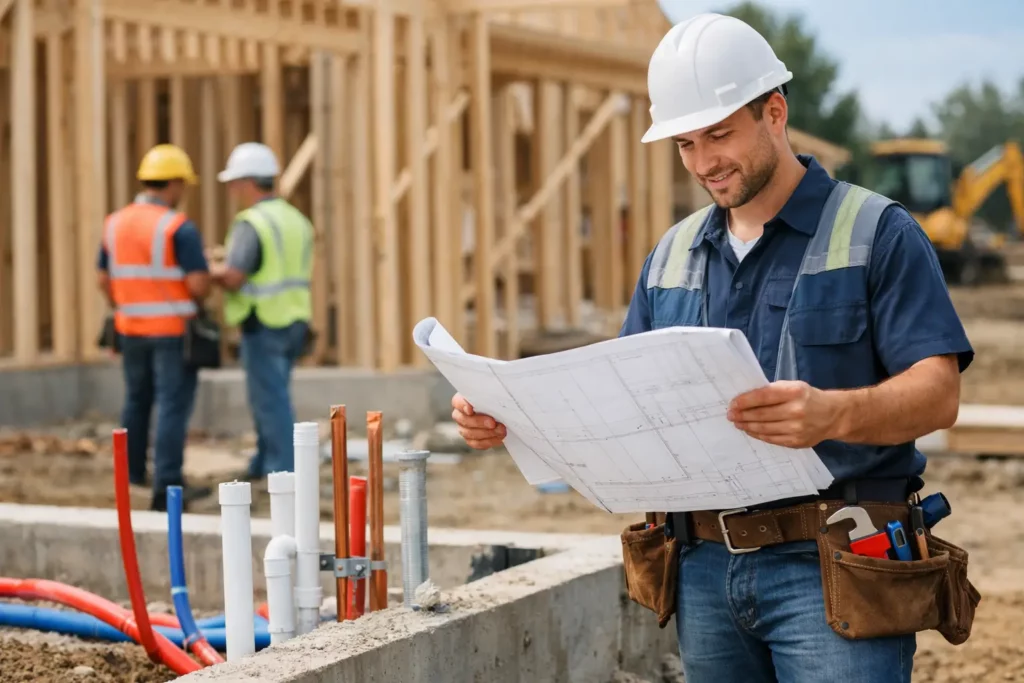
A new construction plumbing contractor does more than install pipe behind finished walls. Their work affects the build schedule, inspection process, operating costs, and how easily the property can be serviced years from now. For builders and commercial contractors in Abbotsford, choosing the right plumbing partner early helps prevent one of the most expensive construction problems: reopening finished work to correct an issue that should have been caught during rough-in.
New construction plumbing requires coordination, accurate layout, and a clear understanding of the plans. Whether the project is a custom home, multi-unit residential building, restaurant, retail space, or tenant improvement, plumbing needs to fit the structure, mechanical requirements, fixtures, and construction sequence from the start.
What a New Construction Plumbing Contractor Is Responsible For
A qualified plumbing contractor should be involved before crews are ready to start cutting holes and running pipe. Reviewing drawings early allows the plumber to identify conflicts between plumbing, framing, HVAC, electrical, and structural elements. A drain line that cannot maintain proper slope or a water line routed through a crowded bulkhead can become a major delay if it is discovered after framing or drywall begins.
The work normally begins with underground services and drainage where required, followed by the rough-in stage. Rough-in includes drain, waste, vent, water distribution, gas piping when included in the scope, and connections for equipment such as water heaters or boilers. Once walls and ceilings are complete, the contractor returns for finishing work: setting fixtures, connecting appliances, testing systems, and completing final corrections before turnover.
Good contractors also manage the details between those stages. That means protecting pipe during construction, confirming fixture specifications before final installation, arranging inspections at the right time, and keeping the general contractor informed when a design decision could affect cost or schedule.
Start With a Clear Plumbing Scope
The lowest price is not always the lowest project cost. Construction quotes can look similar while including very different materials, fixture allowances, exclusions, or responsibilities. Before comparing bids, make sure each new construction plumbing contractor is pricing the same scope.
A useful proposal identifies the drawings and specifications used for pricing, the type of piping proposed, included fixtures or allowances, equipment connections, and exclusions. It should also state who is responsible for excavation, concrete cutting, firestopping, insulation, permits, and temporary water where those items apply. There is no single correct division of responsibility, but there needs to be one clear answer before the project starts.
This is especially important on commercial tenant improvements. A small change in a restaurant kitchen layout, washroom count, or equipment schedule can affect drainage, water sizing, gas requirements, and venting. Addressing those changes on paper is faster and less costly than trying to solve them after walls are closed.
Ask How Changes Will Be Handled
Changes happen on nearly every build. The issue is not whether a change will arise, but whether the contractor has a practical process for handling it. Ask how site directives, revised drawings, owner-selected fixtures, and unforeseen conditions are documented.
A professional contractor should explain the impact before proceeding whenever possible. That includes labor, materials, inspection needs, and potential schedule implications. Clear change documentation protects the builder, owner, and trades from avoidable disputes at the end of the job.
Coordination Keeps Construction Moving
New construction plumbing is tied directly to other trades. Framers need accurate locations for openings and supports. Concrete crews need sleeves and underground work completed before pours. HVAC installers may need access to the same chases. Electrical work, cabinetry, tile, and finishing all depend on plumbing locations being right.
The best plumbing crews do not simply arrive when called and work in isolation. They review upcoming milestones, flag conflicts early, and complete each stage in a way that gives the next trade room to work. On a busy Abbotsford build, where several crews may be moving through a site in the same week, communication can be as valuable as speed.
Scheduling also depends on realistic lead times. Specialty fixtures, tankless units, commercial equipment, and selected finishes may take longer to arrive than standard components. Confirming those selections early prevents a completed space from waiting on one missing valve trim, toilet, or piece of equipment.
Materials and Installation Standards Matter After Turnover
Most plumbing is hidden once the building is complete. That makes workmanship difficult to judge from appearance alone. The real test comes when the system is under regular use: drains need to flow properly, water pressure needs to be consistent, connections need to remain leak-free, and service access needs to be reasonable.
Material selection should match the project, local code requirements, building use, and budget. A custom home may prioritize long-term comfort and a clean mechanical-room layout. A commercial space may require more attention to fixture durability, equipment demand, serviceability, and the operating needs of the tenant.
Installation quality still matters regardless of the material used. Pipes must be supported correctly, valves must be accessible, drainage needs proper slope, and systems need thorough testing before finishes cover the work. Cutting corners at rough-in can result in leaks, poor drainage, noise, or difficult repairs long after the warranty period.
Do Not Treat Testing as a Formality
Pressure tests and drainage tests are not paperwork exercises. They are the opportunity to find a weak joint, damaged section of pipe, or installation issue before the cost of repair multiplies. A careful contractor tests at the required stages and corrects deficiencies while the work remains accessible.
Photos of in-wall and under-slab plumbing are also useful project records. They can help owners, property managers, and future service technicians locate piping without unnecessary exploratory cutting. For larger commercial projects, organized closeout information is particularly valuable when maintenance responsibilities change hands.
Choose a Contractor Who Can Support the Building Later
Construction is only the beginning of the relationship between a property and its plumbing system. Builders benefit from working with a contractor that can handle warranty concerns promptly and provide future maintenance or repair support for the owner.
That continuity matters when a new homeowner has a fixture concern, a property manager needs help understanding shutoffs, or a business requires a fast repair after occupancy. A contractor familiar with the original installation can often diagnose issues more efficiently than someone seeing the building for the first time.
Armacom Plumbing & Heating works with homeowners, builders, property managers, and commercial operators across the eastern Fraser Valley. The goal is straightforward: install systems with precision and care, communicate clearly during construction, and remain available when the building needs service.
Questions Worth Asking Before You Award the Job
Before making a final decision, ask the contractor about similar projects, who will supervise the work, and how they coordinate inspections and schedule updates. Confirm whether their crew will perform the installation directly or whether portions will be subcontracted. Ask what information they need from the builder before rough-in, including finalized fixture schedules, equipment cutsheets, and site readiness.
It is also reasonable to ask how the contractor approaches service access. Shutoff valves, cleanouts, mechanical equipment, and connections should not be placed where future maintenance requires removing finished construction whenever that can be avoided. A few minutes of planning can save a building owner significant time and expense later.
Price should remain part of the decision, but it should be considered alongside scope, communication, schedule capacity, workmanship, and post-construction support. A bid that misses key work or relies on vague allowances can create more cost than it saves.
Build the Plumbing Plan Before the Walls Go Up
The right contractor brings practical input before construction makes changes difficult. They identify conflicts, clarify the scope, install dependable systems, and keep the project moving without sacrificing the work hidden behind the walls. For a new build, that level of planning is not an extra – it is part of delivering a property that is ready to perform from day one.