
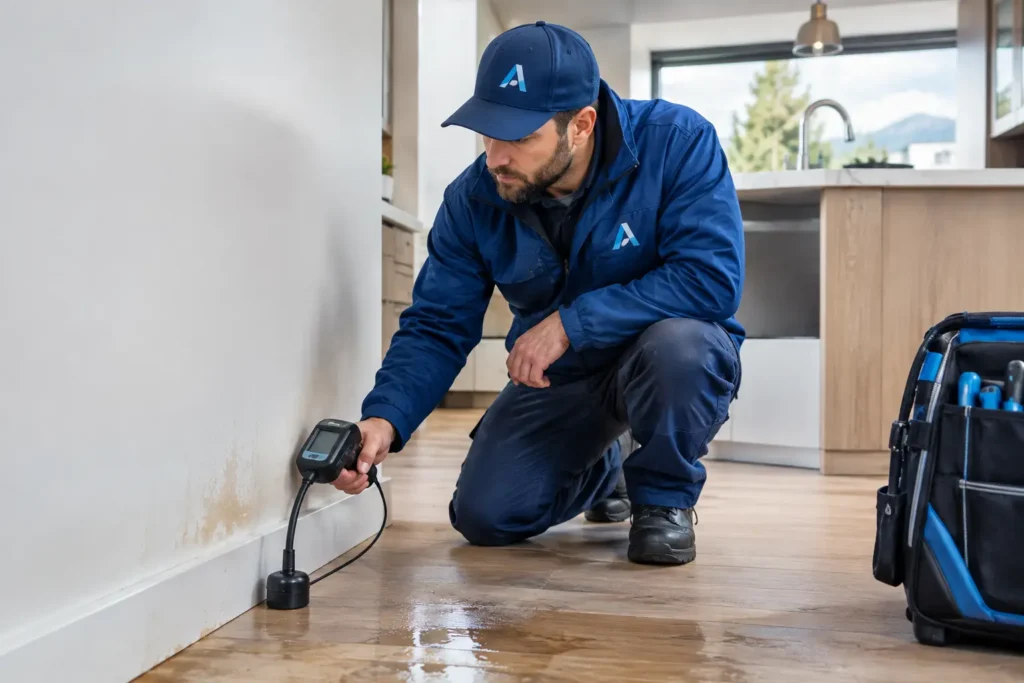
A water stain spreading across a ceiling is obvious. A slow leak under a slab, behind a finished wall, or below a commercial washroom is not. That is where professional leak detection matters. The goal is not to open walls until the leak is found. It is to use the symptoms, plumbing layout, and appropriate testing methods to narrow down the source and make a targeted repair.
For homeowners and property managers in Chilliwack, early detection can be the difference between a contained plumbing repair and damaged flooring, mold-prone building materials, or a disrupted business. Water follows gravity and framing, so the place where it appears is not always where the pipe is leaking.
Signs You May Need Leak Detection
Some leaks announce themselves with a drip or a wet cabinet. Others show up as a pattern that does not make sense until a plumber investigates. An unexplained increase in water use, a water meter that continues moving when all fixtures are off, warm areas on a floor, musty odors, peeling paint, or recurring damp spots all deserve attention.
A hot-water leak can also create a noticeable change in how often the water heater runs. If a hot water tank seems to be cycling more than usual, or hot water is running out sooner than expected, the problem may be at the heater, a fixture, or a concealed hot-water line. The right diagnosis prevents replacing equipment when the actual issue is elsewhere.
Watch for low water pressure as well, particularly when it affects more than one fixture. Pressure loss can have several causes, so it does not automatically mean a leak. However, when it appears with moisture, higher bills, or the sound of water moving inside a wall, it is a good reason to arrange a professional assessment.
How Professional Leak Detection Works
A proper leak call starts with questions. When did the problem begin? Does it happen only when a shower, toilet, appliance, or particular tap is used? Is the moisture clean, rusty, or odorous? Has water use changed? Those details help separate a supply-line leak from a drain, fixture, roof-related moisture issue, or condensation problem.
The next step is to isolate the plumbing system. A plumber may check the water meter, test pressure, inspect accessible piping, and look for moisture patterns around fixtures, mechanical rooms, crawl spaces, and ceilings below bathrooms. Moisture meters can help define how far water has traveled through drywall, flooring, or framing.
When the source remains concealed, specialized methods may be appropriate. Acoustic equipment can help locate the sound of pressurized water escaping from a line. Thermal imaging can reveal temperature differences associated with hot-water leaks or damp materials. In some cases, tracer gas testing is useful for confirming a leak in a closed line where other methods are inconclusive.
No single tool is right for every job. A small pinhole in a copper line behaves differently from a failed toilet seal, a cracked drain connection, or a leak that appears only while a tub is draining. Experience is what turns test results into a sensible repair plan.
Why the Visible Damage Can Be Misleading
Water can run along a pipe, joist, duct opening, or wall plate before it becomes visible. A stain on the main-floor ceiling may originate from a bathroom fixture several feet away. Moisture at the base of a kitchen cabinet may be caused by a dishwasher connection, sink supply valve, drain fitting, or water traveling from another area.
This is why cutting into the first wet spot is often a poor first move. It may create unnecessary repair work while still missing the source. Careful leak detection aims to identify the most likely failure point before access is opened.
There are limits. If building materials are already saturated or a pipe is inaccessible, some selective opening may be necessary. The difference is that it should be deliberate and based on evidence, not guesswork.
Common Hidden Leak Locations
Concealed leaks tend to occur where pipes change direction, pass through framing, connect to fixtures, or have been stressed by age, corrosion, movement, or prior work. In houses, common locations include lines beneath concrete slabs, pipes in exterior walls, shower valves, toilet connections, laundry hookups, and plumbing below kitchen or bathroom floors.
Older piping materials and previous repairs can also affect the diagnosis. A home with Poly-B plumbing may have a different risk profile than one with copper, PEX, or galvanized piping. Where repeated failures point to aging pipe rather than one isolated defect, a larger repair strategy may be more cost-effective than fixing the same system one section at a time.
For mobile homes, access conditions matter. Plumbing may run beneath the home, through enclosed areas, or near vulnerable connections that are difficult to see during a quick visual check. A methodical assessment is particularly valuable before damage spreads into insulation or subfloor materials.
Commercial properties add another layer of complexity. A leak in a washroom, staff area, restaurant kitchen, or tenant space can affect operations and neighboring units. Property managers need clear information about the suspected source, urgency, access required, and the repair options so they can make decisions quickly and communicate with occupants.
When a Leak Is an Emergency
A rapidly spreading ceiling bulge, active water coming through a light fixture area, water near electrical components, or flooding that cannot be contained calls for immediate action. If it is safe to do so, shut off the affected fixture’s stop valve. If the source is unknown or the leak continues, shut off the main water supply and call for emergency plumbing service.
A slow leak is not harmless simply because it is quiet. Water trapped behind finishes can damage drywall, wood, insulation, and flooring long before it reaches an open area. If a water bill jumps without explanation or a stain grows between checks, treat it as a prompt service call rather than a problem to monitor for weeks.
For drain-related leaks, avoid using the affected fixture until it has been assessed. Continued use can send more water into an enclosed space and make it harder to determine the original failure point.
The Repair Should Match the Failure
Finding a leak is only the first part of the job. The right repair depends on pipe material, accessibility, the condition of the surrounding system, and whether the failure is isolated or recurring. A loose fitting may need a straightforward repair. A corroded section of pipe may require replacement beyond the immediate pinhole. A failing toilet connection may need new components and careful testing after installation.
For a concealed supply-line leak, the most economical option is not always the smallest opening. Sometimes rerouting a line through a more accessible path creates a more reliable long-term result than repeatedly repairing difficult-to-reach pipe. In a home with widespread aging plumbing, whole-home repiping may be worth discussing, but it should be based on evidence from the system, not used as a default recommendation.
After the repair, the plumbing should be tested under normal operating conditions. A repair that looks dry for five minutes but has not been properly checked can leave the owner with the same problem later.
What to Expect From a Professional Visit
A good service visit should give you more than a guessed location. You should understand what symptoms were found, what testing was performed, what the likely source is, and what repair options make sense. If access needs to be opened, the reason and location should be explained before work proceeds whenever conditions allow.
For Chilliwack homeowners, landlords, and businesses, Armacom Plumbing & Heating approaches water leaks with the same priority as any other plumbing repair: find the actual cause, protect the property where possible, and complete work built for lasting results. Fast action matters, but so does avoiding unnecessary damage in the process.
If you have unexplained moisture, a moving water meter, or a water bill that no longer matches your normal use, arrange an assessment before the evidence disappears behind a fresh coat of paint or turns into a larger repair.