
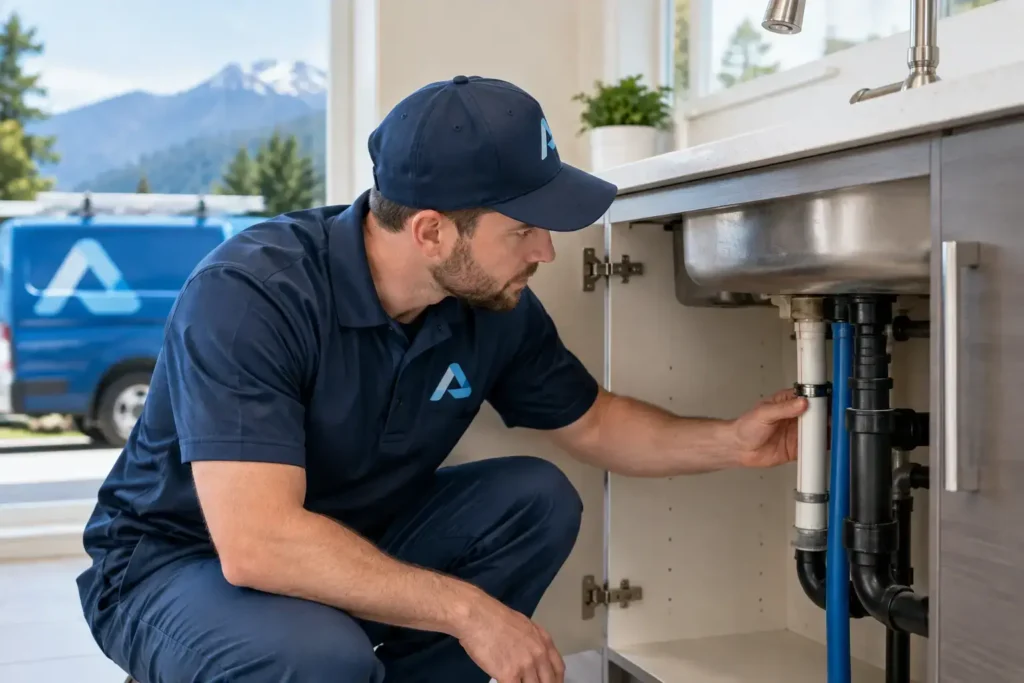
A leak under a bathroom vanity or beside a water heater is often the moment homeowners start asking whether they have Poly B piping. The better time to identify Poly B plumbing is before a fitting fails, water reaches flooring or cabinets, and a small repair becomes a larger restoration job.
Polybutylene, commonly called Poly B, was widely installed in Canadian homes from the late 1970s through the 1990s. Many Chilliwack homes, townhomes, rental properties, and manufactured homes built or renovated during that period may still have it in service. Poly B is not automatically leaking simply because it is present, but it deserves a careful professional assessment and a realistic replacement plan.
What Poly B plumbing looks like
Poly B is a flexible plastic water supply pipe. In most homes, it is gray and about the width of a finger, although some installations may include blue or black pipe. It is used for pressurized hot and cold water lines, not for drain piping.
The pipe is often visible where plumbing enters or leaves key areas of the home. A homeowner may spot it near the hot water tank, under sinks, around a laundry connection, in a utility room, crawl space, unfinished basement, or mechanical closet. In a multi-unit building, exposed piping may be visible in service rooms, but individual units can still contain concealed Poly B lines behind walls and ceilings.
Color alone is not enough for a reliable identification. Gray plastic pipe may be another material, particularly in a home that has had partial plumbing updates. The printed markings on the pipe provide the strongest clue.
Check the printing on the pipe
Look for lettering printed directly on an exposed section of pipe. Polybutylene may be marked with “PB,” “PB2110,” or a standard associated with polybutylene pipe. The wording can be faint, dirty, or partly hidden by insulation, so a plumber may need to inspect several accessible sections before confirming what is installed.
Do not scrape aggressively, cut the pipe, or disturb connections to read a label. Older plastic piping and fittings can be vulnerable, and creating a leak to confirm the material defeats the purpose.
Look at the fittings, but do not rely on them alone
Older Poly B systems are often connected with gray or black plastic fittings, sometimes called acetal fittings. Metal fittings were also used. A metal fitting does not mean the pipe is no longer Poly B, and a plastic fitting does not prove it is. It is the combination of pipe material, markings, fitting type, age of the property, and condition of the system that gives a useful answer.
A professional plumbing inspection can also identify whether the visible Poly B is part of a full original system, a partial repair, or one remaining branch after previous repiping work. That distinction matters when planning costs and reducing future leak risk.
Where homeowners should check first
Start with spaces where water piping is safely visible. In a typical Chilliwack home, the utility room and the area around the water heater are good places to begin. Check beneath kitchen and bathroom sinks, behind laundry appliances if there is safe access, and in an unfinished basement or crawl space.
For townhomes and condos, access is often more limited. Look under sinks and around the water heater, then ask the strata or property manager whether there are records of original plumbing, prior leaks, or building-wide repiping. One unit may have updated piping while neighboring units still have original Poly B.
Manufactured and mobile homes require particular attention. Plumbing may run beneath the structure or through tight service areas where pipe damage is harder to see. A small leak in these locations can go unnoticed until it affects subflooring or insulation. Professional mobile home plumbing service is the safer option when access is restricted.
Why Poly B piping can become a problem
Poly B can deteriorate over time, particularly at fittings and in sections exposed to long-term water pressure, heat, or chemical conditions in the water supply. Failures do not always provide much warning. A line may develop a slow seep at a connection, split near a fitting, or fail suddenly and release a significant amount of water.
Hot water lines are often a concern because heat places additional stress on aging materials. Areas close to a hot water tank, under bathroom sinks, and behind shower walls are common places for homeowners to notice staining, moisture, or pressure-related symptoms.
Age is the central issue. Plumbing that has been operating for decades may look acceptable from the outside while its remaining service life is uncertain. This is why a single leak repair may not be the full answer if original Poly B remains throughout the home.
Signs that call for a plumbing assessment
You do not need to wait for a burst pipe to call a plumber. A prompt assessment is worthwhile if you notice recurring drips at supply-line connections, unexplained water stains, damp cabinetry, musty odors near plumbing fixtures, or a sudden change in water pressure.
Other warning signs include corrosion or moisture around fittings, warped flooring near bathrooms or laundry areas, and repeated repairs on older water lines. These symptoms can come from several plumbing issues, not just Poly B, which is why correct diagnosis matters. Leak detection can locate the source without guessing based on visible damage alone.
If water is actively leaking, shut off the home’s main water supply if it is safe to do so and arrange emergency plumbing service. Fast action limits damage, but the next step should still be a broader review of the plumbing system. Repairing the immediate failure without considering the condition of the remaining lines can leave the property exposed to another leak.
When replacement makes more sense than repair
There is no single answer for every property. If Poly B is limited to a short accessible section and the rest of the water piping has been updated, a targeted repair may be reasonable. If a home still has original Poly B throughout, has experienced prior leaks, or is undergoing bathroom or kitchen renovations, whole-home repiping is usually the more dependable long-term decision.
Replacement planning should consider access, the number of bathrooms, whether walls need to be opened, the condition of shutoff valves, and whether the water heater connections also need updating. For landlords and property managers, planned replacement can be easier to coordinate than dealing with an emergency leak, tenant disruption, and water damage restoration.
A proper quote should be based on the actual layout of the building, not a generic price range. Two similarly sized homes can have very different pipe routes and access conditions. A Red Seal plumber can identify the material, explain what is accessible, and outline whether phased work or full replacement best fits the property.
What a professional Poly B inspection should answer
A useful inspection should give you more than confirmation that gray pipe exists. You should come away knowing where Poly B is present, whether it appears to be original or partially replaced, which fittings and connections show concern, and whether any moisture or active leak needs immediate attention.
The plumber should also explain the practical options. That may mean monitoring an isolated section, completing a repair to address an immediate leak, or planning a full repipe to remove aging Poly B from the water system. For commercial spaces and rental properties, the discussion should include scheduling and how to limit disruption to tenants, staff, or customers.
A practical next step for Chilliwack property owners
If you suspect Poly B, take a clear photo of any visible pipe markings and note where you found them. That information can help when arranging a plumbing visit, but do not assume the visible section tells the whole story. Plumbing concealed behind walls may be a different material, or it may be the same original system extending throughout the property.
Armacom Plumbing & Heating can assess aging water lines, locate active leaks, and provide clear recommendations for Poly B replacement or whole-home repiping in Chilliwack. A planned assessment gives you the chance to address the risk on your schedule instead of reacting after water damage has already started.