
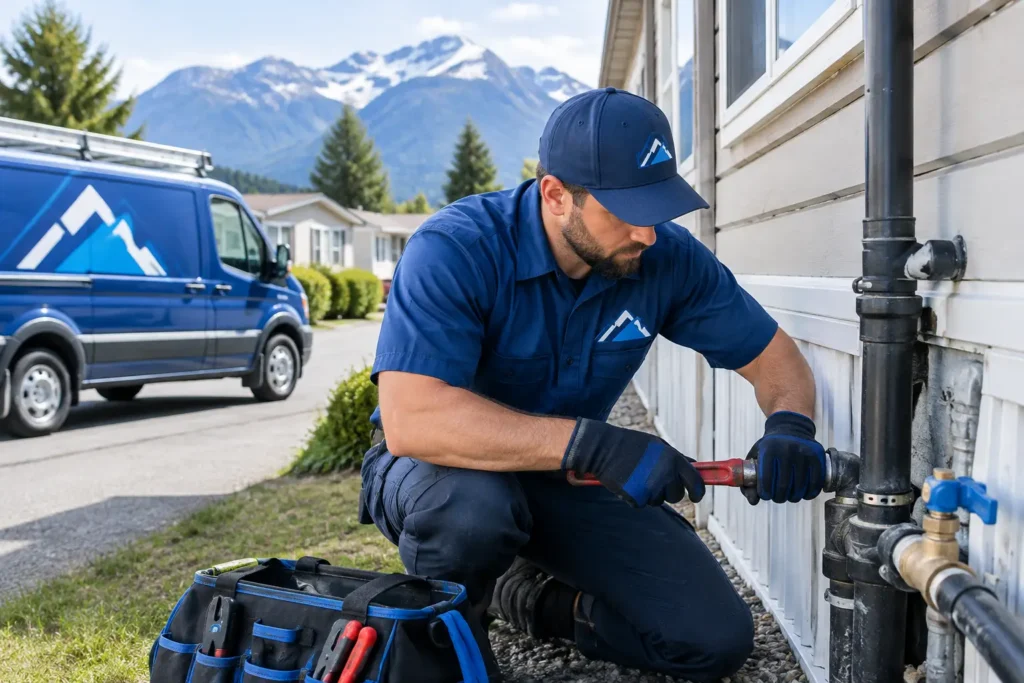
A mobile home plumbing problem can stay hidden longer than it would in a conventional house. Water lines, drain piping, and connections often run below the floor inside an enclosed belly space, where a small leak can wet insulation, damage the subfloor, and create a much larger repair than the original failure. This Chilliwack mobile home plumbing guide covers the issues homeowners and property managers should watch for, what makes these systems different, and when a professional repair is the sensible next step.
Why Mobile Home Plumbing Needs a Different Approach
Mobile homes have many of the same fixtures as site-built homes: toilets, tubs, showers, kitchen sinks, laundry connections, water heaters, and shutoff valves. The layout behind those fixtures is different. Supply and drain lines frequently run through a compact underfloor area, and access may be limited by skirting, insulation, vapor barrier material, or finished flooring.
That construction affects both diagnosis and repair. A dripping fitting under a sink may be straightforward to locate. A leak below the floor can show up first as a soft spot in flooring, a musty smell, unusually high water use, or moisture around the skirting. Finding the actual source without damaging sound materials takes experience and a methodical approach.
Many older units also contain a mix of plumbing materials from previous repairs. It is common to find older plastic supply piping connected to newer PEX, or aging drain fittings tied into newer sections of pipe. Those transitions are often where workmanship and correct fittings matter most.
The Most Common Mobile Home Plumbing Problems
Leaks below the floor
Underfloor leaks are one of the most costly mobile home plumbing issues because they are not always visible right away. A pressurized water line can release water whenever the main supply is on, while a drain leak may only appear when a particular fixture is used. Either can saturate insulation and leave the floor system vulnerable to deterioration.
Warning signs include a water bill that has climbed without explanation, damp or sagging skirting, warm or wet patches on the floor, reduced water pressure, and the sound of water moving when no fixture is running. If the leak is active or water is reaching electrical components, flooring, or walls, treat it as an emergency plumbing concern. Shut off the home’s water supply if it is safe to do so and arrange for prompt service.
A professional leak diagnosis should identify whether the issue is on a hot water line, cold water line, fixture connection, drain, or exterior supply connection. Repairing the visible wet area without confirming the source can leave the real problem in place.
Older Poly-B water lines
Some older mobile homes have Poly-B supply piping. This gray plastic pipe was widely used in residential construction for a period of time and may still be operating without an immediate problem. However, material age, fitting condition, past alterations, and visible damage all need to be considered.
A single failed fitting does not automatically mean every water line requires replacement. On the other hand, repeated leaks, brittle pipe, inaccessible damaged sections, or a patchwork of prior repairs may make a planned Poly-B replacement or whole-home repiping more practical than another isolated repair. The right decision depends on the condition of the existing system, access, and the long-term plans for the home.
Slow drains and recurring clogs
A drain that clears slowly in one fixture may be a local issue at that sink, tub, or toilet. When several fixtures drain slowly, gurgle, or cause water to rise in another fixture, the problem may be farther along in the building drain.
Mobile home drain piping must maintain proper support and slope beneath the home. If a section sags, shifts, or is poorly supported, waste can settle in the low point and create recurring blockages. Repeated use of chemical drain cleaners is not a solution. These products can be harsh on aging piping and often do little to remove the material causing a stubborn blockage.
Professional drain cleaning is more effective when the technician considers the complete drainage layout instead of treating each slow fixture as a separate event. For heavier buildup or persistent blockages, hydro jetting may be appropriate, but it depends on the pipe material, condition, and access. It is not the right first choice for every older system.
Toilet movement and floor damage
A toilet that rocks, leaks at the base, or feels loose deserves attention quickly. In a mobile home, floor damage around a toilet can worsen if moisture reaches the subfloor beneath the bathroom finish. Sometimes the problem is limited to mounting hardware or a failed seal. In other cases, the surrounding floor structure has already softened and needs to be assessed before the toilet can be securely reset.
Do not ignore a small amount of water around the base, especially after flushing. What looks minor from above can hide ongoing damage below.
Water heater concerns
Mobile home water heaters must be selected and installed for the application, with proper connections, safe discharge routing, and adequate access for future service. A shortage of hot water, discolored water, rumbling from the tank, water around the base, or an unreliable burner or heating element all call for a qualified assessment.
Replacement is sometimes the more cost-effective option when a conventional tank is leaking or near the end of its useful life. A tankless water heater can also be a good fit for some households, particularly where space and hot-water demand support the change. The choice depends on fuel type, venting requirements where applicable, household demand, and the condition of the existing plumbing. It should be planned rather than treated as a quick fixture swap.
What to Check Before Calling for Service
You do not need to take plumbing apart to provide useful information. Note which fixtures are affected, when the problem occurs, whether water is visible, and whether the issue is getting worse. For a drainage problem, it helps to know whether the kitchen sink, bathroom sink, tub, shower, and toilet are all draining normally.
For a suspected leak, look for changes around the water heater, beneath sinks, behind toilets, and around the skirting. If the water meter continues to register use while every fixture is off, that is valuable information for the plumber. Avoid opening sealed underfloor areas or disturbing wet insulation unless directed by a qualified technician. Wet underbelly materials can conceal damaged piping and create an unnecessarily difficult restoration.
If your home is in a managed park, confirm where the home’s plumbing responsibility ends and the park’s shared water or sewer infrastructure begins. A plumber can repair plumbing within the home and its connection area, but a problem affecting multiple homes or a common line may need to be reported to park management.
Protecting Plumbing Through Chilliwack Weather
Cold snaps can expose weak points in mobile home plumbing quickly. The underfloor area relies on intact insulation, protected piping, and properly maintained skirting to reduce exposure to freezing air. Damaged or missing skirting, torn belly material, and displaced insulation can leave pipes vulnerable.
Before colder weather arrives, arrange for concerns such as drafts below the home, previous freeze damage, exposed pipes, or a history of slow leaks to be checked. If pipes freeze, avoid using an open flame or improvised heating method. Frozen piping can split as it thaws, and the resulting leak may not become apparent until water pressure returns.
When to Call a Chilliwack Plumber Right Away
Some problems should not wait for a convenient appointment. Call for prompt plumbing repair if you have active water leaking into the floor system, sewage backing up through a fixture, no water with evidence of a broken line, a water heater leaking from the tank, or a toilet overflow that cannot be stopped.
For less urgent issues, early service still saves money. A recurring clog, small underfloor leak, aging Poly-B piping, or toilet that moves under use can often be addressed before it turns into flooring damage or a major water loss. At Armacom Plumbing & Heating, the goal is to locate the actual cause, explain the repair options clearly, and complete work that holds up in the conditions mobile homes present.
A mobile home does not need constant plumbing trouble to deserve attention. It needs the right repair before a concealed issue reaches the floor, insulation, or structure. Acting on the first reliable warning sign is usually the most affordable decision.