
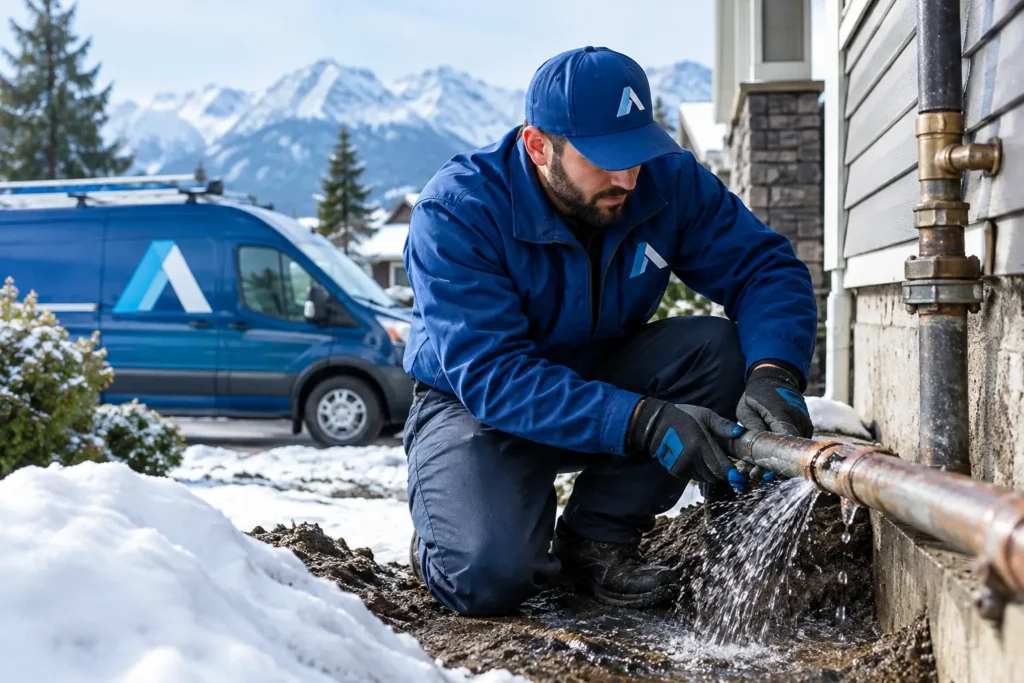
A burst pipe rarely starts with a dramatic bang. More often, it begins with a small freeze point, a weak fitting, hidden corrosion, or pressure that has been building for months. Understanding the top causes of burst pipes can help Chilliwack homeowners, landlords, and property managers act before a minor plumbing concern becomes soaked flooring, damaged drywall, or a closed business.
A pipe that has already burst needs fast attention. Shut off the main water supply if it is safe to do so, keep people away from standing water near electrical equipment, and arrange emergency plumbing service. The next priority is finding the source, repairing it correctly, and determining why the pipe failed in the first place.
1. Freezing temperatures and inadequate pipe protection
Freezing is one of the most common causes of burst water pipes. Water expands as it freezes. When ice forms inside a confined pipe, pressure builds between the blockage and a closed fixture or valve. It is that pressure, rather than the ice itself, that can split copper, plastic, or older piping materials.
Chilliwack winters are generally milder than many parts of Canada, but cold snaps still expose vulnerable plumbing. Pipes in crawl spaces, exterior walls, garages, mobile homes, unheated storage areas, and under kitchen or bathroom cabinets are at greater risk. A pipe may freeze overnight but not show a leak until temperatures rise and the ice thaws.
The warning signs are reduced water flow, frost on visible piping, an unusually cold cabinet or crawl space, or a fixture that suddenly stops producing water during freezing weather. These signs warrant a prompt call to a plumber. Waiting for a thaw can turn a manageable problem into a water leak repair emergency.
2. Aging, corroded, or deteriorated pipe materials
Pipes do not last forever. Internal corrosion gradually thins certain metal pipes, especially where water chemistry, age, and repeated moisture exposure have taken a toll. The pipe may look acceptable from the outside while becoming weak enough to split or develop a pinhole leak under normal operating pressure.
Older galvanized lines are particularly prone to internal buildup and corrosion. Copper can also fail over time at weak spots, fittings, or areas affected by ongoing moisture. Repeated small leaks, green staining around copper joints, rust-colored water, reduced water pressure, or staining beneath plumbing fixtures can all point to a system that needs professional assessment.
Poly-B piping is another concern in some homes. Its condition depends on the installation, fittings, age, and history of the system. A localized repair may be reasonable in some situations, while recurring leaks or widespread deterioration can make Poly-B replacement or whole-home repiping the more practical long-term decision. The right approach depends on the pipe material, accessibility, extent of the problem, and the property’s plans.
3. Excessive water pressure
High water pressure puts continuous strain on pipes, valves, appliance connections, and fixture supply lines. A plumbing system can appear to work normally while pressure slowly shortens the life of its weakest components. Eventually, a fitting may fail or a compromised pipe section may rupture.
Pressure concerns are not always obvious. Banging pipes, dripping pressure relief valves, repeatedly failing toilet fill valves, and appliance hoses that leak prematurely can be clues. Pressure can also rise when water is heated and there is no effective way to accommodate expansion within the system.
A qualified plumber can test the pressure, check the condition of pressure-control components, and identify whether the issue is related to the incoming supply or the building’s plumbing system. This is especially worthwhile for multi-unit properties and light commercial spaces, where a burst line can affect several tenants or disrupt daily operations.
4. Clogs and blockages that create pressure
Not every blockage causes a pipe to burst, but a severe blockage can contribute to a failure when pressure has nowhere to go. Frozen sections of pipe are one example. Another is a restricted line combined with aging or already-damaged piping.
Drain blockages usually lead to backups rather than burst water pipes, but they should not be ignored. Repeated slow drains, gurgling fixtures, foul odors, or water returning through a lower fixture indicate that the drainage system needs attention. Professional drain cleaning or hydro jetting may clear the buildup and reduce the chance of an overflow or further damage to the piping.
The cause matters. A kitchen line blocked by accumulated debris needs a different solution than a main drain with recurring buildup. Clearing only the immediate symptom may provide short-term relief but leave the underlying condition untouched.
5. Poor installation, weak joints, and physical damage
A pipe can fail years after installation if it was poorly supported, improperly joined, exposed to vibration, or placed where it is vulnerable to movement and impact. Plumbing is designed to expand and contract as water temperature changes. When lines are tightly constrained, unsupported over long spans, or connected with failing fittings, that movement can stress the system.
Physical damage is another common issue. Renovation work, stored items in tight utility spaces, shifting soil around an exterior water line, and accidental impacts can damage piping without creating an immediate visible leak. The line may weaken gradually, then rupture when pressure changes or the affected area freezes.
In mobile homes, plumbing often has less protection from outside temperatures and may be located in tighter, harder-to-access spaces. Insulation, skirting condition, pipe routing, and past repairs all affect the risk. A professional inspection after a freeze, recurring leak, or unexplained water loss can prevent repeated emergency calls.
6. Water heater and hot water line issues
Hot water piping sees regular temperature changes, which can expose weak joints or aging materials. If a hot water tank is leaking, making unusual noises, producing inconsistent hot water, or showing signs of corrosion around connections, it should be addressed before the issue worsens.
The problem is not always the tank itself. Leaks may come from nearby shutoff valves, supply connections, relief piping, or the hot water lines serving the building. Tankless water heater systems also need properly installed water connections and regular professional attention when performance changes.
For a commercial property, even a small hot water leak can interrupt washrooms, kitchens, tenant operations, or customer service. Fast diagnosis helps separate a plumbing-line failure from a water-heating equipment issue and keeps the repair focused on the actual source.
Warning signs that should not wait
Burst pipes are often preceded by smaller clues. A sudden increase in the water bill, damp drywall, peeling paint, moldy odors, warm or cold spots on floors, low water pressure, or the sound of water moving when fixtures are off all deserve attention. Water stains on a ceiling may appear far from the actual leak because water follows framing and other concealed pathways.
For property managers, frequent service calls for the same bathroom, kitchen, mechanical room, or suite are another warning sign. Repairing one fitting may be appropriate, but repeated failures can indicate aging piping, pressure problems, or an issue with the building’s broader plumbing layout.
Leak detection is particularly valuable when the source is concealed behind walls, beneath floors, or within a crawl space. Finding the leak accurately limits unnecessary opening of finished surfaces and helps ensure the correct repair is made the first time.
What to do when a pipe bursts
A burst pipe is an emergency when water is actively flowing, water is reaching finished areas, or the building cannot safely operate without service. Turn off the building’s main water supply if it can be done safely, move valuables away from the affected area, and contact Armacom Plumbing & Heating for 24/7 emergency plumbing services in Chilliwack and surrounding Fraser Valley communities. Do not use electrical switches or equipment near standing water.
After the immediate leak is controlled, professional burst pipe repairs should include more than replacing the visibly broken section. An experienced plumber will assess the pipe material, nearby fittings, signs of freezing, water pressure, and the condition of adjacent lines. That extra assessment can make the difference between one repair and a repeat failure weeks later.
A burst pipe is disruptive, but it also provides useful information about the plumbing system. Addressing the reason it failed, not just the split in the pipe, gives your Chilliwack property the best chance of avoiding the next emergency.