
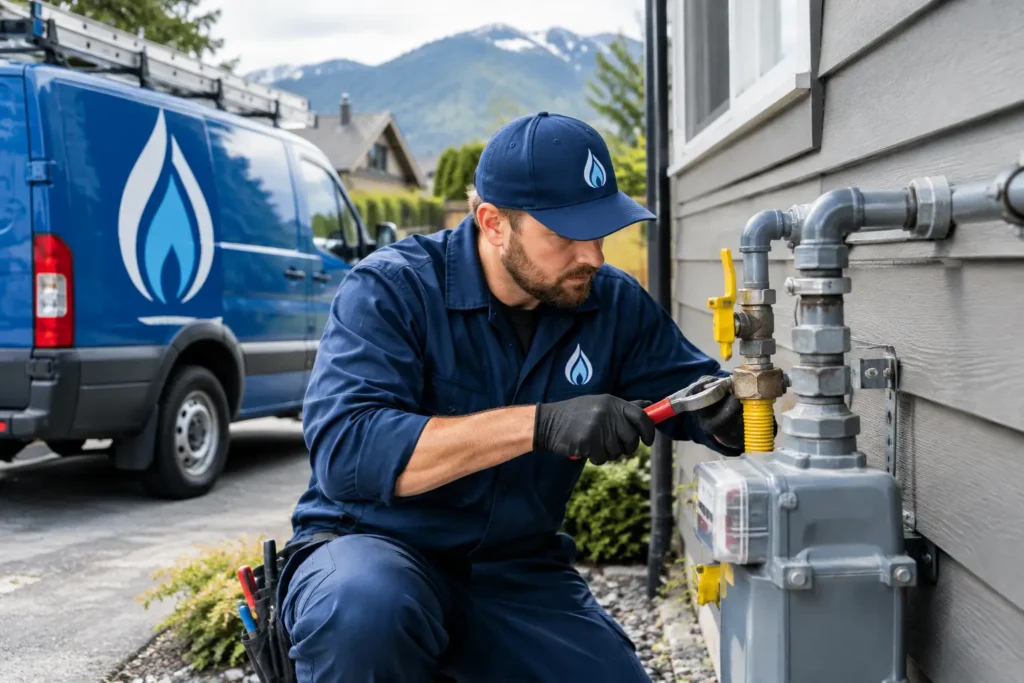
A gas leak is not a plumbing repair to put off until business hours. If you smell sulfur or rotten eggs near a gas appliance, gas meter, furnace room, or commercial kitchen, the question of who repairs gas leaks has a clear answer: a qualified, licensed gas fitter. The first priority is getting people away from the suspected leak and arranging the right emergency response, not trying to find the source yourself.
For Chilliwack homes and businesses, a gas fitter can locate the problem, complete the approved repair, pressure-test the system, and make sure the affected gas line or appliance connection is safe before it is returned to service. That process matters because a leak may be caused by more than a loose fitting.
Who repairs gas leaks in a home or business?
A licensed gas fitter repairs gas leaks on natural gas piping, appliance connections, gas shutoff valves, regulators, and related fuel-gas components. A plumber who is qualified and licensed for gas fitting can perform this work. Not every plumber performs gas work, so it is worth confirming that the contractor handles gas leak repairs specifically.
Depending on where the leak is found, the gas utility may also have a role. If the issue appears to involve the meter, the service line leading to the meter, or an immediate hazard outdoors, contact the utility’s emergency line and follow its instructions. Utility crews address their equipment and supply-side concerns. A gas fitter addresses customer-owned piping and appliance connections inside or beyond the meter, subject to the scope of the problem.
For a suspected indoor leak, do not turn lights, appliances, fans, or switches on or off. Do not start a vehicle nearby, use an open flame, or try to tighten a gas connection. Leave the area, keep others away, call 911 if there is immediate danger, and contact the gas utility emergency line from a safe location. Once the area is safe and the utility has addressed any urgent concern, a licensed gas fitter can take over the repair work.
Why gas leak repair requires more than a quick fix
Natural gas piping is designed as a sealed system. A leak can develop at a threaded joint, flexible appliance connector, valve, union, regulator, or a section of pipe that has corroded or been damaged. In some cases, the odor is strongest at an appliance, but the actual issue is farther back on the piping.
A proper repair starts with isolating the affected portion of the system and confirming where gas is escaping. The repair may be as limited as replacing a failed component, or it may require correcting damaged piping, improper support, or a connection that no longer meets current requirements. The right solution depends on the material, age, location, accessibility, and condition of the rest of the gas line.
After the repair, the system must be tested for leaks before gas service is restored. This is the part customers cannot see, but it is one of the reasons to hire a professional instead of treating a gas odor as a minor maintenance issue. A connection that feels tight is not proof that it is safe.
Appliance issues can look like gas line leaks
A gas smell near a water heater, range, fireplace, or boiler does not automatically mean the appliance itself has failed. The problem could be at the shutoff valve, connector, sediment trap, burner area, or fixed piping behind the unit. Conversely, an appliance may have a combustion or ignition issue that needs service even when the piping is not leaking.
The distinction matters. A qualified technician should identify whether the concern is fuel-gas piping, an appliance component, or both before recommending work. Replacing parts without a clear diagnosis can add cost without solving the safety issue.
Common signs that warrant an urgent call
The strongest warning sign is the distinctive sulfur-like odor added to natural gas. Treat that smell seriously, even if it comes and goes or seems faint. Changes in airflow, doors opening and closing, or ventilation can move the odor away from the actual leak location.
Other warning signs include a hissing sound near exposed piping, a damaged flexible connector, visible corrosion around a fitting, or a gas appliance that repeatedly shuts down or fails to ignite. Dead or discolored vegetation near an outdoor gas line can also be concerning, though it does not confirm a leak by itself.
Commercial properties deserve particular attention because gas piping may serve multiple appliances, tenant spaces, or kitchen equipment. A restaurant, retail unit, or multifamily building should not keep operating around a suspected gas odor. Property managers should have the issue assessed promptly and communicate clear access instructions to occupants if a technician needs to isolate equipment or piping.
What a professional gas leak visit should include
A competent gas leak repair visit is organized around safety and verification. The technician should first assess the reported odor or symptom, determine whether an emergency response is needed, and locate the affected section of the gas system. The repair approach should match the cause, rather than relying on a temporary adjustment.
Once the work is complete, the repaired piping needs appropriate testing before it is put back into use. If repairs affect an appliance connection, the technician should also confirm that the appliance can be safely returned to operation. Required permits or inspections can depend on the scope and location of the work, especially when piping is being altered or extended.
Homeowners should expect a straightforward explanation of what was found, what was repaired, and whether any additional aging or damaged components should be addressed. Not every older gas line needs replacement after one repair. However, repeated leaks, extensive corrosion, unsupported piping, or multiple deteriorated fittings may make a larger repair the more reliable and cost-effective choice.
Gas leak repair versus gas line replacement
Repair is often appropriate when the leak is isolated to one accessible fitting, valve, or appliance connector and the remaining system is in good condition. Replacing a single failed component can restore safe service without unnecessary disruption.
Replacement becomes more sensible when a section of pipe has widespread corrosion, has been physically damaged, is difficult to repair safely, or has developed recurring problems. The same is true when a renovation, appliance change, or commercial equipment upgrade requires changes to pipe sizing or routing. A gas fitter should evaluate the full situation instead of recommending a larger job by default.
For example, a leak at a connection serving a hot water tank may be a localized repair. If the piping around it is heavily corroded or the installation has multiple concerns, the technician may recommend correcting more than one item while the gas service is isolated. That is not always the cheapest option on the day of service, but it can reduce the risk of another urgent call later.
Choosing a gas fitter in Chilliwack
When calling for gas leak service, ask whether the contractor is licensed and qualified to work on natural gas piping and appliances. Explain where you noticed the odor, whether anyone has contacted the utility, what appliances are nearby, and whether the building is a home, rental property, strata property, or commercial space. Clear details help the technician arrive prepared.
For landlords and property managers, it also helps to arrange access to mechanical rooms, suites, utility spaces, or kitchens in advance. Gas problems often take longer to resolve when the affected equipment cannot be accessed or occupants have not been told what is happening.
Armacom Plumbing & Heating provides gas fitting and plumbing repair for Chilliwack customers who need a clear diagnosis and careful repair work. If a gas odor or suspected leak is present, treat it as an urgent safety concern first. Once everyone is safe and the immediate hazard has been addressed, the right gas fitter can restore the system with the testing and workmanship the job requires.