
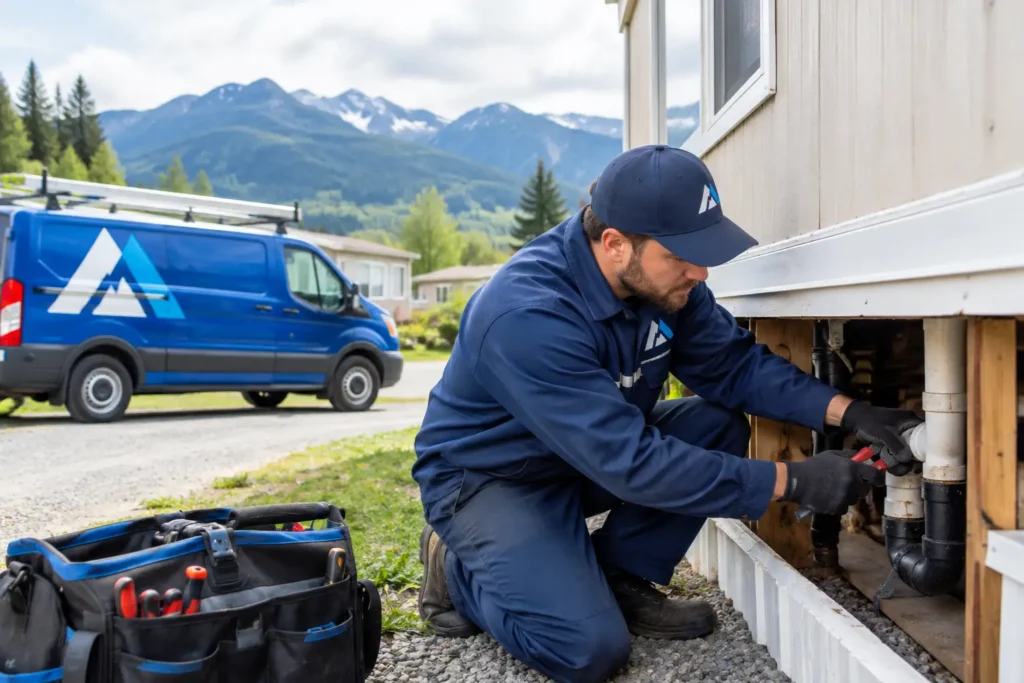
A mobile home plumbing problem often starts out of sight. Water can collect in the underbelly, a drain connection can loosen beneath the floor, or a supply line can drip behind a cabinet long before there is a visible puddle indoors. That is why this mobile home plumbing repair guide focuses on recognizing the warning signs early, understanding what makes these systems different, and knowing when a professional repair is the safer choice.
For Chilliwack homeowners and property managers, quick action matters. Moisture below a manufactured home can damage insulation, flooring, and subfloor materials, while a recurring drain backup can quickly make a bathroom or kitchen unusable. The right repair is not simply the fastest patch. It starts with finding the failed component and confirming the surrounding plumbing is still sound.
Why mobile home plumbing needs a different approach
Mobile homes and manufactured homes commonly have water and drain piping routed below the floor within a protected underbelly. This design keeps plumbing out of living areas, but it can make a small leak harder to locate and repair correctly. Access may require careful removal and restoration of belly material and insulation. Leaving that area improperly sealed can expose pipes to cold weather and allow moisture problems to continue.
The plumbing materials also vary widely by the home’s age and prior repairs. A technician may find PEX, CPVC, older polybutylene pipe, ABS drain piping, or several materials joined together. Each system has compatible fittings and repair methods. A fitting that looks acceptable may still be unsuitable if it is attached to aging pipe, installed under strain, or used at a transition where the materials expand differently.
Mobile homes can also have more movement than a conventional house. Minor settling, seasonal temperature changes, and vibration can put stress on pipe supports, drain connections, and fixture lines. That is one reason a repair should include a check of nearby connections instead of treating one loose fitting as an isolated issue.
Signs you may need mobile home plumbing repair
A sudden increase in the water bill is one of the clearest warnings, especially when daily water use has not changed. Other signs are more subtle: a soft or stained floor near a toilet or kitchen cabinet, a musty smell, low water pressure at one fixture, water heater moisture, or the sound of water moving when no fixture is running.
Drain concerns deserve prompt attention as well. A sink that repeatedly drains slowly, a toilet that bubbles when another fixture is used, or wastewater appearing at a tub or shower drain can point to a developing blockage or a drainage issue farther down the line. Chemical drain products are not a reliable answer for recurring problems. They can damage certain piping, fail to clear the actual blockage, and make the work more hazardous for whoever services the line next.
Outside, look for unexplained damp soil near the home, but do not assume the source is always a water line. Rainwater, a drain leak, and a supply leak can create similar symptoms. Leak detection and a proper plumbing assessment help narrow down the cause before unnecessary repairs are made.
When a leak is an emergency
Treat active water release, water near a water heater, a toilet overflow, or wastewater backing up into the home as urgent. Limit water use and arrange emergency plumbing service rather than waiting for the issue to dry up or disappear. Water can travel along framing and insulation, so the visible wet spot is not always the full extent of the damage.
If you smell gas near a gas appliance or gas piping, leave the area and contact the appropriate emergency provider. Gas work requires qualified service and should never be treated as a homeowner repair.
Common mobile home plumbing problems
Supply-line and fitting leaks
Leaks commonly occur at shutoff valves, toilet supply lines, water heater connections, and transitions between different pipe materials. In a mobile home, a small supply leak can drain directly into the belly area without immediately showing on the finished floor. A plumber should identify the source, replace compromised components with suitable materials, and check the surrounding lines for stress or deterioration.
Older homes with polybutylene piping deserve particular attention. This material may have a history of fitting failures and internal deterioration, depending on its age and installation. Repairing one failure can be reasonable when the rest of the system is in good condition. If leaks become repetitive, a planned Poly-B replacement or repiping discussion may offer better long-term value than a cycle of emergency calls.
Drain leaks and recurring clogs
Drain piping below a mobile home needs correct slope, secure support, and properly sealed joints. A sagging section can hold wastewater and debris, creating repeated slow drains even after a temporary clearing. Loose or damaged drain connections can also release wastewater into the underbelly, where odors and moisture may persist.
Professional drain cleaning addresses the blockage, but the next step depends on what caused it. A one-time blockage from normal use is different from a line that repeatedly backs up because of a poor pipe slope, damaged joint, or heavy buildup. For stubborn or recurring blockages, hydro jetting may be appropriate in some systems, but it should be selected based on the pipe condition and the nature of the obstruction.
Toilet movement and floor damage
A toilet that rocks, leaks at the base, or feels unstable should not be ignored. The concern may be a failed seal, loose mounting, a damaged flange, or moisture-related floor deterioration. In mobile homes, the condition of the subfloor matters as much as the toilet connection itself. Securing a toilet to weakened material without correcting the underlying problem can lead to another leak.
Water heater concerns
Water heaters place significant demands on mobile home plumbing because they involve pressurized water connections, drain components, and safety controls. Rust-colored water, inconsistent hot water, visible corrosion, moisture around the unit, or a tank that is nearing the end of its service life are all reasons to schedule an assessment.
The right answer may be a targeted repair, a conventional hot water tank replacement, or a properly sized tankless water heater. It depends on the home’s layout, fuel source, hot-water demand, and existing plumbing condition. A replacement should be planned around safe installation requirements, not just the cost of the appliance.
What a professional repair visit should accomplish
A good mobile home plumbing repair is more than stopping the immediate leak. The plumber should trace the source, assess accessible piping and connections, determine whether damage has affected nearby materials, and explain the repair options in plain language. If the issue is inside the underbelly, restoring protection around the repaired area is part of preventing future trouble.
For a drain problem, the goal is to identify whether the issue is localized to one fixture or affects the branch line serving multiple fixtures. For a water-line problem, the goal is to distinguish a failed fitting from broader pipe deterioration. That distinction helps homeowners avoid both under-repairing a serious problem and replacing more plumbing than necessary.
Property managers should also consider the pattern across similar homes. Repeated toilet leaks, drain backups, or polybutylene failures across a property may justify a proactive maintenance plan. Planned repairs are usually easier to schedule, less disruptive to residents, and less likely to involve moisture damage than emergency work.
Preventing repeat repairs in Chilliwack
Chilliwack’s wet seasons and winter cold snaps make protecting the underbelly especially worthwhile. Keep an eye on signs of moisture around fixtures, address slow drains before they become full backups, and have small leaks assessed before they reach flooring or insulation. When a mobile home is vacant for a period, regular checks can catch a problem that would otherwise continue unnoticed.
It is also sensible to keep records of prior plumbing repairs, particularly pipe material changes, water heater service, and recurring drain work. That history gives the next plumber useful context and can reveal whether a repair is becoming a system-wide issue.
Armacom Plumbing & Heating can help Chilliwack mobile home owners and property managers assess leaks, drain problems, toilet issues, water heater concerns, and aging piping with precision and care. The best time to call is when the first warning sign appears, before a hidden plumbing problem becomes a damaged floor, a saturated underbelly, or an after-hours emergency.