
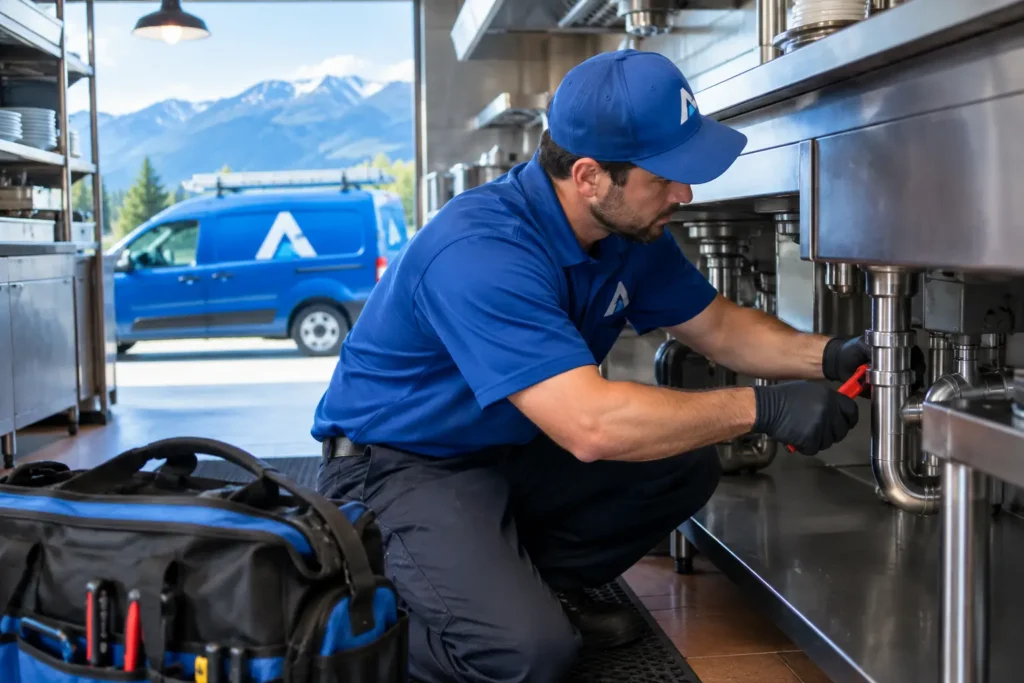
A restaurant can handle a busy Friday night. It cannot easily handle a kitchen sink backing up during dinner service, a restroom toilet overflowing, or a hot water tank failing before the dishwashing rush. Chilliwack restaurant plumbing is not just about fixing fixtures when they break. It is about keeping the kitchen, washrooms, staff, and customers moving without an avoidable shutdown.
Restaurant plumbing works harder than residential plumbing. High volumes of water, food debris, soap, frequent handwashing, commercial dishwashing, and long operating hours all put stress on drains, supply lines, water heaters, and fixtures. The best approach is to deal with warning signs early, maintain the systems that see the most use, and know when a repair requires a professional plumber.
Where Restaurant Plumbing Problems Usually Start
Most service interruptions begin in a few predictable places: kitchen drains, floor drains, hot water equipment, washroom fixtures, and the water lines feeding the building. A small problem in any one of these areas can quickly affect the rest of the operation.
Kitchen drains are often the first trouble spot. Food particles, oil residue, detergent buildup, and sediment do not disappear simply because water is flowing. They can collect inside branch lines and farther down the drain system, gradually restricting flow. By the time staff notice standing water in a sink or a slow floor drain, the pipe may already have substantial buildup.
Restroom problems can be just as disruptive. A toilet that runs continuously, flushes poorly, or clogs repeatedly is not always a simple fixture issue. It may be a worn internal component, a blocked branch drain, or a problem in the main sewer line. Repeated plunging can get through a shift, but it does not correct the cause.
Hot water is another operational necessity that often gets noticed only when it is gone. In a restaurant, insufficient hot water affects cleaning, dishwashing, handwashing, and daily closing procedures. A tank that is leaking, making popping sounds, delivering inconsistent temperatures, or failing to recover between busy periods should be inspected before it leaves the business without hot water.
Chilliwack Restaurant Plumbing Warning Signs to Act On
A plumbing issue rarely arrives without warning. The first signs are often easy to dismiss because the restaurant is busy, the drain eventually clears, or the toilet works again after a second flush. Those small signs deserve attention because emergency repairs are usually more disruptive and more expensive than planned service.
Watch for drains that empty slowly, gurgle, smell unpleasant, or back up when another fixture is used. A floor drain that holds water, a sink that needs frequent plunging, or water appearing around a drain cover can indicate a blockage developing farther down the line. If multiple fixtures are affected at once, the issue may be in a shared drain or sewer line rather than one individual sink.
Also pay attention to unexplained water use. A sudden increase in the water bill, damp wall areas, staining near ceilings, water around a water heater, or a persistent sound of running water can point to a hidden leak. A slow water leak can damage finishes, create sanitation concerns, and raise operating costs long before it becomes visible.
For gas-fired water heaters or boilers, a gas odor, unusual burner behavior, soot, or equipment that repeatedly shuts down requires prompt professional attention. Staff should not attempt to repair gas piping, burners, or safety controls. Shut off the affected equipment if it is safe to do so, keep people away from the area, and contact a qualified professional.
Why Drain Maintenance Matters More Than Emergency Plunging
A plunger has a place for a minor toilet blockage, but it is not a drain maintenance plan. When a kitchen line repeatedly slows down, the real issue is often buildup coating the interior of the pipe. Snaking may open a path through a blockage, which can be appropriate for certain clogs. However, it may not remove heavy residue from the pipe walls.
Hydro jetting uses controlled high-pressure water to clean buildup from inside suitable drain lines. It can be an effective option for recurring kitchen drain problems, but it is not automatically the right answer for every pipe. A plumber should consider the line’s condition, material, access points, and the cause of the blockage before recommending it. Older or damaged piping may need a different approach.
For restaurants, planned drain cleaning is usually easier to schedule during lower-impact hours than an emergency backup during service. The right maintenance interval depends on the menu, volume of business, kitchen habits, and condition of the existing plumbing. A high-volume operation may need more frequent attention than a small cafe with limited food preparation.
Staff practices matter too. Strainers should be used and emptied regularly, visible food waste should be kept out of sinks, and employees should report slow drains immediately rather than waiting for a full blockage. These steps will not replace professional cleaning, but they can reduce strain on the system between service visits.
Protecting Hot Water During Busy Service
Restaurants have different hot water demands than homes. A system that appears adequate during a quiet afternoon may struggle once dishwashing, sink use, and washroom demand rise at the same time. If hot water runs out regularly, the cause could be an undersized tank, a failing heating element or burner, sediment buildup, a malfunctioning mixing component, or a distribution problem.
A hot water tank nearing the end of its service life may still heat water, but leaks and failures become more likely with age. Moisture around the base of the tank, corrosion at fittings, rusty water, unusual sounds, or inconsistent temperature are all reasons to arrange an inspection. Replacing a deteriorating unit on a planned timeline gives a business more control than waiting for a failure.
Tankless water heaters can suit some restaurant applications because they provide hot water on demand, but sizing and installation are critical. The equipment must be selected for the actual flow rate and simultaneous demand of the operation. A unit that is too small may create the same service problem it was intended to solve. Existing gas capacity, venting, water quality, and maintenance access also need to be assessed before installation.
Water Leaks and Supply Line Failures Need a Fast Response
Drain problems are obvious when water backs up. Supply-side leaks can be quieter and more damaging. A failing shutoff valve below a sink, a loose fitting, a deteriorated water line, or a leaking fixture connection can release water inside cabinets, walls, or utility spaces where it may not be seen right away.
If a leak is active, isolate the water source when possible. Staff should know where local shutoff valves are located and where the building’s main water shutoff can be accessed. Do not force a seized valve, and do not leave a leak contained with towels or buckets as a long-term solution. Those are temporary measures while repair is arranged.
Professional leak detection is especially useful when there is water damage or a higher bill but no visible source. Finding the actual leak before opening walls or replacing finishes helps limit disruption and unnecessary work.
A Practical Service Plan for Restaurant Owners and Managers
The most effective restaurant plumbing plan is based on the building and how it operates, not a generic checklist. Still, a few habits prevent many urgent calls. Schedule professional drain cleaning when slow drainage becomes a pattern, inspect hot water equipment before the busiest season, and repair running toilets or dripping fixtures promptly.
Keep a simple record of recurring problems. Note which sink, washroom, or floor drain is affected, what time the problem occurs, and whether another fixture causes it to worsen. This information helps a plumber diagnose shared-line problems faster and recommend repairs that address the cause rather than only the symptom.
Property managers should also consider access. If plumbing shutoffs, cleanouts, water heaters, or mechanical spaces are blocked by storage, an emergency repair takes longer and may interrupt operations more than necessary. Clear access supports faster, safer service.
Armacom Plumbing & Heating works with Chilliwack businesses that need practical diagnosis, responsive repairs, and work planned around the realities of operating a commercial kitchen. Whether the issue is a recurring drain backup, a failing hot water system, a water leak, or an urgent washroom repair, early action generally gives you more options.
A restaurant does not need perfect plumbing to stay open. It needs plumbing that is inspected, repaired, and maintained before a minor warning becomes the reason service has to stop.