
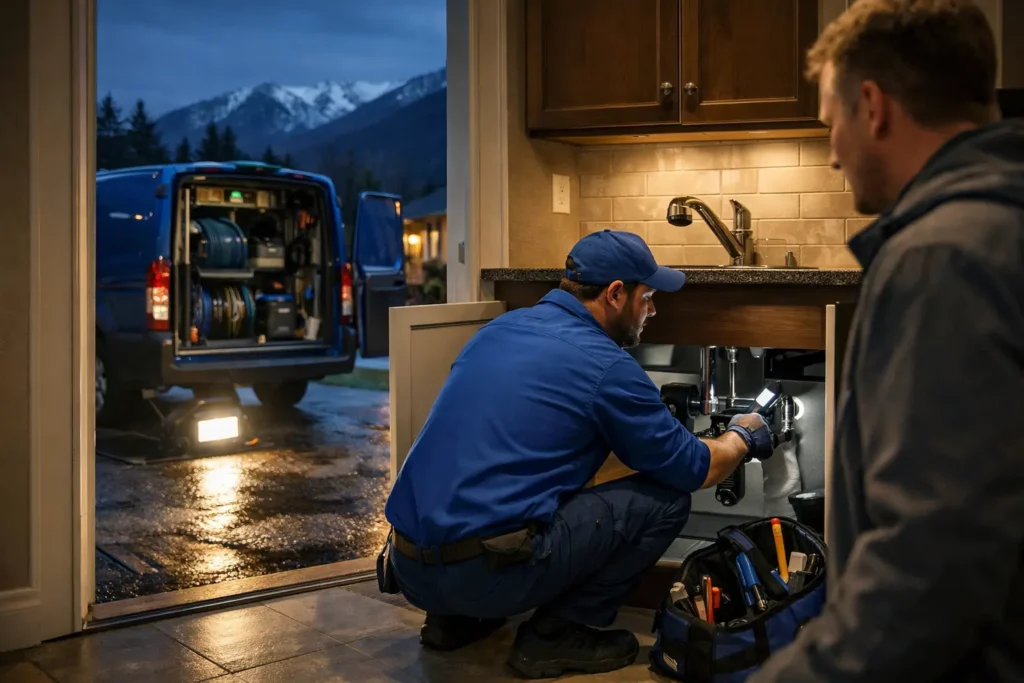
A burst supply line at 2 a.m., a toilet overflowing before guests arrive, or a hot water tank leaking across the utility room leaves little time to search for instructions. When you need a 24 hour plumber Chilliwack homeowners, landlords, and business owners can trust, the first goal is simple: stop the damage safely, then get the right repair underway.
Not every plumbing problem requires an after-hours visit. Some can wait until morning without creating damage or a health concern. The difference is knowing which symptoms point to an active emergency and what to do while help is on the way.
What Counts as a Plumbing Emergency?
An emergency is not defined by inconvenience alone. It is a condition that can cause ongoing water damage, sewage exposure, loss of essential water service, or a safety concern if left unattended.
Active leaks are the most obvious example. Water escaping from a pipe, fixture supply, hot water tank, or ceiling can quickly soak insulation, flooring, drywall, and framing. A small drip under a sink may be manageable until regular business hours if it can be contained. A steady spray, pooling water, or water coming through a ceiling needs prompt attention.
A sewer backup is also an urgent call. If wastewater is rising in a tub, shower, floor drain, or toilet, do not keep using sinks, toilets, dishwashers, or washing machines. Adding more water to the drainage system can make the backup worse. A plumber needs to identify whether the blockage is in a fixture branch, the building drain, or the sewer line before the proper clearing method can be selected.
Loss of water throughout the building can be urgent, particularly in a rental property, restaurant, or commercial space. So can a failed hot water tank that is leaking heavily or creating a risk of flooding. Gas odors or suspected gas leaks require immediate action: leave the area, avoid switches and open flames, and contact the gas utility or emergency services first. Do not attempt to locate or repair a gas leak yourself.
What to Do Before the Plumber Arrives
The actions you take in the first few minutes can limit the repair scope. Stay calm and work only where it is safe to do so.
Shut off the water at the right point
For a leaking toilet, sink, or washing machine connection, use the local shutoff valve if it operates properly. Turning off only that fixture keeps the rest of the building supplied with water.
If water is coming from an unknown location, a burst pipe, or a hot water tank, turn off the main water supply. In most homes, the main shutoff is near where the water service enters the building, although its exact location varies. Property managers should make sure staff and tenants know where it is before an emergency happens.
If a hot water tank is leaking, shut off the cold-water valve supplying the tank. Do not close valves that are seized or damaged with excessive force. A broken valve can turn a manageable leak into a larger one.
Protect people and property
Move belongings away from the affected area and contain water with towels, buckets, or pans if possible. If water is close to electrical outlets, appliances, panels, or cords, do not enter the area or handle electrical equipment. Contact the appropriate emergency resource if there is an electrical hazard.
For a drain or sewer backup, keep children, pets, and occupants away from contaminated water. Avoid using chemical drain cleaners. They rarely solve a serious blockage, can damage certain piping, and create a hazard for anyone working on the drain afterward.
Gather useful details
A quick description helps a plumber arrive prepared. Note where the problem started, whether water is still running, what fixtures are affected, and whether the issue followed laundry, dishwashing, bathing, or heavy toilet use. Photos can be useful for documenting damage for a landlord, strata, or insurance provider, but do not delay shutting off water to take them.
How an Emergency Plumber Diagnoses the Problem
Good emergency plumbing is not just about stopping water quickly. It is about finding the actual cause so the repair holds up after the immediate problem is controlled.
With a leak, the first step is to isolate the source. The water visible on a ceiling may have traveled from a bathroom, kitchen, pipe connection, or appliance above. A professional inspection checks supply lines, drain piping, shutoff valves, fixture seals, and accessible piping before recommending a repair. When the source is concealed, leak detection methods may be needed rather than opening walls based on a guess.
Drain emergencies require the same methodical approach. A single slow or blocked fixture often points to a local drain issue. Multiple fixtures backing up, especially at lower levels, can indicate a main drain or sewer line obstruction. Depending on the condition of the line and the nature of the blockage, clearing may involve professional drain cleaning equipment or hydro jetting. The right method depends on the pipe material, access, and what is causing the restriction.
For water heater problems, a technician will check whether the leak is from a valve, connection, drain fitting, or the tank itself. A leaking tank body generally cannot be repaired and usually requires replacement. No hot water does not always mean replacement, however. The cause may involve a failed component, fuel supply issue, or another serviceable fault. Accurate diagnosis avoids replacing equipment unnecessarily.
Problems That Often Can Wait Until Morning
It depends on the condition, but some plumbing repairs can usually be scheduled during regular hours. A slowly dripping faucet, a toilet that runs occasionally but can be shut off, or one sink draining slowly without backup elsewhere is often not an after-hours emergency.
That said, watch for changes. A slow drain that becomes a backup, a toilet leak that reaches the floor, or a water heater drip that turns into a puddle should be treated differently. If you are unsure, describing the symptoms to a qualified plumber is better than waiting and hoping the issue stays contained.
Preventing the Next After-Hours Call
Many emergencies begin with warning signs that are easy to overlook. Repeated drain clogs, gurgling fixtures, unexplained increases in water use, discolored water, moisture stains, or a hot water tank nearing the end of its service life all deserve attention before they become urgent.
Routine drain maintenance is especially worthwhile in rental and commercial properties where multiple occupants use the same plumbing system. It is also wise to repair leaking toilets and fixture shutoff valves before they fail completely. For older homes with Poly-B piping or recurring leaks in aging water lines, an inspection can help determine whether a targeted repair is reasonable or whether planned repiping is the better long-term choice.
For property managers, a simple emergency plan makes a real difference. Keep the main shutoff location documented, provide tenants with instructions for shutting off fixture valves, and establish who has authority to request emergency service. A fast response is easier when no one is searching for access information during a leak.
Choosing a 24 Hour Plumber in Chilliwack
During an emergency, look for clear communication and a practical approach. The plumber should ask enough questions to understand the immediate risk, explain what you can do to limit damage, and arrive ready to assess the source rather than applying a temporary fix without investigation.
For homeowners and local businesses, long-lasting results matter as much as quick arrival. Armacom Plumbing & Heating approaches urgent calls with the same focus used for planned plumbing repairs: isolate the problem, diagnose it accurately, and recommend work that fits the condition of the system.
The best time to locate your main water shutoff and save the number for a qualified local plumber is before water is running across the floor. When an emergency does happen, that preparation gives you a better chance of protecting your property and getting the right repair started quickly.