
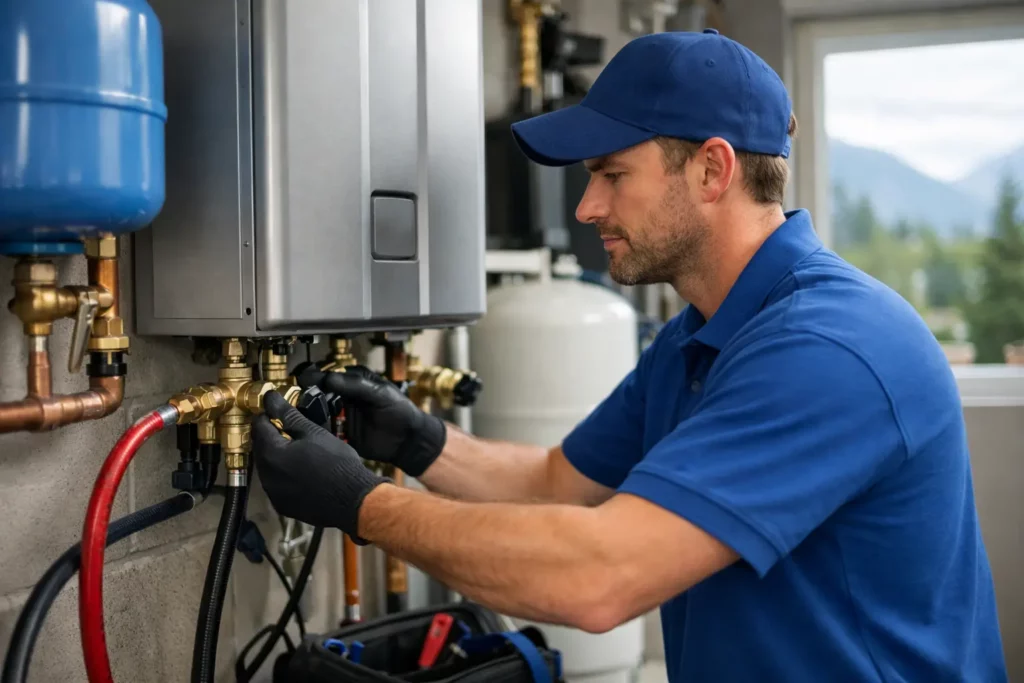
A tankless water heater can deliver dependable hot water for years, but it is not maintenance-free. Knowing how to maintain tankless water heater equipment helps prevent reduced flow, temperature swings, error codes, and premature part failures. In Chilliwack homes, we often find that units are still working but have gradually lost performance because routine flushing and filter cleaning were put off.
The good news is that most maintenance is straightforward when done on schedule. The work mainly comes down to keeping mineral scale, sediment, dust, and venting issues from affecting a high-efficiency appliance that relies on precise water flow and combustion.
Why Tankless Water Heater Maintenance Matters
Unlike a conventional tank heater, a tankless unit heats water through a compact heat exchanger only when a hot-water fixture is running. That heat exchanger operates at high temperatures. Over time, minerals in the water can collect inside its narrow passages and reduce the rate at which water moves through the unit.
As scale builds up, the water heater has to work harder to provide the same temperature. You may notice weaker hot-water flow, longer waits for hot water, unusual noises, or inconsistent temperatures at showers and faucets. In more serious cases, the unit may shut down and display an error code.
Regular service protects the heat exchanger, but it also gives a plumber a chance to inspect gas connections, condensate drainage on condensing models, venting, valves, and safety controls. Those are not parts to ignore simply because the unit is mounted neatly on a wall.
The Basic Tankless Water Heater Maintenance Schedule
For most Chilliwack households, a professional inspection and flush once per year is a sensible starting point. The right interval can be shorter or longer depending on the unit, household demand, water conditions, and whether the heater supplies a large home, rental property, restaurant, or commercial space.
A home with two occupants and moderate water use may have less buildup than a busy household with several daily showers, frequent laundry, and a large soaking tub. A commercial unit or a residential system that runs hard throughout the day deserves closer attention. Follow the manufacturer’s maintenance requirements as well, since warranty terms can vary by model.
Between annual appointments, homeowners can do a few simple checks. Look around the heater monthly for moisture, staining, corrosion, loose venting, or anything stored too close to the appliance. Check that the area remains clear and accessible. If the unit has a display, take note of error codes rather than repeatedly resetting it.
How to Flush a Tankless Water Heater
Flushing is the core task in tankless water heater maintenance. It removes mineral deposits from the heat exchanger before they restrict flow or affect heat transfer.
A proper flush generally involves shutting off the gas and water supply, isolating the heater with service valves, connecting hoses, and circulating an approved descaling solution through the unit with a small pump. The system is then rinsed thoroughly with clean water before it is returned to service.
This sounds simple, but details matter. The wrong chemical can damage internal components. Missing isolation valves makes the job more complicated. A unit with an active error code, visible leak, or poor combustion should not be treated as a routine flush-and-go appointment.
Homeowners who are experienced with their specific model may choose to handle flushing themselves, provided they follow the manufacturer’s instructions exactly. For many people, professional service is the safer choice. A qualified plumber can flush the heat exchanger while checking for problems that a circulation pump alone will not reveal.
Do Not Skip the Water Inlet Filter
Most tankless heaters have a small cold-water inlet screen or filter designed to catch sediment before it enters the appliance. A dirty screen can reduce flow enough to cause ignition problems or poor hot-water performance, even when the heat exchanger is relatively clean.
The filter should be removed and rinsed during scheduled maintenance. If your home has had plumbing repairs, a water-line interruption, or work that may have disturbed debris in the piping, checking the screen sooner is worthwhile. Sediment can move through the system after water service is restored.
Clean the Air Intake Area
Gas tankless water heaters need clean combustion air and properly installed venting. Dust, lint, pet hair, and construction debris can collect around intake openings or in the surrounding area. Keep the space around the unit clear, and do not block intake or exhaust terminals outside.
If you see discoloration near vent connections, smell gas, hear unusual roaring or rattling, or notice recurring combustion-related error codes, stop treating it as a maintenance issue. Arrange for professional diagnosis. Gas fitting and venting repairs require precision and care.
Signs Your Tankless Water Heater Needs Service Now
Annual maintenance is preventative. Certain symptoms mean you should schedule service sooner rather than waiting for the next planned visit.
A common warning sign is inconsistent temperature. If a shower alternates between hot and cool while water flow remains steady, the cause could be scale, a dirty inlet filter, a flow-sensor issue, or a problem elsewhere in the plumbing system. Low hot-water pressure at multiple fixtures can also point to a restricted filter or heat exchanger.
Pay attention to changes in sound. A tankless unit should not make loud popping, rumbling, grinding, or repeated clicking noises during normal operation. Those sounds do not always mean the heater is failing, but they deserve investigation before a small issue becomes a no-hot-water call.
Water around the unit needs prompt attention. A leak may come from a valve, fitting, condensate connection, pressure-relief component, or internal part. Turn off the water supply if it is safe to do so and arrange for a plumber to inspect it. Fast leak repair can limit damage to walls, cabinets, and flooring.
Maintenance Mistakes We See in Chilliwack Homes
The most common mistake is waiting until hot water stops completely. By that point, a heater may have been running inefficiently for months. Routine service costs less than dealing with a failed component, an urgent replacement decision, or damage caused by an unnoticed leak.
Another mistake is treating every error code as a reset problem. Resetting a unit once after a brief interruption may be reasonable if the manufacturer’s guide allows it. Repeatedly resetting it without finding the cause can hide a developing issue with flow, ignition, venting, drainage, or the water supply.
It is also risky to use unapproved cleaners, force stuck service valves, or take apart sealed gas and combustion components. Tankless systems are compact, but they are not simple appliances. The work should match the problem. Cleaning a filter is one thing; diagnosing a gas, venting, or internal control issue is another.
What a Professional Tankless Service Visit Should Include
A thorough service appointment should be more than connecting a pump for a few minutes. The technician should first confirm the customer’s concern, check the unit for active or stored fault codes, and inspect the surrounding plumbing for leaks or restrictions.
The heat exchanger should be flushed as needed, and the inlet filter should be cleaned. The plumber should also inspect isolation valves, water connections, pressure-relief piping, condensate components where applicable, venting, and visible gas piping. The unit should be tested after service to confirm normal operation and stable hot-water delivery.
For property managers and commercial owners, maintenance records are especially useful. Keeping a record of service dates, error codes, repairs, and equipment age makes it easier to budget for future work and respond quickly when tenants or staff report a hot-water problem.
When Maintenance Turns Into Replacement
Maintenance can extend a tankless water heater’s useful life, but it cannot solve every problem. Replacement may make more sense when a heat exchanger is damaged, parts are no longer available, repairs keep recurring, or the existing unit was undersized from the start.
Sizing matters in Fraser Valley homes with multiple bathrooms. A unit that cannot meet simultaneous shower, laundry, and kitchen demand may seem unreliable even when it is mechanically sound. Before replacing it, a plumber should assess actual fixture demand, incoming water temperature, gas capacity, venting requirements, and the condition of the existing plumbing.
If your tankless heater has missed a few service intervals, do not assume the worst. Schedule an inspection, describe any symptoms clearly, and have the unit evaluated before a minor performance issue turns into an inconvenient loss of hot water.