
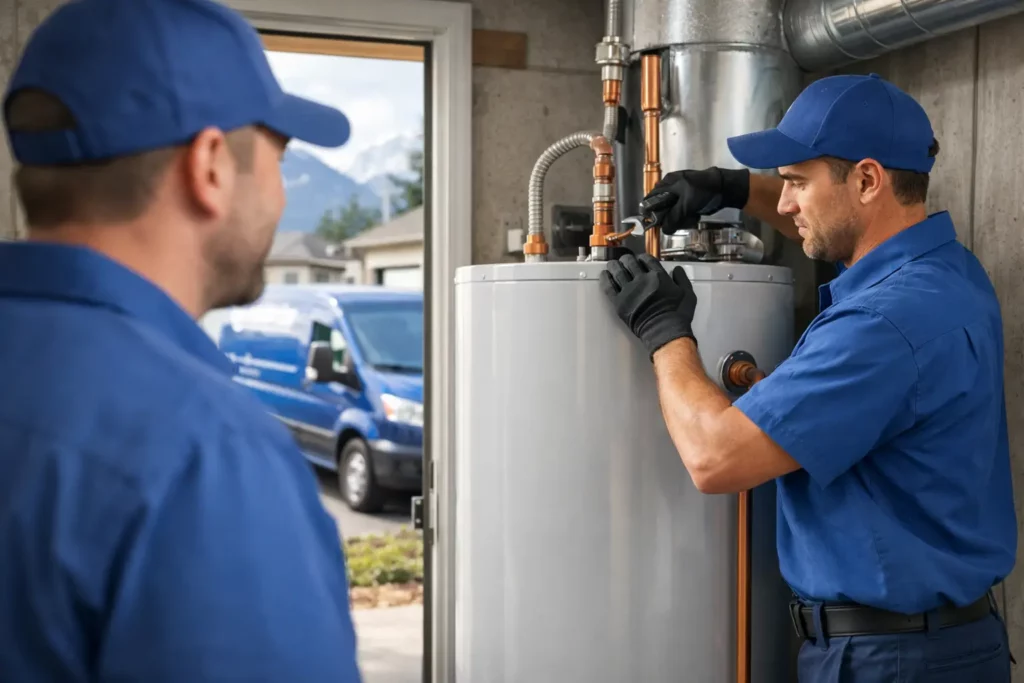
A water heater install case study is most useful when it shows the decisions behind the replacement, not just a new tank in place. On a recent-type Chilliwack replacement, the homeowner’s main concern was simple: the existing gas water heater had begun leaking from the bottom and the family needed reliable hot water without creating a larger problem with venting, drainage, or gas connections.
The old unit was near the end of its service life. Rust-colored water around the base, a damp floor, and intermittent hot-water recovery were the warning signs. A leaking tank does not heal itself. Once the tank liner fails, the practical choice is replacement before the leak damages flooring, walls, or nearby stored items.
The Initial Problem: A Tank Leak With Limited Time
This home had a conventional storage-tank water heater installed in a utility area. The family had noticed a small puddle for several days, but it became clear the water was coming from beneath the tank rather than from a nearby pipe fitting. That distinction matters. A loose fitting or failed relief valve can often be repaired; water escaping from the tank body generally means the unit itself has failed.
Before selecting a replacement, we would first shut off the water supply to the heater and confirm whether the leak was active. If water is spreading quickly, if the area is near finished materials, or if the homeowner smells gas, it is time to treat it as an urgent plumbing call. Turning off water can limit damage, but homeowners should not disconnect gas piping or attempt to alter venting themselves.
The homeowner originally asked for the same tank size because it had served the house for years. That is often reasonable, but matching the old label is not always the right answer. Family size, fixture use, available space, fuel type, venting arrangement, and the condition of existing connections all affect the recommendation.
Water Heater Install Case Study: The Site Assessment
The first part of a proper water heater installation is inspection. The old heater tells part of the story, but the surrounding system tells the rest.
In this case, the assessment focused on the tank capacity, the condition of the shutoff valve and water connectors, the discharge route for the temperature and pressure relief valve, the gas connection, and the venting above the unit. We also checked the floor area for evidence of long-term moisture. A tank that has been slowly leaking can hide damage behind insulation, under flooring, or around a drain opening.
The existing heater’s capacity was still appropriate for the household. Moving to a larger tank would have used more space and increased standby energy use without providing a meaningful benefit. A smaller unit may have reduced upfront cost but could have left the family short on hot water during busy morning use. Proper sizing is about expected demand, not simply buying the biggest tank that fits.
The installation area had another issue: the existing relief-valve discharge piping needed attention. That valve is a safety device, not an optional accessory. If temperature or pressure rises beyond safe limits, it needs a clear discharge path that does not put occupants at risk or cause concealed water damage. Details such as pipe material, termination point, and routing need to suit the installation and applicable local requirements.
The venting connection also required close inspection. A gas water heater depends on correct draft and a secure vent path to carry combustion gases out of the building. A new appliance cannot be treated as a drop-in swap when the vent connector is corroded, poorly supported, or incorrectly sloped. Correcting those issues during replacement is far less costly than returning later for a draft or performance concern.
The Installation Plan
For this Chilliwack home, the practical choice was a like-for-like conventional gas water heater with an updated installation around it. The plan was to remove the failed tank, prepare the area, set the new unit level, reconnect the water and gas piping correctly, address the vent connection, and test the completed system under operating conditions.
A reliable installation starts with a clean, stable base. The new tank needs to sit level so it drains and operates as intended. We also make sure there is enough working space around the appliance for future maintenance and replacement. Packing a tank tightly into a corner can make a later repair harder and can prevent clear inspection of fittings and drain connections.
New approved water connectors are typically a sensible part of a replacement when the old ones show age or corrosion. The shutoff valve should be usable, not merely present. It is frustrating for a homeowner to have a small leak years later and discover the valve will not fully close.
On the gas side, the connection must be properly supported and checked for leaks once the work is complete. The control settings, burner operation, and vent draft should be verified before the plumber leaves. Filling a tank and lighting it without checking the whole installation is not a finished job.
Why the Lower-Cost Option Was Not the Best Option
Homeowners often compare a basic replacement against a tankless water heater installation. Both can be good choices, but neither is automatically better in every Chilliwack property.
A conventional tank was the right fit here because the household’s demand was predictable, the location already suited a tank installation, and the homeowner wanted a straightforward replacement with familiar operation. The installation could be completed efficiently while correcting the age-related issues around the old unit.
A tankless unit can make sense when a property has limited space, the usage pattern favors long periods of hot-water demand, or the owner plans to stay long enough to value its efficiency and service life. It may also require changes to gas piping, venting, condensate handling, and water connections. Those added requirements can make the initial project more involved. The right recommendation comes from the home and the installation conditions, not a one-size-fits-all sales pitch.
For commercial properties, the calculation is different again. A restaurant, multi-unit building, or business with peak demand may need a more detailed review of recovery rate, usage schedule, and equipment layout. A tank that works well in a three-bedroom home may be completely inadequate for a commercial application.
Testing Before the Job Is Complete
After the new tank was connected, the system needed to be filled carefully and purged of air before normal operation. Water connections were checked for seepage, the relief-valve piping was confirmed, and the gas connection and burner operation were tested. The venting was reviewed while the unit was running, because that is when draft-related concerns become visible.
The homeowner was also shown the location of the water shutoff and given practical guidance on what to watch for. A small amount of moisture around a fitting should not be ignored. Neither should popping sounds, rusty water, fluctuating temperatures, or a relief valve that discharges repeatedly. Those symptoms do not always mean the tank has failed, but they are worth a prompt diagnosis.
For homeowners in Chilliwack, Abbotsford, and nearby Fraser Valley communities, seasonal conditions can make a small plumbing issue more disruptive. A heater located in a cold garage, crawlspace, or utility room may face added stress when temperatures drop. Keeping the area accessible and checking for early signs of leakage can prevent an emergency replacement at the worst possible time.
What This Job Shows Homeowners
The value in this installation was not just a new water heater. It was identifying why the old one failed, confirming the replacement was properly sized, and correcting related details that could cause another service call. A low initial quote can become expensive if it excludes necessary venting corrections, safety piping, gas checks, or replacement of worn connection parts.
When comparing quotes, ask what is included beyond the tank itself. A clear scope should address removal of the old unit, installation materials, water and gas connections, venting review, safety components, startup testing, and disposal. If the answer is vague, the quote may not reflect the real condition of the job.
Armacom Plumbing & Heating approaches water heater replacements with that same practical focus: diagnose the condition on site, explain the options plainly, and complete the work with precision and care. If your water heater is leaking, taking too long to recover, or showing signs of corrosion, arranging an inspection before the tank fails completely gives you more choices and a calmer path to dependable hot water.