
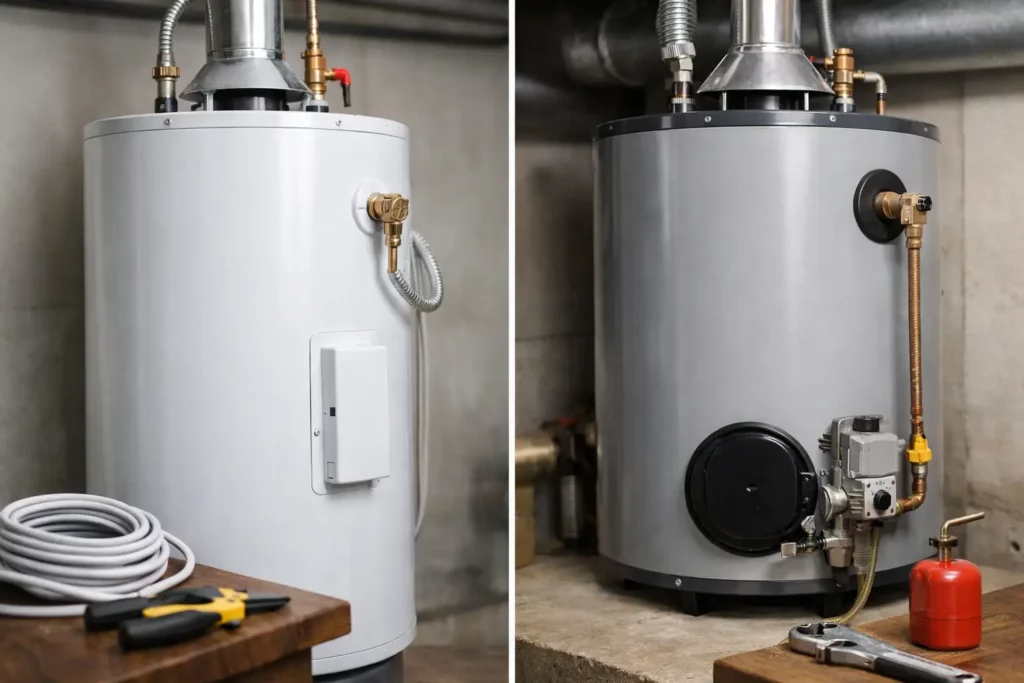
A failed water heater usually turns this question from a casual upgrade into a same-day decision. When homeowners in places like Mission, Abbotsford, or Hope call about replacement, the real issue is not just electric vs gas water heater – it is whether the next unit will keep up with the household, fit the mechanical space, and make sense for monthly operating costs.
There is no one-size-fits-all answer. The better choice depends on your home, your hot water habits, your utility setup, and how long you plan to stay in the property. A small rancher with one or two occupants has different needs than a busy family home with back-to-back showers, laundry, and a dishwasher running every evening.
Electric vs gas water heater: the main difference
At the simplest level, an electric water heater uses heating elements inside the tank, while a gas model uses a burner under the tank. Both can do the job well when properly sized and installed, but they behave differently in day-to-day use.
Gas water heaters usually recover faster. That matters in larger households or in homes where several fixtures are used close together. If two people shower in the morning and someone starts a load of laundry right after, a gas unit often keeps up better.
Electric models are typically simpler to install if the home is already set up for them. They do not need gas piping or combustion venting, which can make replacement more straightforward in some homes and suites. That simplicity is one reason electric tanks are common in condos, smaller homes, and properties where gas service is limited or not practical.
Upfront cost vs operating cost
A lot of homeowners focus on sticker price first, and that is understandable. In many cases, a standard electric tank costs less upfront than a comparable gas model, especially if adding or modifying gas lines and venting is part of the job.
But installation cost is only half the story. Utility costs over time matter too. Depending on local rates, gas may cost less to run than electricity, especially in homes with high hot water demand. That can make a gas unit more economical over the life of the heater, even if the initial install is higher.
This is where real-world conditions matter. If a home only uses modest hot water, the operating difference may not be dramatic enough to justify converting from electric to gas. On the other hand, in a larger household, the lower ongoing cost and faster recovery of gas can make a stronger case.
If you are replacing an older unit and want a practical recommendation based on your layout and usage, that is usually part of a proper water heater replacement assessment. The best choice is not always the cheaper tank on day one. It is the system that performs well without creating avoidable installation costs or future headaches.
Recovery rate matters more than most people expect
People often ask about size first – 40-gallon, 50-gallon, 60-gallon – but recovery rate is just as important. Recovery rate is how quickly the heater can warm a new supply of water after hot water has been used.
Gas water heaters generally recover faster than electric tanks. That means a gas 50-gallon unit may feel more capable in a busy home than an electric 50-gallon unit, simply because it can reheat the tank sooner.
This matters in households with teenagers, rental suites, or properties where occupancy changes. In areas with a mix of older homes and growing families, we often see people replace a working-but-underperforming heater because the old setup no longer matches the way the home is used.
If your current problem is running out of hot water, switching from electric to gas may help, but not always. Sometimes the better fix is proper sizing, replacing a failing tank, or moving to a tankless water heater installation if the property and budget support it.
Installation requirements are not the same
This is where online comparisons often get too simple. A gas water heater is not just an electric heater with a different fuel source. Gas units require combustion air, proper venting, a gas supply line sized for the appliance, and safe installation practices. If those conditions are not already in place, the conversion can cost more than people expect.
Electric units avoid venting and combustion concerns, which makes them easier to place in some mechanical rooms, closets, or utility areas. For landlords and property managers, that simpler installation can sometimes reduce downtime during replacement.
That said, gas can still be the better long-term option in the right building. In homes that already have a suitable gas line and venting arrangement, replacing an existing gas tank with another gas unit is often straightforward.
If the home needs gas line changes, that work should be handled correctly from the start. Poorly planned gas work creates safety issues and can delay inspections, tenant occupancy, or final project completion.
What about power outages?
This is one of those questions where the answer depends on the equipment. A basic electric tank will not heat water during a power outage. A gas tank may still have limited operation depending on the ignition and controls, but many newer systems also rely on electrical components.
So while some people assume gas always means hot water during an outage, that is not guaranteed. If this is a priority for your household or business, it is worth discussing the exact model rather than making assumptions based on fuel type alone.
Lifespan, maintenance, and repair considerations
Both electric and gas storage water heaters can give solid service life when installed properly and maintained. Neither type is maintenance-free.
Sediment buildup is a common issue in tanks over time. It affects efficiency, recovery, and overall performance. Gas units can also develop burner or venting issues, while electric units may have element or thermostat failures. In both cases, age matters. Once a tank gets into the later part of its expected service life, repair decisions need to be weighed against leak risk and replacement cost.
For commercial spaces, rental properties, and older homes, we also look at surrounding plumbing conditions. If the shutoff valves, supply lines, drain pans, or venting are in poor shape, replacing the tank alone may not be enough for a reliable result.
That is why a good install is not just swapping one box for another. It is making sure the full setup is safe, serviceable, and built to last.
Which one makes more sense for your home?
If you want the shortest answer, electric usually makes the most sense when installation simplicity is the priority and hot water demand is moderate. Gas usually makes more sense when the home uses a lot of hot water and already has the right gas and venting setup.
For a smaller home, condo, or lower-demand rental, an electric water heater can be a sensible and cost-effective option. For a busy household with multiple bathrooms, a gas water heater often performs better under load.
But there are gray areas. A home with limited mechanical space, aging venting, or expensive gas upgrades may still be better off staying electric. A family that is frustrated with slow recovery and frequent hot water shortages may benefit from gas even if the install cost is higher.
This is also where tankless enters the conversation. In some homes, comparing electric vs gas water heater options leads to a third answer: neither traditional tank is ideal. If space savings, continuous hot water, and long-term efficiency are priorities, tankless may be worth considering.
A practical way to decide
The cleanest way to choose is to look at five things together: current fuel source, installation conditions, household demand, operating cost, and long-term plans for the property.
If you are staying in the home for years, monthly utility cost and performance matter more. If you are replacing a failed unit before selling, a like-for-like replacement may be the most practical route. If you manage a rental, reliability, code-compliant installation, and turnaround time may outweigh everything else.
For homeowners and property managers who want fast, professional guidance, Armacom Plumbing & Heating can assess the existing setup and recommend the option that fits the building instead of pushing a generic answer.
If your water heater is aging, leaking, or no longer meeting demand, the best next step is to have the system looked at before it fails completely. A good recommendation should account for the home you actually have, not the one described in a product brochure. The right heater is the one that gives you steady hot water, sensible operating costs, and fewer problems when you need the system most.