
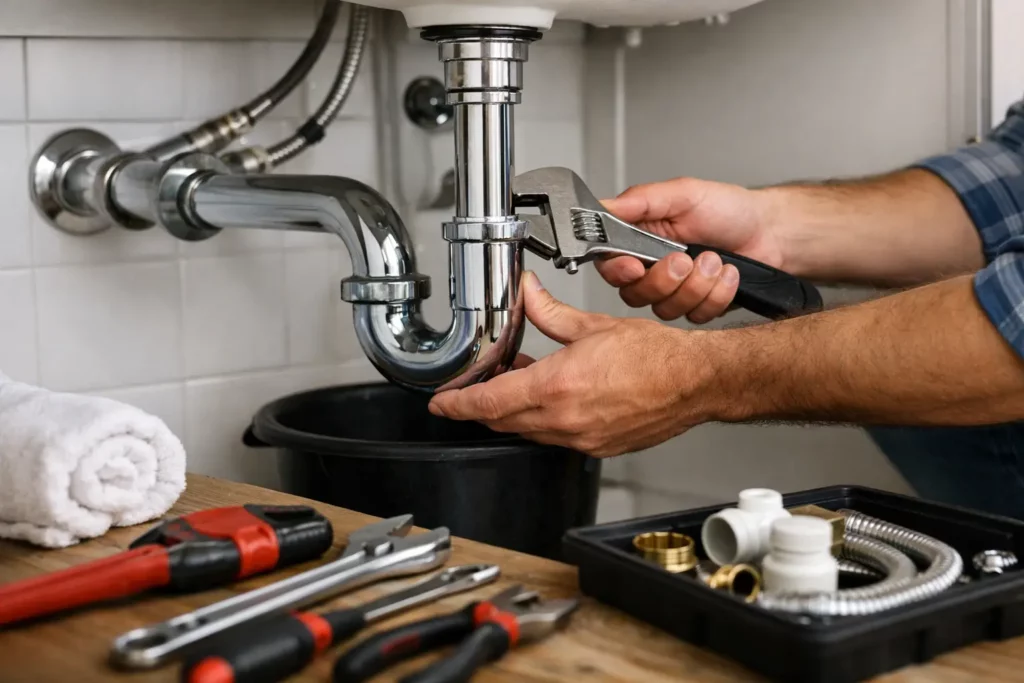
A dripping faucet rarely stays just a dripping faucet. It turns into wasted water, cabinet damage, mineral buildup, or a call for emergency service at the worst possible time. A good home plumbing maintenance guide helps you catch those small issues early, before they become expensive repairs.
For most homeowners, plumbing maintenance is not about learning to do a plumber’s job. It is about knowing what to watch, what to test, and when a professional should step in. A few routine checks each season can help protect your fixtures, water heater, drains, shut-off valves, and pipes without taking over your weekend.
Why a home plumbing maintenance guide matters
Plumbing problems usually build slowly. A toilet keeps running a little longer than normal. A kitchen drain starts gurgling. Water pressure drops in one shower. None of those issues seem urgent until they combine with age, cold weather, or a hidden leak.
Preventive maintenance lowers that risk. It also helps you plan repairs on your schedule instead of dealing with water damage, emergency shutdowns, or fixture failure when you least expect it. For homeowners and property managers, that difference matters. Planned service is almost always easier on both the property and the budget.
There is also a practical trade-off here. Some maintenance tasks are simple and worth doing yourself. Others look simple but can cause damage if handled the wrong way. Snaking a line too aggressively, overtightening a shut-off valve, or ignoring early signs of a failing water heater can create bigger problems than the original issue.
Start with the plumbing areas that fail most often
The most useful approach is to check the parts of your system that see daily use and the most wear. That means fixtures, exposed pipes, drains, toilets, and your water heater.
In kitchens and bathrooms, look under sinks for moisture, staining, swollen cabinet material, or corrosion around supply lines and shut-off valves. Even a small amount of moisture matters. It may point to a loose connection, a slow drain leak, or condensation that needs attention before mold and material damage set in.
At faucets and showerheads, notice changes in pressure or spray pattern. Mineral buildup can reduce flow over time, especially in homes with harder water. Cleaning an aerator or showerhead may restore performance, but if pressure drops in several fixtures at once, the issue may be deeper in the system.
Toilets deserve more attention than they usually get. A running toilet can waste a surprising amount of water, and small internal parts wear out quietly. Listen after flushing. If the tank keeps filling or you hear intermittent refilling, the flapper, fill valve, or water level setting may need adjustment or replacement.
Your water heater is another high-priority item. If you hear rumbling, see rust-colored water, notice inconsistent hot water, or spot moisture around the base, do not ignore it. Sediment buildup and aging components can shorten the unit’s life and reduce efficiency well before a full breakdown happens.
Seasonal plumbing maintenance that actually helps
A home plumbing maintenance guide works best when it follows the calendar. Seasonal checks are easier to remember and better matched to how plumbing systems fail.
Spring
Spring is a good time to inspect for damage left behind by winter. Check exposed pipes, outdoor hose bibs, and irrigation connections for leaks or cracks. If a pipe or faucet froze during colder weather, the damage may not show up right away.
This is also a smart time to test sump pump performance if your property has one. Pour water into the pit and make sure the pump activates properly. A sump pump problem often stays hidden until heavy rain arrives.
Summer
Summer often brings heavier water use, especially if you are filling pools, watering landscaping, or hosting guests. Watch for slow drains, sewer odors, or outdoor spigots that leak under pressure. Higher seasonal use tends to expose weak points.
If you are planning renovations or fixture upgrades, summer is also a practical time to address aging shut-off valves, supply lines, or older toilets before they fail on their own.
Fall
Fall is when prevention pays off most. Disconnect hoses, shut down and drain exterior lines if needed, and protect pipes that are exposed to cold air. Frozen pipes are one of the most disruptive plumbing issues a homeowner can face, and they often come from areas that were easy to overlook in milder weather.
It is also a good time to service your water heater before winter demand increases. If your unit has not been inspected or flushed in some time, fall is usually the right moment to deal with it.
Winter
In winter, keep an eye on pipe temperatures in garages, crawl spaces, basements, and exterior walls. If a cold snap hits, opening cabinet doors under sinks on exterior walls can help warmer air circulate around pipes.
Pay attention to early warning signs. Reduced water flow from one faucet may mean ice is forming in a nearby section of pipe. That is the stage where quick action can prevent a burst.
Drain care without making the problem worse
Drains are one of the most common maintenance issues, and they are also where homeowners often create accidental damage. Chemical drain cleaners may offer a temporary fix, but repeated use can be hard on pipes and may not solve the real blockage.
A better habit is basic prevention. Use strainers where they make sense, keep grease out of kitchen drains, and avoid flushing wipes or hygiene products even if packaging says they are flushable. That advice sounds obvious, but many sewer and drain service calls begin with exactly those materials.
If a drain slows down, try the simplest option first. Remove visible debris and use a plunger if appropriate. If multiple drains are backing up, or if you notice gurgling and sewer smell, the problem may be farther down the line. At that point, forcing the issue usually does not help.
Water pressure, shut-offs, and small warning signs
Good plumbing maintenance is often about noticing changes before they turn into failures. Water pressure is a good example. Pressure that is too low is frustrating, but pressure that is too high can quietly damage fixtures, valves, and appliance connections over time.
If pressure suddenly changes throughout the home, it is worth having the system checked. The cause could be simple, or it could point to a pressure regulator issue, buildup, or a hidden leak.
You should also know where your main water shut-off valve is and confirm that it works. Many homeowners do not find out a shut-off has seized until they need it during an emergency. Testing it carefully from time to time is worthwhile, but if the valve is old or stiff, it is better to have it serviced than force it.
Watch for higher water bills, damp drywall, musty smells, soft flooring near tubs or toilets, and discoloration on ceilings below bathrooms. Those are not cosmetic issues. They are often the first visible signs of a plumbing leak that has been active for a while.
What homeowners can handle and when to call a pro
Some tasks are reasonable for a homeowner. Cleaning aerators, checking under sinks, monitoring water heater performance, and inspecting exposed pipes are all useful steps. Replacing a worn toilet flapper or tightening a loose showerhead connection may also be straightforward if the problem is clearly identified.
It changes when leaks are hidden, drains keep backing up, valves do not respond properly, or water heater issues involve gas, venting, pressure relief, or tank corrosion. Those are not areas for guesswork. The cost of a wrong repair is often much higher than the cost of service.
That is especially true in older homes or properties with previous renovation work. Plumbing systems may have mixed materials, outdated connections, or past repairs that only make sense once everything is properly inspected. In those cases, experience matters more than a quick fix.
For homeowners in places like Chilliwack and nearby communities, seasonal temperature swings add another layer. Freeze risks, sediment issues, and outdoor plumbing exposure make routine maintenance more valuable, not less.
A simple maintenance rhythm that works
If you want plumbing maintenance to stick, keep it realistic. Check visible plumbing monthly, test toilets and shut-offs a few times a year, inspect outdoor plumbing before winter, and pay attention to any change in pressure, drainage, or hot water performance.
That schedule will not prevent every plumbing problem. No system works forever without repairs. But it does give you a better chance of catching trouble while it is still manageable, which is usually the difference between a quick service call and a major cleanup.
The best plumbing systems are not the ones that never need attention. They are the ones that get the right attention at the right time.