
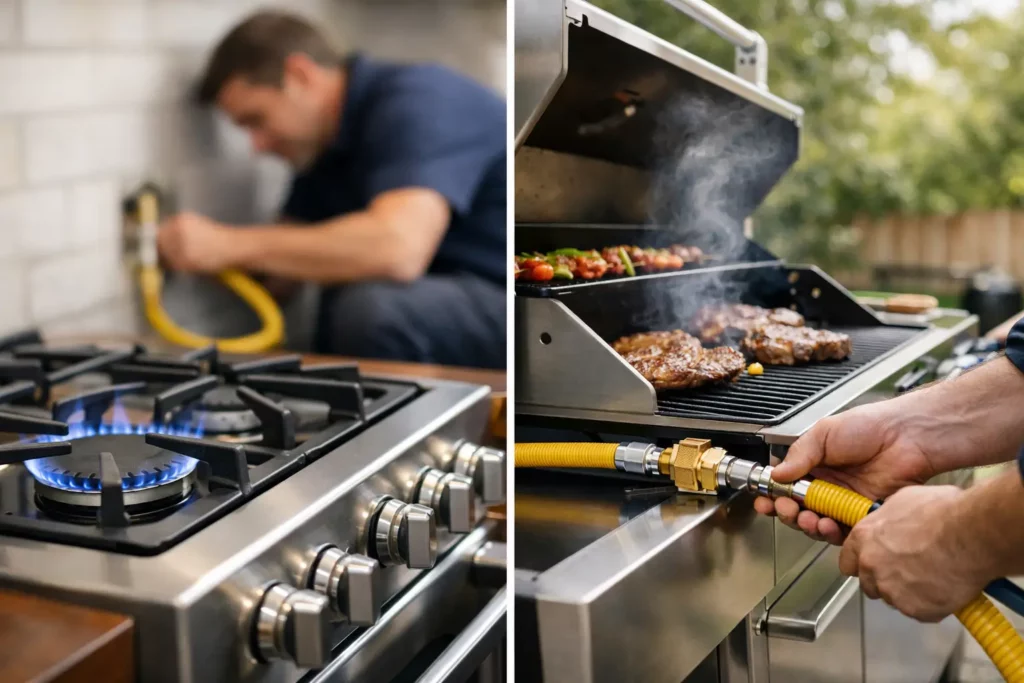
A gas stove that lights properly and a BBQ line that delivers steady fuel both depend on more than just hooking up an appliance. Stove and BBQ gas line installations need the right pipe sizing, proper routing, secure shutoffs, and pressure testing. If any part of that work is off, you can end up with weak performance, safety risks, or costly rework during a renovation.
For homeowners, builders, and property managers, the main question is usually simple: can the new appliance be connected to the existing gas system, or does the line need to be upgraded? The answer depends on total gas load, distance from the meter, the type of appliance, and where the line has to run. A high-BTU range or an outdoor BBQ setup may need more capacity than the current branch line can provide.
What matters in stove and BBQ gas line installations
The biggest mistake people make is assuming gas is gas and every appliance can share the same line without issue. In practice, gas systems have to be sized for demand. If the line is undersized, your stove may struggle to maintain heat output, or your BBQ may not perform the way it should when multiple burners are running.
Routing matters too. Indoor and outdoor installations have different demands, especially when the line passes through walls, crawl spaces, cabinets, or exterior surfaces. The work has to be clean, protected, and accessible for future service. Shutoff valves need to be placed where they make sense, and connections need to match both code and manufacturer requirements.
A professional installation also includes leak testing and final verification. That means checking pressure, confirming proper operation, and making sure the appliance is receiving the fuel supply it was designed for. Good workmanship is not just about passing an inspection. It is about making sure the system performs reliably day after day.
When an existing gas line is not enough
In many homes, there is already a gas connection somewhere in the kitchen or near a patio, but that does not automatically mean it is ready for a new appliance. Renovations often change appliance locations, cabinet layouts, and exterior access points. Even moving a stove a few feet can affect how the line needs to be routed.
Outdoor BBQ installations bring their own set of variables. A permanent gas BBQ line can be far more convenient than swapping propane tanks, but it needs to be planned properly. Exposure to weather, routing around decks or concrete, and placement near outdoor kitchens all affect the installation method.
For larger properties or mixed-use spaces, capacity becomes even more important. If the building already has a furnace, water heater, fireplace, and other gas appliances, adding one more load may require a closer look at the full system. This is where experienced gas fitting saves time and avoids repeat visits.
Common signs you need a new or upgraded line
If you are replacing an electric stove with gas, adding a built-in BBQ, relocating an appliance, or noticing poor burner performance, it is worth having the gas line assessed. The same applies if the existing piping is older, exposed in awkward areas, or does not meet the layout of your current renovation plans.
Safety, code, and long-term reliability
Gas work is not the place for guesswork. Safe installations depend on approved materials, correct fittings, secure supports, and proper testing procedures. There is also a practical side to code compliance: if the work is done correctly from the start, you are less likely to run into problems during inspection, resale, or future appliance servicing.
Clean installation matters as much as technical accuracy. Homeowners want finished spaces that look professional, and builders want trades that can complete work efficiently without creating delays for the next phase of the project. A well-installed gas line should feel invisible once the job is done – dependable, tidy, and built to last.
That is especially important in busy households and managed properties. The goal is not just to connect the appliance. The goal is to provide a line that supports daily use, reduces the risk of future issues, and fits the space without cutting corners.
Choosing the right contractor for the job
When comparing contractors for stove and BBQ gas line installations, ask how they assess line capacity, how they handle testing, and whether they regularly work on both retrofit and new installation projects. The right contractor should be direct about what the job needs and clear about any limitations in the existing system.
For clients in Chilliwack and nearby communities, that local experience matters. Homes, additions, and outdoor living spaces across the Fraser Valley can vary a lot, and practical field knowledge helps keep jobs moving. Armacom Plumbing approaches gas fitting the same way it handles plumbing work – with reliable scheduling, clean execution, and a focus on getting it done right the first time.
If you are planning a kitchen upgrade or adding a permanent BBQ connection, the best time to look at the gas line is before cabinets, finishes, or hardscaping are complete. Early planning usually means fewer surprises, better routing options, and a result that works as well as it looks.